
Many older adults worry they’ve missed their chance to get dental implants. You might wonder if your age means you’re no longer a good candidate for this tooth replacement option. The good news is simple and clear.
Age alone does not disqualify you from getting dental implants, and many people in their 60s, 70s, and even 80s successfully receive them.
Dentists focus more on health and jawbone strength than on how many birthdays you’ve celebrated. What really matters is your overall health, bone density, and ability to heal after a minor surgical procedure.
Your overall health and ability to safely undergo treatment are the main factors dentists consider when evaluating you for implants.
This article explains what makes you eligible for dental implants, how health conditions affect your options, and what solutions exist if you face challenges like bone loss.
Key Takeaways
- There is no maximum age limit for dental implants if you have good overall health and adequate jawbone density
- Factors like gum health, medical conditions, and healing ability matter more than your age when determining eligibility
- Solutions like bone grafting can help many older adults overcome obstacles and successfully receive dental implants
Does Age Matter for Dental Implants?
Your age is rarely the deciding factor when it comes to getting dental implants. What matters most is your overall health, bone density, and ability to heal rather than the number on your birthday cake.
Is There a Maximum Age for Dental Implants?
There is no official maximum age for dental implants. You could be 70, 80, or even 90 years old and still be a good candidate for implant dentistry.
Age alone doesn’t disqualify you from getting dental implants. Your dentist will look at your overall health status instead of focusing on your age.
Research shows that dental implants have a 97% success rate at 10 years and 75% at 20 years across all age groups.
A 2019 study compared 400 patients over 65 years with younger patients. The results showed only a 2% failure rate in both groups over 10 years.
Even participants over 80 years had good outcomes, though they experienced slightly more complications than younger groups.
Your ability to undergo surgery safely matters more than your age. If you can handle the procedure and follow recovery instructions, you’re likely a suitable candidate.
Why Age Alone Is Rarely a Barrier
Your overall health plays a bigger role than your age in determining if you’re eligible for dental implants. Dentists focus on specific health factors rather than how many years you’ve been alive.
Key factors that matter more than age include:
- Bone density in your jaw
- Ability to heal after surgery
- Management of chronic conditions like diabetes
- Smoking status
- Overall immune system health
- Oral hygiene habits
Health matters more than age when your dentist evaluates you for dental implants. People with unmanaged medical conditions or severely compromised bone may face challenges, but these issues can happen at any age.
You might need additional procedures like bone grafts if your jawbone has deteriorated. This doesn’t mean you’re too old for dental implants.
It simply means your treatment plan will be personalized to meet your specific needs.
Dental Implants for Seniors: Common Age Ranges
Dental implants for seniors have become increasingly common. The rate of adults over 50 getting dental implants rose from 1.3% to 8.4% between 1999 and 2020.
The largest increase happened among people between 65 and 74 years old. This shows that more seniors are choosing dental implants over traditional dentures.
Success rates remain high for older adults:
- Over 90% success rate in older age groups
- Minimal difference in outcomes between seniors and younger patients
- Bone grafts can address density loss in older patients
If you’re asking “am I too old for dental implants,” the answer is probably no. Your dentist will evaluate your specific situation to determine if you’re a good candidate.
Many people in their 70s, 80s, and beyond successfully receive dental implants and enjoy improved quality of life.
Key Eligibility Factors Beyond Age
Your ability to get dental implants depends more on your health, bone condition, and daily habits than the number of candles on your birthday cake. These factors determine how well your body can support the implant and heal after the procedure.
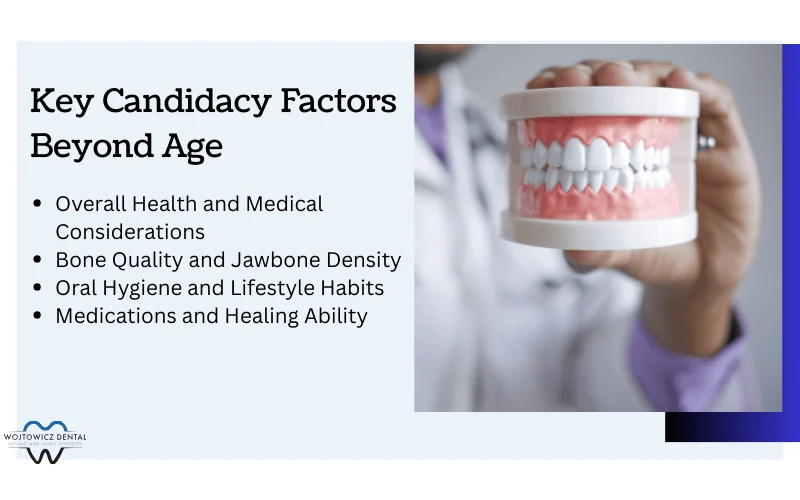
Overall Health and Medical Considerations
Your general health plays a bigger role than age when dentists evaluate you for implants. Conditions like uncontrolled diabetes can slow down healing and affect how well the implant bonds with your jawbone.
Heart disease may require special planning before surgery.
Autoimmune disorders can make it harder for your body to accept the implant. If you have conditions that affect your immune system, your dentist will need to assess whether dental implants are right for you.
The good news is that many medical conditions don’t automatically disqualify you. Your dentist can work with your doctor to create a safe treatment plan.
They’ll review your medical history and current medications to minimize risks.
Bone Quality and Jawbone Density
Bone quality matters because dental implants need a solid foundation to stay in place. The implant must fuse with your jawbone through a process called osseointegration. Without enough bone, this fusion can’t happen properly.
Bone loss naturally occurs when you lose teeth. Your jawbone needs stimulation from chewing strength to maintain its density. The longer you wait after losing a tooth, the more bone you may lose.
Modern implant dentistry offers solutions if you don’t have enough bone. Dentists can use bone grafting to rebuild the area. They can also perform sinus lifts for upper jaw implants.
Your dentist will use 3D imaging to check your jawbone density before recommending implants. This technology shows exactly how much bone you have and where it needs strengthening.
Oral Hygiene and Lifestyle Habits
Your daily oral care routine directly affects implant success. Brushing twice daily and flossing keeps your gums healthy around the implant. Poor hygiene can lead to infections that cause implant failure.
Smoking is one of the biggest risk factors for implant problems. It reduces blood flow to your gums and slows healing. Some dentists won’t place implants in heavy smokers because tobacco use increases failure rates.
Heavy alcohol consumption also interferes with healing. It can weaken your immune system and affect how medications work during recovery.
If you’re willing to improve these habits, you boost your chances of success. Many people quit smoking specifically to get implants and improve their overall health.
Medications and Healing Ability
Certain medications affect your body’s ability to heal and support implants. Blood thinners may increase bleeding during surgery. Your dentist might coordinate with your doctor to adjust them temporarily.
Bisphosphonates used for osteoporosis can affect jawbone healing. These medications strengthen bones but sometimes cause complications with dental procedures.
Tell your dentist about all medications you take, including supplements.
Steroids and chemotherapy drugs can slow down healing. They may also affect osseointegration. Your dentist needs this information to time your procedure correctly.
Your body’s natural healing ability changes with various health factors. A thorough health assessment helps your dental team predict how well you’ll recover and whether any adjustments are needed for your treatment plan.
Addressing Bone Loss and Solutions
When you lose a tooth, your jawbone starts to shrink because it no longer gets stimulation from the tooth root. Bone grafts and modern imaging tools can restore lost bone and help dentists plan your implant placement with precision.
Why Bone Loss Happens With Age
Your jawbone needs constant stimulation to stay healthy and strong. When you lose a tooth, the bone underneath begins to deteriorate because there’s no root to keep it active.
Most bone loss occurs in the first few years after tooth loss. The majority of bone deterioration happens during this early period, making early replacement important.
Bone loss affects implant placement because dental implants need adequate jawbone density for successful osseointegration.
This is the process where your bone fuses with the implant to create a stable foundation. Without enough bone, the implant can’t integrate properly.
Age itself doesn’t cause bone loss, but older adults are more likely to have experienced tooth loss years earlier. The longer you wait to replace missing teeth, the more bone you lose.
This makes it harder to place implants without additional procedures.
Bone Grafting and Sinus Lift Procedures
A bone graft adds material to your jaw to rebuild areas where bone has disappeared. Your dentist takes bone from another part of your body, uses donor bone, or applies synthetic materials to strengthen the area.
Bone grafting typically takes several months to heal before implant placement. The grafted material gradually fuses with your existing bone to create enough volume and density for an implant.
A sinus lift is a specific type of graft for your upper jaw. When you lose upper back teeth, your sinuses can expand downward into the space where bone used to be.
The procedure lifts the sinus membrane and adds bone material underneath to create room for implants.
While bone grafts can fortify your jawbone, some cases involve too much bone loss for even grafting to work effectively. Your dentist will assess whether you have enough remaining bone structure to support a graft.
3D Imaging and Modern Assessment Tools
3D imaging technology lets your dentist see exact measurements of your jawbone before planning implant placement. These scans show bone density, height, width, and the location of nerves and sinuses.
Cone beam CT scans create detailed three-dimensional images of your jaw structure. Your dentist can measure bone volume in millimeters and identify the best placement angles for your implants.
Digital planning software uses your 3D scans to create a virtual surgery plan. Your dentist can test different implant positions and sizes on the computer before touching your mouth.
This reduces complications and improves success rates.
These assessment tools help determine if you need a bone graft and how much bone material is required.
They also show whether alternative options like shorter implants or angled placement might work for your specific situation.
Dental Implants vs. Dentures for Older Adults
Both options can restore your smile and eating ability, but they work in different ways. Implants offer permanent stability, while dentures provide a removable and often more affordable solution.
Comparing Dental Implants and Removable Dentures
The main difference between dental implants and dentures is that implants are permanent fixtures in your jawbone, while dentures are removable appliances.
Dental implants replace your tooth root with a titanium post that fuses to your bone. This creates a stable foundation for your replacement teeth.
Removable dentures sit on top of your gums and rely on suction or adhesives to stay in place. A partial denture fills in gaps when you still have some natural teeth. Full dentures replace all your teeth on the upper or lower jaw.
Key differences include:
- Stability: Implants stay fixed in place, while dentures can slip during eating or talking
- Bone preservation: Implants stimulate your jawbone like natural teeth, preventing bone loss
- Upfront cost: Dentures typically cost less initially than implants
- Care routine: You remove dentures for cleaning, while you brush implants like regular teeth
The benefits of dental implants include better durability and a more natural feel. However, dentures work well for many seniors and don’t require surgery.
Implant-Supported Dentures: A Hybrid Solution
Implant-supported dentures combine the security of implants with the convenience of dentures. This option uses two to four dental implants to anchor your denture in place.
You can often remove them for cleaning, but they stay secure while you wear them.
This hybrid approach costs less than replacing every tooth with individual implants. It also provides much better stability than traditional dentures. Your denture won’t slip when you eat or speak.
The implants help preserve your jawbone health. They prevent the bone loss that commonly occurs with regular dentures.
Most people need adequate bone density for this treatment to work. Your dentist can determine if you’re a good candidate during your consultation.
Long-Term Comfort and Chewing Strength
Your chewing strength differs significantly between implants and dentures. Dental implants restore about 80-90% of your natural bite force.
This means you can eat most foods without worry, including tough meats and crunchy vegetables.
Traditional dentures typically provide only 20-25% of normal chewing strength. You may need to avoid certain hard or sticky foods. Many denture wearers adjust their diet to softer options.
Comfort levels also vary over time. Implants feel and function like your natural teeth once they heal. Your jawbone doesn’t shrink, so your face maintains its natural shape.
Dentures can become loose as your bone naturally recedes. You may need adjustments or relining every few years to maintain proper fit. Some people experience sore spots where dentures rub against their gums.
Dental Implant Process and Success in Later Life
The implant process involves careful planning, surgical placement, and a healing period where the implant fuses with your jawbone. Success rates remain high for older adults, with proper care leading to decades of function.
Consultation and Personalized Planning

Your journey begins with a comprehensive exam where your dentist evaluates your oral health, jawbone density, and medical history.
They’ll use 3D imaging to map your jaw structure and determine the best placement locations for your implants.
This detailed planning phase is especially important as you age because it helps identify any potential challenges before surgery begins.
Your dentist will review your medications, check for conditions that might affect healing, and discuss any necessary adjustments to your treatment plan.
The consultation typically includes digital scans, X-rays, and sometimes a CT scan to create a precise surgical guide. This technology allows for accurate implant placement and helps avoid complications.
You’ll also discuss your goals, timeline, and what to expect during recovery.
Implant Placement and Healing Time
During the surgical procedure, your dentist places titanium posts into your jawbone where teeth are missing.
The surgery is usually done under local anesthesia, though sedation options are available if you prefer.
After placement, your implants need time for osseointegration to occur. This is when your bone grows around and bonds with the titanium implant, creating a stable foundation. Recovery might add a week or two for healthy seniors, but the process is generally successful.
Most implants take three to six months to fully integrate with your bone. During this time, you may wear temporary teeth while the implants heal beneath your gums.
Expected Results and Longevity
Implants often outlast other tooth replacement options and can function like natural teeth for many years. Success rates hover around 95% for healthy seniors, making this a reliable solution regardless of your age.
Your new teeth will look natural, feel secure, and allow you to eat the foods you enjoy. Implant dentistry has advanced to where most people can’t tell the difference between implants and natural teeth.
With proper care including daily brushing, flossing, and regular dental checkups, your implants can last 20 years or longer. Many seniors find that their implants remain functional for the rest of their lives.
Limitations, Risks, and When Implants May Not Be Ideal
Certain health conditions can make dental implants challenging or unsafe, while bone loss may require additional procedures before placement.
If implants aren’t suitable for you, other tooth replacement options can still restore your smile.
Health Conditions That May Affect Eligibility
Your overall health plays a major role in determining if you’re a good candidate for implants.
Uncontrolled diabetes is a serious concern because high blood sugar levels slow healing and weaken your immune system. This makes it harder for the implant to bond with your jawbone.
Blood clotting disorders like hemophilia prevent safe implant placement. The surgery requires cutting into your gum tissue, which creates bleeding risks if your blood doesn’t clot properly.
Active cancer treatment is another barrier. Chemotherapy and radiation therapy weaken your body’s ability to heal.
Most doctors recommend waiting 9 to 12 months after completing cancer treatment before considering implants.
Autoimmune diseases can cause your body to reject the implant as a foreign object. Heart surgery or a heart attack within the past 6 months requires postponing the procedure.
Conditions that may be manageable include:
- Controlled diabetes with stable blood sugar
- Thyroid disorders with proper medication
- Osteoporosis with bone grafting options
- Gum disease after treatment
Alternative Solutions for Tooth Replacement
If you’re told it’s too late for dental implants due to health issues or severe bone loss, you still have options. A partial denture is a removable appliance that fills gaps where teeth are missing.
It clips onto your remaining natural teeth and can replace one or several teeth at a time.
Bridge work is another choice that doesn’t require surgery. Your dentist shapes the teeth on either side of the gap and places a connected set of crowns over them. The middle crown fills the empty space.
Full dentures work for people missing all their teeth in one or both jaws. These removable appliances rest on your gums and can be taken out for cleaning.
Some patients with significant bone loss might still qualify for specialized implant techniques. The All-on-4 method uses longer implants placed at angles to avoid areas with less bone.
This can help you avoid bone grafting procedures.
Frequently Asked Questions
Age doesn’t automatically rule you out from getting dental implants. Your overall health, bone density, and ability to heal matter more than the number of years you’ve lived.
What factors determine the eligibility for dental implants in older adults?
Your general health plays a bigger role than your age when it comes to dental implants. If you can handle routine dental work, you’re likely a good candidate for implants.
Doctors look at conditions like diabetes, heart disease, and osteoporosis. These don’t automatically disqualify you. Your dental team will work with your doctor to make sure these conditions are stable before moving forward.
Bone density in your jaw is another key factor. You need enough bone to support the implant posts. If you’ve lost bone over time, treatments like bone grafting can build up your jaw to make implants possible.
Your gum health matters too. Active gum disease needs treatment before implant placement. Healthy gums create a stable foundation for your new teeth.
The medications you take can affect healing. Blood thinners, steroids, and some osteoporosis drugs may need adjustments. Your dentist will review all your medications during your consultation.
How does age impact the success rate of dental implants?
Age alone doesn’t lower your chances of successful dental implants. People in their 70s, 80s, and even 90s get implants with great results.
Dental implants work just as well for older patients as they do for younger ones. The implant success depends on your health and bone quality, not your birthday.
Healing might take slightly longer as you get older. Your body’s natural healing process can slow down with age. Most older adults still heal well enough for implants to fuse properly with the jawbone.
The success rate for dental implants remains high across all age groups. With proper planning and care, your implants can last for decades.
Can seniors with bone loss still qualify for dental implants?
Bone loss doesn’t mean you can’t get dental implants. Many solutions exist to restore jawbone density before implant placement.
Bone grafting adds new bone material to your jaw. This procedure builds up areas where bone has shrunk over time. The grafted bone integrates with your existing bone over several months.
Sinus lifts help when you’ve lost bone in your upper jaw. This procedure raises the sinus floor and adds bone underneath. It creates enough space and support for implants in the upper back teeth area.
Some implant systems work with less bone. Mini implants or zygomatic implants offer options when traditional implants aren’t possible. Your dentist can explain which approach fits your situation best.
What financial assistance options are available for seniors seeking dental implants?
Dental insurance rarely covers the full cost of implants. Some plans may cover part of the procedure, like the crown or extraction. Check with your insurance provider about what they’ll pay.
Medicare doesn’t typically cover dental implants. Original Medicare considers dental work a routine expense. Some Medicare Advantage plans include dental benefits that might help with costs.
Medicaid coverage varies by state. A few states offer limited dental implant coverage for seniors. Contact your state’s Medicaid office to learn about available benefits.
Many dental offices offer payment plans. These let you spread the cost over several months or years. Some practices work with healthcare financing companies that provide low-interest or interest-free options.
Dental schools provide implants at reduced rates. Students perform the work under close supervision from experienced instructors. This option takes longer but costs much less than private practice rates.
Health savings accounts and flexible spending accounts can cover implant costs. If you have these accounts, you can use pre-tax dollars for your dental work.
Are there age-specific considerations for dental implants in elderly patients?
Your body’s healing ability changes as you age. Older adults may need more time between surgical steps. Your dentist might adjust the treatment timeline to match your healing pace.
Medication management becomes more important with age. Blood thinners, diabetes medications, and bone drugs need careful coordination. Your dental team will work with your doctors to keep you safe during treatment.
Sedation options vary based on your health status. Older adults with certain conditions might need specific types of sedation. Your dentist will choose the safest option for your situation.
Mobility issues can affect dental visits. If you have trouble getting to appointments, ask about transportation services. Some dental offices offer flexible scheduling or home care instructions.
Your ability to maintain oral hygiene matters. Arthritis or reduced dexterity can make brushing and flossing harder. Your dentist can recommend special tools that make cleaning easier.
How does overall health affect the suitability for dental implants in seniors?
Your overall health matters more than your age when considering dental implants. Stable health conditions allow your body to heal properly after surgery.
Uncontrolled diabetes can slow healing and increase infection risk. Your blood sugar needs to be well-managed before implant surgery. Work with your doctor to get your levels stable.
Heart conditions require special attention. Your cardiologist and dentist will coordinate care to keep you safe. Some heart patients need antibiotics before dental procedures.
Immune system health affects how well you fight infections. Conditions that weaken immunity or medications that suppress it need evaluation. Your dental team will take extra precautions to prevent complications.
Smoking significantly reduces implant success rates. It restricts blood flow and slows healing at any age. Quitting smoking before getting implants greatly improves your chances of success.
Osteoporosis doesn’t automatically rule out implants. However, certain osteoporosis medications can affect jawbone healing. Your dentist will review your medications and may consult with your doctor about timing.