Not every damaged tooth can be fixed with a root canal. While dentists work hard to save natural teeth, some situations leave no choice but extraction and replacement.
Understanding when a tooth has passed the point of repair helps you make the right decision for your long-term oral health.
A tooth cannot be saved when decay has destroyed most of its structure, when infection keeps returning after treatment, when a crack extends below the gum line, or when gum disease has caused severe bone loss around the tooth.
These conditions make it impossible to restore the tooth properly. In these cases, a dental implant often provides a better outcome than trying to save a failing tooth.
Knowing the warning signs can help you avoid wasting time and money on treatments that won’t work.
This guide will show you when extraction becomes necessary and why dental implants may be your best option for a healthy, functional smile.
Key Takeaways
- Teeth with severe decay, deep fractures, or recurring infections often cannot be saved and need extraction
- Advanced gum disease that causes bone loss can make teeth too unstable to repair
- Dental implants provide a permanent solution when a tooth is beyond repair and help preserve your jawbone
Key Signs a Tooth Is No Longer Savable
Some teeth reach a point where no amount of treatment can restore them safely.
Pain that won’t stop, decay that’s destroyed most of the tooth, infections that spread despite treatment, and cracks that run through the root are all signs that extraction and replacement might be your best option.
Persistent and Severe Tooth Pain
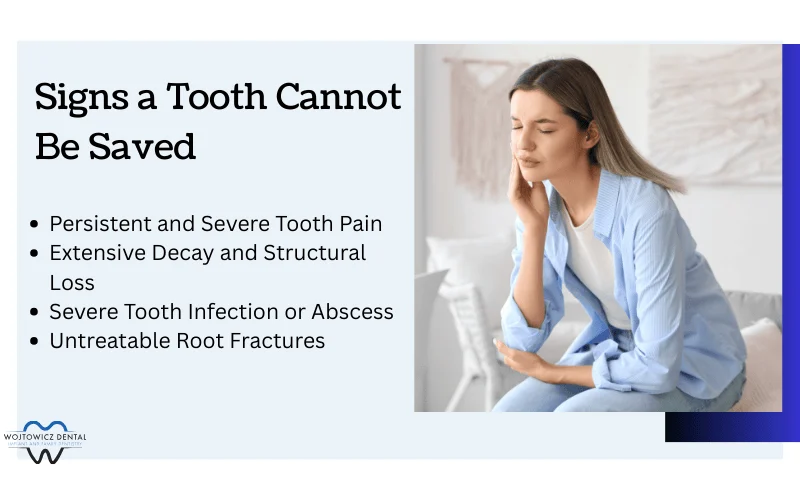
Tooth pain that never goes away or keeps getting worse often means the damage inside your tooth is too severe to fix.
You might feel throbbing pain that wakes you up at night or sharp discomfort when you bite down on food.
This type of persistent pain can indicate that the nerve has died or the infection has spread beyond what a root canal can treat. The pain might also shoot into your jaw, ear, or head.
When you experience pain that spreads or doesn’t respond to normal pain medication, it’s a strong signal that the tooth structure may be too compromised.
If the pain returns even after treatment attempts, your tooth might not have enough healthy tissue left to support a restoration. At this point, removing the tooth and considering an implant becomes the more reliable path forward.
Extensive Decay and Structural Loss
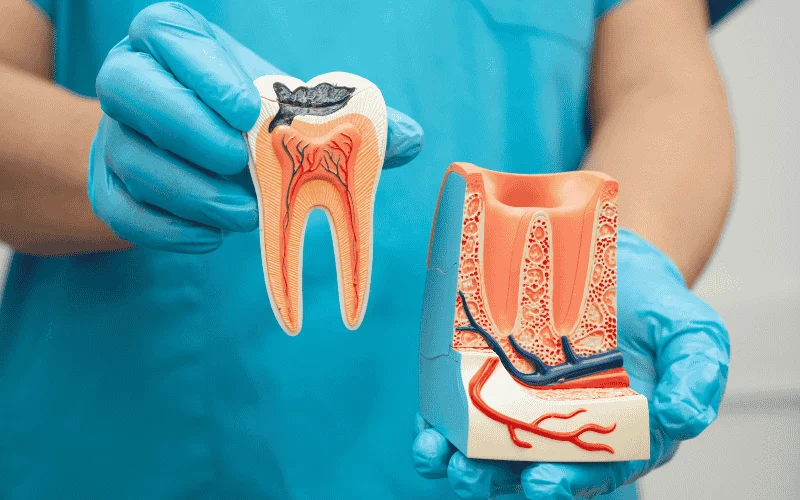
Advanced tooth decay eats away at your tooth until there’s not enough left to support a filling or crown.
You might notice dark brown or black spots, visible holes in the tooth, or pieces breaking off when you eat.
When decay reaches deep into the tooth and affects the roots, even aggressive treatment can’t rebuild what’s been destroyed.
Too little healthy tooth structure remaining means there’s nothing solid for a crown to attach to or for a root canal to reinforce.
Signs of extensive structural loss include:
- The tooth crumbles when you touch it
- Most of the visible tooth is gone above the gum line
- You can only chew on one side of your mouth
- Food constantly gets stuck in the damaged area
Your dentist will take X-rays to see how much tooth is left below the gums.
If the decay has destroyed the majority of the tooth, extraction followed by an implant gives you a stronger, longer-lasting solution than trying to save what little remains.
Severe Tooth Infection or Abscess
An abscess forms when bacteria infect the tooth’s pulp and spread to the surrounding bone. While many infections can be treated successfully with root canal therapy, some are too widespread to eliminate completely.
Warning signs of a severe abscess include swelling in your face or gums, a bump that looks like a pimple on your gum, pus draining from around the tooth, and fever.
You might also taste something foul in your mouth or notice persistent bad breath even after brushing.
When infection spreads into the jawbone or creates large pockets of pus, keeping the tooth puts your overall health at risk.
The infection can enter your bloodstream or damage the bone that would need to support a future implant. In these cases, removing the infected tooth stops the spread and protects the surrounding teeth and bone tissue.
Untreatable Root Fractures
A vertical root fracture runs lengthwise down the root of your tooth, often hidden below the gum line where you can’t see it.
Unlike cracks in the crown that can sometimes be repaired, root fractures cannot heal naturally and typically doom the tooth.
These fractures often happen from grinding your teeth, biting down on something hard, or as a complication from previous dental work.
You might feel pain when you bite down, notice the tooth feels loose, or experience sensitivity that doesn’t improve with treatment.
Root fractures let bacteria seep into the crack, causing infection that spreads into the bone. Even if a root canal removes the infected pulp, the crack itself remains as a pathway for new bacteria.
Your dentist can spot these fractures on X-rays or during an examination, though sometimes they’re difficult to detect until symptoms worsen.
When a vertical root fracture is confirmed, extraction becomes necessary because there’s no way to seal or repair the split in the root structure.
Contact Wojtowicz Dental for an expert opinion on whether your tooth needs an implant or root canal.
The Role of Gum Disease and Bone Loss in Tooth Prognosis
Gum disease directly affects whether your tooth can be saved through procedures like root canals or if you need extraction and an implant.
The amount of bone supporting your tooth and how stable it remains in your jaw are key factors dentists evaluate when determining if treatment can work.
Impacts of Periodontal Disease on Tooth Stability
Periodontal disease damages the soft tissue and bone that hold your teeth in place. When bacteria build up along your gum line, your body’s immune response triggers inflammation that breaks down these supporting structures.
Advanced periodontal disease creates a serious problem for tooth survival. The infection destroys the connective tissue attachment between your tooth and jawbone.
Without this connection, even a tooth with healthy roots and no decay may need extraction.
Your dentist looks at how much bone surrounds your tooth roots when deciding if saving it makes sense. Teeth with bone loss extending to or beyond the middle third of the root typically have a poor long-term outlook.
Some classification systems consider teeth hopeless when bone loss reaches 50% or more.
Tooth Mobility and Looseness
Loose teeth signal that periodontal disease has progressed to a dangerous level. You might notice your tooth moving when you touch it with your tongue or finger.
This mobility happens because the bone and ligaments supporting your tooth have deteriorated.
Common signs of problematic tooth mobility include:
- Teeth that shift position when you bite down
- Noticeable wiggling when you push on a tooth
- Changes in how your teeth fit together
- Difficulty chewing on affected teeth
Advanced gum disease makes teeth loose or unstable as the bone loss increases. A root canal cannot fix this problem because the issue lies in the supporting structures, not inside the tooth itself.
Your dentist may recommend extraction and an implant when mobility becomes severe enough that the tooth cannot function properly.
Bone Loss Around the Tooth
Bone loss matters because it determines whether your tooth can stay stable in your mouth long-term.
Dentists use X-rays to measure how much bone remains around your tooth roots. They look at both the height of bone and how it wraps around the tooth.
Receding gums often accompany bone loss and expose more of your tooth root. You might see longer-looking teeth or feel sensitivity to hot and cold temperatures.
These visible changes reflect the hidden bone destruction happening beneath your gums.
The location of bone loss affects your treatment options. Bone loss around the tooth apex (the tip of the root) traditionally meant extraction was necessary.
However, some teeth with bone loss beyond the apex can be saved with specialized periodontal treatment, though this requires significant expertise and commitment to maintenance care every three months.
Take the first step toward a healthier smile with a root canal or implant consultation today.
Failed and Inaccessible Root Canal Treatments
Sometimes root canal therapy doesn’t work the first time, or a tooth’s anatomy makes treatment impossible.
When infections return despite treatment or a tooth’s structure prevents proper access to infected areas, extraction and implant placement may become the only viable options.
When Root Canal Treatments Fail
Root canal failure can occur months or even years after your initial treatment. Bacteria can re-enter through small openings, missed canals, or leaks in the filling or crown.
You might notice persistent pain that gets worse instead of better. Swelling around the treated tooth is another red flag. A pimple-like bump on your gums near the tooth often signals that infection has returned.
Retreatment is sometimes possible, but multiple failed attempts typically mean your tooth can’t be saved. If you’ve already had one or two retreatments without success, extraction and an implant may be your best choice.
Your tooth structure weakens with each procedure, making it less likely to survive long-term even if the infection clears.
Unmanageable Tooth Structure or Roots

Some teeth have anatomy that makes root canal therapy extremely difficult or impossible. Molars often have multiple canals that curve in unexpected directions.
Hidden canals that dentists can’t locate or access leave bacteria trapped inside.
Severely curved roots prevent instruments from reaching infected areas. Your dentist can’t clean and seal what they can’t reach. Calcified canals that have narrowed over time create similar problems.
Complex root structures make complete disinfection unrealistic.
When your endodontist determines they can’t adequately clean all the canals, they’ll recommend extraction rather than attempting a procedure with a high failure rate.
Persistent Infections After Endodontic Therapy
Sometimes infections refuse to clear despite proper endodontic treatment. You’ve completed the procedure, followed all aftercare instructions, and the tooth still hurts. Swelling continues or returns weeks later.
Certain bacterial strains resist standard root canal disinfection methods. These stubborn infections destroy the bone around your tooth root. You might develop an abscess that drains through your gums.
When infection spreads to surrounding bone and tissue, saving the tooth puts your overall health at risk. Your dentist will take X-rays to check bone loss around the root.
Significant bone destruction means the tooth no longer has adequate support.
At this point, removing the infected tooth and placing an implant protects your health and gives you better long-term results than keeping a chronically infected tooth.
When Dental Implants Become the Best Solution
Dental implants offer a permanent tooth replacement option when saving your natural tooth is no longer possible.
Understanding who qualifies for implants and how they compare to other solutions helps you make the right choice for your situation.
Criteria for Dental Implant Candidacy
You need adequate jawbone density to support a dental implant. The implant post fuses with your bone through a process called osseointegration, which requires healthy bone structure.
If your jawbone has deteriorated from tooth loss, you may need bone grafting before getting an implant.
Your gums must be healthy and free from active periodontal disease. Gum infections can prevent proper healing and cause implant failure.
You also need to be in good overall health, as conditions like uncontrolled diabetes can affect healing.
You should be committed to good oral hygiene after getting your implant. Daily brushing and flossing keep your implant and surrounding tissues healthy.
Regular dental visits allow your dentist to monitor your implant and catch any problems early.
Advantages of Dental Implants Over Other Options
Dental implants look and feel like natural teeth because they’re custom-crafted to match your smile. Most people can’t tell which tooth is an implant.
Implants prevent jawbone loss by stimulating the bone like a natural tooth root would. Dental bridges and dentures sit on top of your gums without providing this stimulation.
Over time, missing teeth without implants can lead to bone deterioration and facial changes.
You don’t need to alter healthy teeth to place an implant. A dental bridge requires grinding down adjacent teeth to support the replacement tooth. Implants stand alone without affecting your other teeth.
Dental implants can last decades with proper care. Dental bridges typically last 10 to 15 years before needing replacement. Dentures require adjustments as your jawbone changes shape over time.
Dental Bridges and Dentures as Alternatives
A dental bridge uses your surrounding teeth as anchors to hold a replacement tooth in place. Your dentist places crowns on the teeth next to the gap and attaches an artificial tooth between them.
Bridges work well for replacing one or two missing teeth when the neighboring teeth are strong enough to support them.
Dentures replace multiple missing teeth with removable prosthetics. Full dentures replace all teeth in your upper or lower jaw. A removable partial denture fills gaps when you still have some natural teeth remaining.
Both dental bridges and dentures cost less upfront than dental implants. However, they need more frequent replacements and adjustments.
Dentures can slip while eating or speaking, and bridges put extra stress on the supporting teeth.
How Dentists Decide: Factors That Affect Tooth Savability
Dentists evaluate several key factors when determining if your tooth can be saved or needs extraction.
The amount of decay, how much healthy tooth remains, and your ability to maintain good oral hygiene all play a role in this decision.
Extent and Location of Decay or Damage
The depth and position of tooth decay significantly impact whether dentists can save or must extract a tooth. When decay only affects the enamel or outer dentin layers, your dentist can typically restore the tooth with a filling or crown.
However, when decay reaches deep into the root or extends below the gum line, saving the tooth becomes much harder.
Cracks and fractures matter too. A crack that stops above the bone level can often be fixed. But vertical root fractures that run the length of the tooth usually mean extraction is your only option.
Decay location also affects your treatment options.
Front teeth in the aesthetic zone are often worth extra effort to save. Back molars that are severely damaged and don’t serve as important anchors for other dental work may not be worth the investment to restore.
Remaining Tooth Structure and Support
The amount of healthy tooth structure left determines if restoration is possible. Your dentist needs enough solid dentin above the gum line to create what’s called a ferrule effect.
This means you need 1.5 to 2mm of parallel tooth walls extending above where a crown would sit.
Without adequate remaining tooth structure, a crown or other restoration won’t have proper support. The tooth would be at high risk of breaking again after treatment.
Bone support around the tooth roots also matters. Teeth with less than 30% bone support typically can’t be saved, especially if you can’t keep the area clean.
Periodontal health forms the foundation for any restored tooth, so your dentist will measure the bone levels and check for gum disease before recommending treatment.
Patient Oral Hygiene and Overall Health
Your daily oral hygiene habits directly affect whether a restored tooth will last long-term. If you don’t brush twice daily, floss regularly, and use mouthwash, bacteria will continue attacking the tooth.
Even the best root canal and crown can fail without proper home care.
Your overall health plays a role too. Conditions like diabetes can reduce healing capacity and increase infection risk after dental procedures.
Patients with poorly controlled diabetes have lower success rates with root canals and may be better candidates for extraction and implants.
Your dentist will also consider if you smoke, have a high-sugar diet, or grind your teeth at night. These factors increase the chance of treatment failure.
Being honest about your habits helps your dentist make the right recommendation for your situation.
Protecting Your Smile: How to Keep Your Natural Teeth
Taking care of your teeth every day and seeing your dentist regularly can help you avoid serious problems that lead to tooth loss. Simple habits and quick action when issues arise make a big difference in keeping your smile healthy.

Tips for Early Detection and Timely Treatment
Pay attention to warning signs that something might be wrong with your teeth. Tooth pain that lasts more than a day or two needs professional attention.
Sensitivity to hot or cold foods, swelling in your gums, or bleeding when you brush can signal early problems.
Check your teeth in the mirror once a week. Look for dark spots, chips, or changes in color. These could mean cavities are forming. If you notice any of these signs, preventing tooth loss starts with early detection and prompt treatment.
Don’t wait for pain to become severe. Small cavities can be fixed with simple fillings. But when you delay treatment, decay spreads deeper into the tooth.
This can turn a minor problem into one that needs a root canal or extraction.
Importance of Routine Dental Care
Regular dental visits every six months let your dentist catch problems before they get serious. Professional cleanings remove hardened plaque and tartar that your toothbrush can’t reach.
Your dentist can spot early signs of gum disease, cavities, or cracks that you might miss. X-rays reveal problems hiding between teeth or below the gum line.
These checkups cost less than major treatments like implants or bridges.
Basic oral hygiene habits include:
- Brushing twice daily for two minutes
- Flossing once per day to clean between teeth
- Using fluoride toothpaste to strengthen enamel
- Rinsing with antibacterial mouthwash
Long-Term Strategies for Preventing Future Tooth Loss
Protect your teeth from damage by wearing a mouthguard if you play sports or grind your teeth at night. Never use your teeth to open packages or bite hard objects like ice or pens.
Your diet affects your tooth health. Foods rich in calcium and vitamin D strengthen teeth and bones. Limit sugary snacks and acidic drinks that wear down enamel. Drink water after meals to wash away food particles.
If you smoke, quitting helps protect your gums and teeth. Smoking increases your risk of gum disease, which is a leading cause of tooth loss in adults. Managing health conditions like diabetes also helps keep your mouth healthy since these diseases can affect your gums and teeth.
Frequently Asked Questions
Many people have questions about when extraction becomes necessary and how implants compare to root canals in terms of pain, cost, and long-term results. Understanding these differences helps you make informed decisions about your dental care.
What are the signs indicating a tooth might be beyond saving and require an implant?
Severe tooth decay that extends below the gumline often means a tooth cannot be saved. When decay destroys too much of the tooth structure, there isn’t enough healthy material left to support a filling or crown.
A tooth that has undergone multiple treatments like fillings, crowns, or root canals but continues to break or become infected may no longer be a good candidate for repair.
Repeated problems suggest the tooth has lost its ability to heal properly.
Fractures below the gumline or vertical cracks through the tooth root typically cannot be fixed. These types of breaks allow bacteria to enter and make it impossible to seal the tooth effectively.
Advanced gum disease that has caused severe bone loss around the tooth is another sign. When the supporting bone is gone, the tooth becomes loose and unstable even with treatment.
How does the pain level compare between getting a root canal and a dental implant?
Both procedures are performed under local anesthesia, so you shouldn’t feel pain during the treatment itself. Modern numbing techniques make both options comfortable while you’re in the dental chair.
Root canal recovery typically involves mild to moderate soreness for a few days. You can usually manage this discomfort with over-the-counter pain medication.
Dental implant placement involves minor surgery, which may cause more swelling and discomfort during the first week. The pain is usually manageable with prescribed or over-the-counter medications.
Most patients report that neither procedure causes severe pain when proper aftercare instructions are followed. Your individual pain level depends on factors like the complexity of your case and how well you heal.
Can you explain the cost difference between a tooth implant and a root canal treatment?
A root canal with a crown typically costs between $1,500 and $3,500 depending on which tooth needs treatment. Front teeth are usually less expensive than molars.
A single dental implant including the post, abutment, and crown generally ranges from $3,000 to $6,000. The higher cost reflects the surgical placement and materials used.
However, implants often last longer than root canals. A well-maintained implant can last 25 years or more, while a root canal treated tooth may need additional work over time.
Insurance coverage varies significantly between the two options. Many dental plans cover a portion of root canal therapy but may provide limited or no coverage for implants.
What are the holistic considerations when choosing between a dental implant and a root canal?
Some people prefer to keep their natural tooth whenever possible because it maintains the original tooth structure and nerve connections. Your natural tooth can still sense pressure and temperature after a root canal.
Others worry about keeping an infected or compromised tooth in their body even after treatment. They feel more comfortable removing the source of infection completely.
Implants don’t contain the natural materials and bacteria that can remain in root canal treated teeth. This appeals to people who want to eliminate any potential for future infection in that spot.
Your body’s ability to heal and integrate the implant is an important factor. Conditions like uncontrolled diabetes or smoking can affect implant success rates.
Could you outline the pros and cons of root canal therapy versus dental implants?
Root canals preserve your natural tooth and typically require less treatment time upfront. The procedure is usually completed in one or two visits, and you keep your original tooth structure.
However, root canal treated teeth can become brittle over time and may fracture. You might need additional treatments years later if problems develop.
Dental implants provide a permanent replacement that functions like a natural tooth. They don’t decay and typically have high long-term success rates when properly maintained.
The downside is that implants require surgery and a healing period of several months. You’ll need temporary solutions while the implant integrates with your jawbone.
Implants also help prevent bone loss in your jaw that naturally occurs after tooth extraction. This helps maintain your facial structure over time.
How does the cost effectiveness of root canals and crowns compare to dental implants for a cracked tooth?
A cracked tooth that needs a root canal and crown costs less initially than an implant. You’ll spend roughly half as much upfront for the root canal option.
But if the crack extends below the gumline or the tooth fractures again later, you may eventually need extraction and an implant anyway. This means paying for both procedures over time.
For teeth with severe cracks, extraction and immediate implant placement may be more cost effective in the long run. You avoid spending money on a root canal that might fail within a few years.
The location and severity of the crack plays a major role in this decision. Your dentist can assess whether the crack makes the tooth a poor candidate for long-term survival.