Missing a tooth and wondering if you can skip the long wait and get everything fixed in one visit? Same-day dental implants make it possible to walk into the dentist’s office and leave with a complete smile the same day. But this fast option isn’t right for everyone.
You’re likely a good same day dental implant candidate if you’re in good overall health, have healthy gums, sufficient jawbone density, and don’t smoke.
Ideal candidates for same-day procedures also need to be free from active gum disease and have no uncontrolled health conditions that could affect healing.
Your dentist will need to check your mouth and medical history to know for sure if this dental implant will work for you.
The good news is that many people do qualify for this treatment. If you’re tired of hiding your smile or dealing with the hassle of temporary solutions, learning what makes someone eligible can help you figure out if same-day implants are right for your needs.
Key Takeaways
- Same-day dental implants let you get an implant and a temporary crown in one appointment instead of waiting months
- Good candidates need healthy gums, enough jawbone, no smoking habits, and overall good health without conditions that slow healing
- Not everyone qualifies for same-day treatment, so a full exam with your dentist is needed to determine if you’re eligible
What Are Same-Day Dental Implants?
Same-day dental implants let you walk out of the dentist’s office with a new tooth in just one visit. Instead of waiting months between steps like you would with traditional implants, immediate load implants combine tooth extraction, implant placement, and temporary crown attachment all in a single appointment.
Immediate Placement Versus Traditional Implants
Traditional dental implants follow a multi-step process spread over several months. First, your dentist extracts your damaged tooth and waits for the extraction site to heal.
Then they place the implant and wait again for it to fuse with your jawbone. Finally, they attach your permanent crown.
Immediate implant placement takes a different approach. Your dentist removes your tooth and places the implant on the same visit. This means you skip the waiting period between extraction and implant surgery.
The key difference is timing. With traditional implants, you might need to wear a temporary denture or go without a tooth for months. Same-day procedures give you a functional tooth right away, though it’s not your final restoration yet.
Temporary Crowns and Immediate Restoration
After placing your implant, your dentist attaches a temporary crown to restore your smile immediately. This provisional restoration looks like a natural tooth and fills the gap in your mouth.
Your temporary crown serves several purposes. It protects the implant site while healing occurs. It also lets you eat and speak normally, though you’ll need to be careful with hard or sticky foods.
The teeth in a day approach means you never leave the office with a missing tooth.
For patients replacing multiple teeth, treatments like all-on-X can restore an entire arch with just four strategically placed implants and a full set of temporary teeth attached the same day.
Immediate Loading and Osseointegration
Immediate loading means putting weight and pressure on your new implant right away with the temporary crown. This is the biggest difference between same-day and traditional implant dentistry.
Your implant still needs to go through osseointegration, where the titanium post bonds with your jawbone. This process takes several months, even with same-day implants. The difference is that you have a temporary tooth in place while your bone heals around the implant.
Success depends on your bone density and overall health. Your dentist needs to ensure your jawbone is strong enough to support immediate loading without the implant shifting during healing.
Once osseointegration is complete, they’ll replace your temporary crown with a permanent one to fully restore your smile.
Essential Candidacy Criteria for Same-Day Implants
Your jawbone density, gum health, overall medical condition, and ability to achieve initial implant stability all work together to determine if you qualify for same-day implants.
Each of these factors plays a specific role in ensuring successful osseointegration and long-term implant success.
Jawbone Density and Quality Requirements
Your jawbone needs to be strong and dense enough to hold an implant securely from day one. During the dental implant process, your dentist uses advanced imaging like CBCT scans to measure your bone density and volume.
If your bone is too thin or weak, it won’t support the immediate placement of a temporary prosthesis. This is why patients with healthy, dense jawbone are ideal candidates for same-day procedures.
Bone grafting may be needed if you don’t have sufficient bone quality. However, this disqualifies you from same-day treatment since grafts require months to heal before implant placement.
Your dentist evaluates whether your natural bone can support the implant without additional augmentation.
Gum Health and Oral Hygiene
Your gums must be healthy and free from infection to be a candidate for same-day implants. Active periodontal disease or gum disease creates an unstable environment that prevents proper healing and osseointegration.
Your dentist will check for signs of gingivitis, measure gum pocket depths, and assess overall tissue health. Deep pockets or bleeding gums indicate infection that needs treatment first.
Good oral hygiene habits are equally important. You need to demonstrate that you brush and floss regularly and are committed to maintaining cleanliness around your new implant. Poor oral hygiene increases your risk of implant failure and infection at the surgical site.
If you have untreated gum disease, you’ll need to complete periodontal care before becoming eligible for immediate implants.
Overall Medical and Oral Health
Your general health directly impacts your implant candidacy. Certain medical conditions can slow healing or increase complications during osseointegration.
Conditions that may affect eligibility:
- Uncontrolled diabetes (affects blood flow and healing)
- Severe osteoporosis (weakens bone structure)
- Immune disorders (compromise infection resistance)
- History of head and neck radiation
- Use of bisphosphonate medications
Smoking is another major factor. Nicotine reduces blood flow to your gums and jawbone, which can prevent proper healing. Your dentist may require you to quit smoking before and after the procedure.
You’ll need to provide a complete medical history including all medications and previous surgeries. This helps your dental team predict how well you’ll heal and whether same-day placement is safe for you.
Initial Implant Stability
Your implant must achieve strong initial stability during placement to support a temporary prosthesis immediately. This stability depends on your bone quality and the precision of the surgical technique.
Your dentist measures implant stability using specific torque values during insertion. If the implant doesn’t reach the required stability threshold, immediate loading isn’t possible.
Computer-guided technology and cone-beam computed tomography help ensure precise placement in the densest areas of bone.
The temporary crown attached on the same day is carefully designed to minimize chewing pressure. This protects the implant while osseointegration occurs over the following months.
Without adequate initial stability, the implant could move or fail before it fully fuses with your bone.
Who Typically Makes a Good Candidate?
Same-day dental implants work best for patients who have adequate bone density, healthy gums, and no active infections at the implant site. The ability to receive immediate restoration depends on your specific situation and oral health conditions.

Single Tooth and Multiple Teeth Cases
If you’re missing one tooth or several teeth, you might be an excellent candidate for same-day dental implants. Your dentist will check that you have enough bone to support the implant and that your gums are free from disease.
Single tooth replacement works well when the extraction site is healthy and the surrounding bone is strong. You can often get temporary teeth on the same day as your implant placement. This means you won’t need to go without a tooth while waiting for healing.
For multiple missing teeth, the process is similar but requires more planning. Your dentist evaluates each site individually to confirm that immediate placement makes sense.
Not all missing teeth need separate implants. Sometimes two or three implants can support a bridge that replaces several teeth at once.
The key factor is bone quality. If you lost your teeth recently, your bone is usually in better condition than if you’ve been missing teeth for years.
Recent Extractions and Immediate Placement
One-day implant procedures often work best right after a tooth extraction. When your dentist removes a damaged tooth, they can place an implant into the same socket during that visit.
This approach saves you time and reduces the total number of appointments you need. The bone socket from your natural tooth provides a natural space for the implant.
Your dentist may attach a temporary crown or bridge on the same day so you can leave with teeth in one visit.
However, immediate placement after extraction isn’t always possible. If you have an infection, severe bone loss, or insufficient bone width at the extraction site, you might need to wait for healing first. Some patients require bone grafting before they can receive implants.
Your overall health matters too. Good candidates for dental implants generally don’t smoke heavily and have conditions like diabetes under control. These factors affect how quickly your body can stabilize a new implant.
Full-Arch and All-on-4 Solutions
If you’re missing all your teeth on the upper or lower jaw, All-on-4 treatment might be right for you. This technique uses four strategically placed implants to support a full arch of replacement teeth.
The All-on-4 method is designed specifically for dental implants in one day. Your dentist places four implants at specific angles to maximize contact with existing bone. A temporary full arch of teeth attaches to these implants immediately after placement.
This approach works even if you have some bone loss. The angled placement of the back implants avoids areas where bone tends to deteriorate first. You don’t necessarily need bone grafting, which shortens your treatment time.
Full-arch solutions require healthy gums and adequate bone density in key areas of your jaw. Your dentist uses 3D imaging to map your bone structure and plan exact implant positions before surgery.
This planning ensures your new teeth will have proper support from day one.
Situations That May Affect Candidacy
Several health conditions and lifestyle factors can impact whether you qualify for same-day dental implants. These issues don’t always disqualify you completely, but they may require additional treatment or a different approach.

Bone Loss and Need for Bone Grafting
Your jawbone needs enough density and volume to support a dental implant. If you’ve had missing teeth for a while, your jawbone may have started to shrink or deteriorate. This natural process happens because the bone no longer receives stimulation from tooth roots.
Bone grafting can rebuild your jawbone to create a solid foundation for implants. This procedure adds bone material to areas where volume is lacking. A sinus lift may be necessary if you need upper back tooth implants and your sinus cavity sits too close to your jaw.
These additional procedures typically mean you won’t qualify for same-day implants right away. You’ll need to wait several months for the grafted bone to integrate with your natural bone before implant placement.
Your dental implant specialist will use 3D imaging to measure your bone density and determine if grafting is required.
Active Gum Disease or Infections
Gum disease must be treated before you can receive same-day dental implants. Active periodontal disease creates an unstable environment that increases the risk of implant failure.
Bacteria and inflammation in your gums can prevent proper healing and bonding between the implant and bone.
Your dentist will need to eliminate any infections first. This may involve deep cleaning procedures, antibiotics, or other periodontal treatments. Once your gums are healthy and infection-free, you can move forward with implant placement.
Untreated gum disease is one of the main reasons patients need to get issues under control before qualifying for same-day procedures.
Chronic Health Issues and Smoking
Certain medical conditions or medications may affect your body’s ability to heal after implant surgery. Uncontrolled diabetes slows healing and increases infection risk. You’ll need to manage your blood sugar levels before proceeding with implants.
Smoking significantly reduces success rates for dental implants. It restricts blood flow to your gums and slows tissue healing. Many dentists require you to quit smoking several weeks before and after the procedure.
Other conditions that may affect candidacy include:
- Autoimmune disorders that impact healing
- Blood clotting disorders or blood-thinning medications
- Radiation therapy to the head or neck area
- Severe teeth grinding (bruxism) that puts excess pressure on implants
These issues don’t always eliminate you as a candidate. Your dentist will assess potential risks like nerve damage and work with you to create a safe treatment plan.
The Same-Day Implant Procedure Step-by-Step
The dental implant procedure involves three main phases: comprehensive evaluation with advanced imaging, precise implant placement with immediate provisional restoration, and careful post-operative management to support healing.
Initial Consultation and Imaging
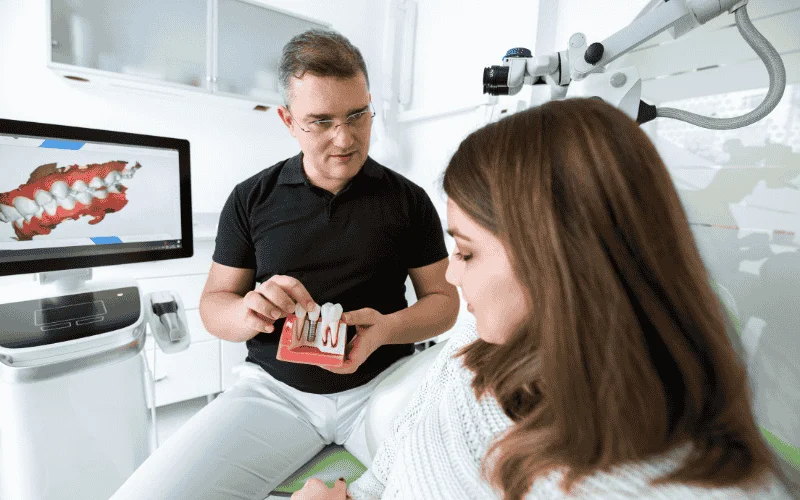
Your journey starts with a thorough evaluation by a dental implant specialist. During this visit, your dentist will examine your teeth, gums, and overall oral health.
Advanced imaging plays a critical role in planning your treatment. Your dentist will use cone-beam computed tomography (CBCT) scans to create detailed three-dimensional images of your jawbone.
These scans show bone density, nerve locations, and the best position for your implant.
Digital scans of your mouth help create a surgical guide for precise implant placement. Your dentist will also review your medical history, including any medications you take and conditions like diabetes or osteoporosis.
This information helps them determine if you’re ready for the procedure or need any preparatory treatments.
You’ll discuss the treatment plan, timeline, and costs during this visit. Your dentist will explain what to expect and answer your questions about the process.
Implant Placement and Temporary Restoration
On the day of your procedure, you’ll receive local anesthesia to keep you comfortable. If needed, your dentist will first extract any damaged teeth from the treatment site.
Using the custom surgical guide, your dentist will drill into your jawbone and insert the titanium implant. The implant placement process typically takes just a few hours from start to finish.
After securing the implant, your dentist attaches a temporary abutment followed by a provisional restoration. This temporary crown is carefully designed to avoid putting too much pressure on the new implant while it heals.
The immediate restoration means you leave with a complete smile the same day. Your temporary tooth looks natural and functions well, though you’ll need to follow specific care instructions.
The entire dental implant procedure uses computer-guided technology to ensure accuracy and reduce complications.
Post-Procedure Care and Recovery Guidelines
Following your procedure, you’ll need to stick to a soft-food diet for at least the first week. Avoid hard, crunchy, or chewy foods that could stress your new implant.
Maintain excellent oral hygiene by gently brushing and using an antimicrobial mouthwash as directed. Avoid touching the implant site with your tongue or fingers. Some swelling and minor discomfort are normal and can be managed with prescribed medications.
Important recovery steps:
- Rest for the first 24-48 hours and avoid strenuous activities
- Apply ice packs to reduce swelling
- Don’t smoke or drink alcohol during healing
- Take all prescribed antibiotics to prevent infection
You’ll have follow-up appointments to monitor how your implant is integrating with your bone. Your dentist will check the healing progress and make any needed adjustments to your provisional restoration.
Contact your dental office immediately if you experience severe pain, excessive bleeding, or signs of infection.
Important Considerations and Limitations
Same-day implants require careful attention to healing protocols and ongoing care. Your commitment to following post-procedure guidelines and maintaining excellent oral hygiene directly affects whether the implant succeeds or fails.
Risks and Potential Complications
Like any surgical procedure, the same-day implant procedure carries specific risks you should understand before moving forward. Implant failure can happen if the post doesn’t achieve proper stability during placement or if osseointegration doesn’t occur as expected.
The process of osseointegration, where your jawbone fuses with the titanium implant, typically takes several months and can be disrupted by excessive force on the temporary restoration.
Infection at the surgical site poses another concern, especially if you have active periodontal disease or poor oral hygiene habits. Nerve damage, though rare, can occur during placement and may cause temporary or permanent numbness in your lip, chin, or tongue.
Sinus complications may develop if an upper implant penetrates the sinus cavity.
Heavy smokers face higher failure rates because smoking reduces blood flow and slows healing. If you have uncontrolled diabetes, your body’s ability to heal properly becomes compromised, increasing complication risks.
Lifestyle Commitments for Success
Your daily habits play a major role in determining implant candidacy and long-term success. You’ll need to follow a modified diet for several weeks after the dental implant process, sticking to soft foods and avoiding hard or crunchy items that could disturb the implant.
If you smoke, you’ll need to quit or significantly reduce tobacco use before and after the procedure. Smoking restricts blood flow to your gums and bone, which interferes with healing and osseointegration.
You must commit to excellent oral hygiene practices, including gentle brushing around the implant site and using prescribed mouth rinses. Skipping these steps increases your risk of infection and implant failure.
If you grind your teeth at night, you’ll likely need to wear a protective night guard to prevent excessive pressure on the temporary restoration.
Long-Term Maintenance and Follow-Up

Regular check-ups with your dentist are essential to monitor healing and catch problems early. You’ll typically have follow-up appointments at specific intervals during the first year to assess how well osseointegration is progressing.
Daily oral hygiene becomes even more important once you have implants. You’ll need to brush twice daily, floss carefully around the implant, and possibly use special tools like interdental brushes or water flossers.
Poor oral hygiene can lead to peri-implantitis, an inflammatory condition similar to periodontal disease that affects the tissues around implants.
Professional dental cleaning and exams every three to six months help prevent bacterial buildup that could threaten your implant. Your dentist will also check the stability of your restoration and examine the surrounding gum tissue for signs of inflammation or bone loss.
Frequently Asked Questions
Many people wonder about specific requirements and conditions that affect their ability to get same-day implants. Success depends on several health factors, bone quality, and lifestyle choices that influence healing.
What factors determine if someone is suitable for same-day dental implants?
Your suitability for same-day implants depends on bone quality and quantity at the extraction site. The dentist needs to confirm you have adequate bone density to support immediate placement.
The condition of your tooth before extraction plays a big role. Teeth with minimal decay that can be removed without damaging surrounding bone work best for immediate implant placement.
Your dentist will also check the distance to important structures like nerves and sinuses. Upper premolars often provide ideal conditions because they have excellent bone quality and are far from sinus cavities.
Root canal treated teeth often make poor candidates because they can be brittle and difficult to remove. Severely decayed or fractured teeth may require too much bone removal during extraction.
Are there any age restrictions for receiving immediate dental implants?
There are no strict upper age limits for same-day dental implants. Your overall health and bone quality matter more than your age.
Young patients need to wait until their jaw has finished growing. This typically happens around age 18 for women and age 21 for men.
Older adults can be excellent candidates as long as they have good bone density and overall health. Your dentist will evaluate your specific situation regardless of age.
Could existing dental health conditions affect my eligibility for same-day dental implants?
Active gum disease makes you a poor candidate for immediate implants. You need healthy gums for successful healing and integration.
Chronic infections around the tooth requiring extraction can compromise bone quality. These cases often need a healing period of 5-6 months before implant placement.
Uncontrolled diabetes can affect the healing process and increase complication risks. Your overall health status needs to be stable before proceeding.
Immune disorders may slow healing and affect implant success. Your dentist will review your complete medical history before recommending same-day placement.
How can I tell if my jawbone is strong enough for immediate dental implant procedures?
You cannot determine bone strength on your own. Your dentist needs to use 3D imaging called CBCT scans to measure bone dimensions accurately.
These scans show bone thickness, density, and the location of nerves and sinuses. The dentist needs to see at least 1-2mm of bone around where the implant will go.
During extraction, your surgeon assesses the septal bone between tooth roots. If bone quality looks poor after removal, they may switch to traditional placement with bone grafting.
Your dentist will discuss imaging results with you before the procedure. They can show you exactly what your bone looks like and explain if immediate placement will work.
What lifestyle factors might influence the success of same-day dental implants?
Smoking significantly reduces implant success rates. Tobacco use slows healing and increases infection risk.
Good oral hygiene is essential for same-day implant success. You need to keep the area clean during the integration period.
Your diet during healing affects bone integration. Eating nutritious foods supports the body’s ability to heal around the implant.
Grinding or clenching your teeth can damage new implants. Your dentist may recommend a night guard to protect your investment.
Is there a recovery time advantage with same-day dental implants compared to traditional methods?
Same-day implants can cut months off your total treatment time. You skip the 4-6 month waiting period between extraction and implant placement.
The traditional implant timeline requires healing after extraction, then another surgery for implant placement. Immediate placement combines these into one appointment.
Both methods still need 3-4 months for the implant to integrate with your jawbone. This healing period happens either way before you get your final crown.
The number of dental appointments decreases with same-day placement. You have one surgery instead of two separate procedures.