Losing all your teeth changes how you eat, speak, and feel about your smile. You want a solution that feels stable and lasts, not something that slows you down.
When you compare All-on-X vs traditional implants, you need clear facts so you can choose with confidence.
If you have full mouth tooth loss, All-on-X is often better because it replaces a full arch with fewer implants and a faster treatment time, while traditional implants work best when you are missing only a few teeth.
Both options use implants placed in your jawbone, but they differ in cost, healing time, and how many implants you need.
As you explore your options, you should understand how each treatment works, who qualifies, and what daily life looks like after the procedure. The right choice depends on your bone health, budget, and long-term goals.
Key Takeaways
- All-on-X restores a full arch with fewer implants and often a shorter timeline.
- Traditional implants replace teeth one by one and may take longer for full mouth cases.
- Your bone health, budget, and lifestyle help determine the best option.
Understanding All-on-X and Traditional Implants
When you face full mouth tooth loss, you have two main implant options. All-on-X replaces an entire arch with fewer implants, while traditional implants replace teeth one at a time.
What Is the All-on-X Technique?
All-on-X is a type of full-arch restoration that uses 4 to 6 dental implants to support a complete set of upper or lower teeth. You may hear it called All-on-4 or All-on-6, depending on how many implants your dentist places.
Instead of placing an implant for every missing tooth, your provider anchors a full bridge to a small number of implants. They often angle the back implants to use the strongest areas of your jawbone.
This method works well if you have extensive tooth loss or failing teeth in one arch. In many cases, you receive temporary teeth the same day as surgery.
Key features of all-on-x implants:
- 4–6 implants per arch
- Fixed, non-removable bridge
- Designed for full arch replacement
- May reduce the need for bone grafting
You leave the office with stable teeth, not a removable denture.
Overview of Traditional Dental Implants
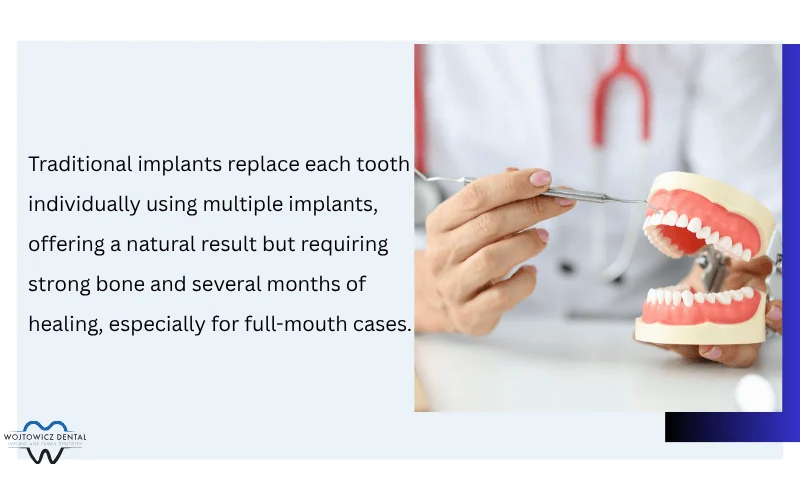
Traditional implants replace each missing tooth individually. Your dentist places a titanium post in the jawbone where the natural root once sat. After healing, they attach a crown on top.
If you miss many teeth, you may need many individual dental implants. For full mouth cases, this can mean 8 or more implants per arch.
This process often takes several months. The bone must fuse to each implant before your dentist places the final teeth.
Traditional implants work best when you:
- Have strong jawbone density
- Are missing a few teeth, not a whole arch
- Want to keep healthy natural teeth nearby
You gain a very natural look and feel, but treatment usually takes longer than all-on-x.
When Is Each Approach Recommended?
Your dentist will review your scans and health history during a detailed consultation. They will check bone levels, gum health, and how many teeth you have left.
All-on-X often fits you best if you have:
- Full mouth or near full arch tooth loss
- Loose dentures
- Severe damage or decay across many teeth
Traditional implants are usually recommended if you are missing only a few teeth. They also suit you if the rest of your mouth is healthy and stable.
Both options fall under implant dentistry. The right choice depends on your bone, your goals, and how much arch replacement you truly need.
Treatment Process and Timeline
Your treatment plan depends on how many teeth you need to replace and the health of your jawbone. The number of implant placements, healing time, and whether you receive teeth the same day can change your overall timeline.
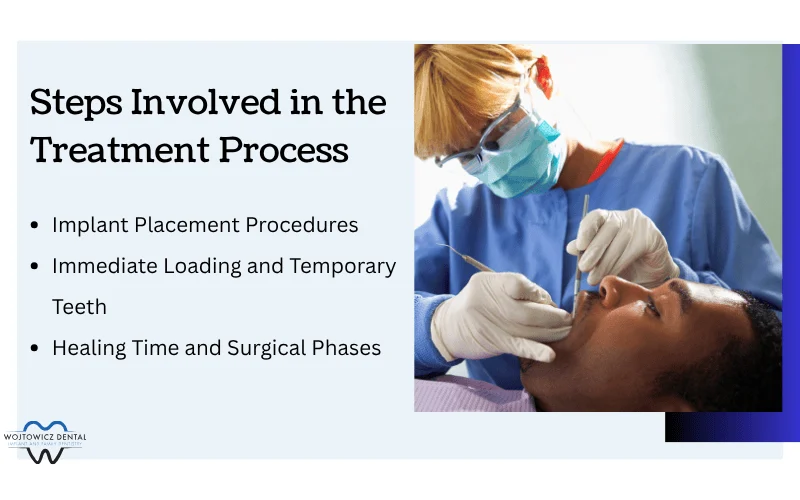
Implant Placement Procedures
Both options start with a full exam, digital scans, and 3D imaging. Your dentist uses this data to plan exact implant placement and avoid nerves and sinuses.
With traditional implants, your surgeon places one implant for each missing tooth. If you need a full arch, this can mean six to ten implants per jaw. You may also need bone grafting if your jaw lacks enough bone.
All-on-X uses four to six implants to support a full arch. The surgeon places them at angles to use stronger areas of bone. This method often reduces the need for grafting and lowers the number of surgical sites.
Implant surgery usually takes a few hours per arch. Most patients go home the same day.
Immediate Loading and Temporary Teeth
Immediate loading means your dentist attaches a temporary prosthesis right after implant surgery. Many All-on-X patients leave with fixed teeth the same day. This approach is often called teeth in a day.
The temporary set looks natural and lets you eat soft foods while you heal. It stays in place while your implants bond with the bone.
Traditional implants often follow a slower path. If you replace teeth one by one, your dentist may wait for healing before placing crowns. In full-arch cases, you might wear a removable denture during healing.
Healing Time and Surgical Phases
Healing centers on osseointegration, the process where your bone fuses to the implant surface. This step makes your implants stable and long lasting.
Osseointegration usually takes three to six months. During this time, you follow a soft diet and attend checkups so your dentist can monitor progress.
Traditional full-mouth treatment may involve multiple surgical phases. You might have tooth extractions, bone grafts, implant placement, and later a second procedure to uncover the implants before the final restoration.
All-on-X often combines steps into fewer surgical phases. After healing, your dentist replaces the temporary teeth with a custom final restoration made for strength and fit.
Bone Health, Candidacy, and Jawbone Considerations
Your jawbone plays a direct role in whether you qualify for All-on-X or traditional implants. Bone loss, bone density, and the shape of your jawbone all affect how stable your implants will be and whether you need extra procedures like bone grafting.
Bone Loss and Preservation
When you lose teeth, your jawbone starts to shrink. This happens because the bone no longer receives pressure from chewing. Over time, bone loss can change your facial shape and make future treatment harder.
Traditional implants replace each missing tooth root. This helps with bone preservation because each implant stimulates the jawbone in that spot. If you replace only a few teeth, this approach supports the surrounding bone well.
All-on-X also supports bone health. The implants hold a full arch of teeth in place and help stimulate the jawbone.
Many people with advanced bone loss choose All-on-X because it uses angled implants to anchor into stronger areas of bone, which can reduce the need for grafting in some cases.
Bone Density and Grafting Needs
Bone density refers to how strong and thick your jawbone is. Implants need solid bone to stay stable.
If your jawbone density is low, your dentist may suggest a bone graft. A bone graft adds volume to thin areas so the implant has enough support. Traditional implants often require grafting when you replace many teeth, especially in the back of the jaw.
All-on-X may lower the need for bone grafting because it uses fewer implants. The dentist can angle the back implants to reach denser bone. This approach works well if you want to avoid multiple graft procedures and long healing times.
Jawbone Structure and Suitability
Your jawbone structure includes its height, width, and overall shape. These details decide where implants can safely go. A full exam with 3D scans helps your dentist measure your jawbone density and map out safe implant positions.
Traditional implants work best if you have enough bone in each missing tooth area. If your jawbone has uneven bone loss, you may need several grafts before placing multiple implants.
All-on-X adapts more easily to different jaw shapes. The “X” means your dentist can use a variable number of implants based on your bone structure.
If your jawbone has moderate loss but still has dense areas in the front or along the sides, All-on-X may offer a stable option without rebuilding the entire ridge.
Outcomes, Longevity, and Durability
You want teeth that look natural, feel stable, and last many years. The quality of the prosthetic teeth, the number of implants, and how the bite spreads force all shape long‑term results.

Prosthetic Teeth and Restoration Quality
Your final result depends on the materials and design of the prosthetic teeth. In an All‑on‑X case, a fixed bridge attaches to four to six implants and replaces the entire arch at once. Labs often use acrylic over a titanium bar or solid zirconia for strength and fit.
Acrylic teeth cost less but wear down faster. Zirconia resists chipping and staining better, and it often keeps its shape longer.
Traditional implants use individual crowns placed on separate implant posts. Each crown stands alone, which allows detailed shaping and color matching. If one crown chips or cracks, your dentist can repair or replace just that tooth instead of the whole bridge.
Fit also matters. A well-made full-mouth restoration should sit tight against the implants, support your lips, and keep your bite even. Poor fit leads to loose screws, sore gums, and faster wear.
Durability and Long-Term Success
Both systems show high implant survival over 10 years when you maintain good hygiene and attend regular visits.
The titanium implant posts rarely fail when they bond well with bone. Most long-term issues involve the prosthetic layer, not the implant itself.
With All‑on‑X, you may need screw tightening or replacement of worn acrylic teeth after 8 to 12 years. With traditional implants, each crown can last many years, but you have more parts that may need small repairs over time.
Grinding, smoking, and poor cleaning reduce durability. A nightguard and steady checkups protect your investment.
Comparing Full-Arch Replacement Results
A full-arch replacement with All‑on‑X spreads chewing force across fewer implants that support one solid bridge. This design often works well for patients who want fewer surgeries and faster treatment.
Traditional implants replace each tooth one by one. That approach can offer more precise bite control, especially if you still have some healthy natural teeth.
In daily use, both options can restore strong chewing and clear speech. The main difference lies in repair style and structure.
- All‑on‑X: one connected fixed bridge, fewer implants, shared load
- Traditional implants: multiple individual crowns, more implants, isolated repairs
Your choice affects how your full-mouth restoration handles force, how repairs happen, and how long your prosthetic teeth keep their shape.
Cost, Maintenance, and Daily Life
You need clear numbers and daily expectations before you choose a treatment. Cost, oral hygiene, and how your teeth feel each day will shape your long-term oral health and comfort.
Treatment Cost Comparison
All-on-X usually costs more upfront than replacing teeth one by one, but the total depends on how many implants you need.
A full arch with All-on-X often ranges from $20,000 to $50,000 per arch, depending on materials and surgical needs. The price often includes surgery, temporary teeth, and your final prosthesis.
Traditional implants often cost under $3,000 per implant, but you may need 8–12 implants per arch. That can raise the total cost beyond an All-on-X case if you replace many teeth.
You also need to factor in bone grafts, extractions, sedation, and follow-up visits. Insurance may cover part of the treatment, but coverage varies. Many offices offer payment plans to spread out the cost.
Oral Hygiene and Maintenance Needs
You must commit to daily oral hygiene with both options.
With All-on-X, your teeth stay fixed in place. You brush twice a day and use floss threaders, water flossers, or special brushes to clean under the bridge. You cannot remove the prosthesis at home, so regular dental cleanings and exams are very important.
Traditional implants require the same daily brushing and flossing. Each implant crown sits separately, so you clean between them like natural teeth. If you miss spots, plaque can build up and affect your gums and bone.
Unlike removable dentures, neither option comes out at night. That means you must keep your mouth clean every day to protect your long-term oral health.
Impact on Lifestyle and Oral Health
Both options improve chewing, speech, and comfort compared to removable dentures. You can eat most foods again, but you still need to avoid using your teeth to open packages or chew ice.
All-on-X uses fewer implants to support a full arch, which makes surgery less extensive in some cases. However, it concentrates chewing force on fewer implants. Careful planning helps spread that force across the jaw.
Traditional implants spread force across more implants when you replace each tooth. That may reduce stress on any single implant, especially if you grind your teeth.
Your daily life changes in simple but important ways. You no longer remove your teeth at night, and you speak and smile without worrying about slipping. Strong oral hygiene and routine dental visits protect your investment and support stable oral health for years.
Choosing the Right Implant Solution for You
You need clear clinical advice and a plan that fits your health, budget, and long-term goals. The right choice depends on careful imaging, bite analysis, and an honest talk about what you expect from treatment.
Consultation and Professional Guidance
Start with a detailed consultation with an experienced implant dentist. This visit should include a full exam, 3D imaging, and a review of your medical history.
Your implant dentist will measure bone volume, check sinus position, and study your bite force. These details help decide if four implants will support your bridge or if you need more for better load balance.
Ask direct questions such as:
- How many implants do I need and why?
- What material will you use for the final bridge?
- How will I clean under the prosthesis?
- What maintenance visits will I need each year?
If appearance matters to you, discuss how the plan supports facial shape and smile design. Many implant dentists also work within cosmetic dentistry, which focuses on tooth shape, color, and gum symmetry.
Personal Factors and Patient Goals
Your daily habits and long-term goals matter as much as bone levels. If you grind your teeth or have a strong bite, extra implants may lower stress on each post.
Think about these factors:
- Bone quality in your upper and lower jaw
- Budget limits and financing options
- Healing time you can allow
- Desire for fixed vs removable teeth
- Willingness to attend regular maintenance visits
Traditional implants work well if you still have healthy teeth and only need to replace a few. All-on-X may suit you better if you want a full arch with fewer surgeries.
Focus on what will serve you for 10 to 15 years, not just what costs less today. Your decision should support comfort, function, and simple daily care.
Frequently Asked Questions
You likely want clear facts about benefits, healing time, cost, candidacy, lifespan, and daily care. These details help you compare full-arch All-on-X treatment with placing implants one tooth at a time.
What are the main benefits of choosing All-on-X for full mouth restoration?
All-on-X replaces a full arch of teeth using about four to six implants. You do not need one implant for every missing tooth.
Many patients receive temporary teeth within 24 to 48 hours. You avoid removable dentures, adhesives, and daily removal. The teeth stay fixed in place, which helps you chew and speak with more stability.
How long is the recovery period for All-on-X compared to traditional implants?
All-on-X often allows you to leave surgery with temporary teeth the same day. Healing of the implants into the bone usually takes about 3 to 6 months.
Traditional implants often require several visits. If you replace many teeth, the process may take months because each implant heals before the final crown is placed.
You may also need bone grafting with traditional implants, which can extend treatment time.
Can you explain the differences in cost between All-on-X procedures and traditional implant methods?
All-on-X uses fewer implants to restore a full arch. That can lower total cost when you need to replace all teeth in the upper or lower jaw.
Traditional implants place one implant per missing tooth. If you need many teeth replaced, the total cost increases because you pay for each implant, abutment, and crown.
For full-arch cases, many dentists note that All-on-X can be more efficient than placing individual implants across the entire jaw.
What are the criteria for being a good candidate for All-on-X dental implants?
You may be a good candidate if you have lost most or all teeth in one arch. All-on-X works well when you want a fixed solution instead of removable dentures.
You still need enough jawbone to hold implants. However, angled implant placement can help when you have moderate bone loss.
Your dentist will check your bone with 3D scans and review your medical history before recommending treatment.
What is the expected longevity of an All-on-X procedure versus traditional dental implants?
Both options can last many years with proper care. Dental implants often show high long-term success rates when placed in healthy bone.
The implant posts can last decades. The attached bridge or crowns may need repair or replacement over time due to wear.
Your daily hygiene, bite habits, and regular dental visits play a large role in how long your results last.
How does the maintenance and care differ for All-on-X implants compared to individual traditional implants?
You brush and floss around All-on-X implants every day, just like natural teeth. Your dentist may suggest special floss or water flossers to clean under the fixed bridge.
With traditional implants, you clean around each crown individually. That can mean more spaces to floss if you have many implants.
Both options require regular exams and cleanings to protect your gums and bone.