

Going to the dentist shouldn’t fill you with dread, but for many people, dental anxiety is very real. Whether you avoid appointments because of past bad experiences, fear of pain, or just general nervousness, you’re not alone.
The good news is that modern dentistry offers safe and effective ways to help you feel calm during your visit.
Sedation dentistry uses medication to help you manage stress or anxiety during dental procedures, with options ranging from mild relaxation to deeper sedation depending on your needs.
You stay awake and can respond to your dentist, but you won’t notice pain or feel anxious. Some people call it conscious sedation or twilight sleep.
Your sedation options include nitrous oxide (laughing gas), oral medications you take before your appointment, and IV sedation for more complex procedures. Each type works differently and offers varying levels of relaxation.
Understanding what’s available can help you work with your dentist to find the right solution for your specific situation and fears.
Key Takeaways
- Sedation dentistry offers multiple safe options to help you overcome fear of dental treatment and receive necessary care
- The three main types of sedation are nitrous oxide, oral conscious sedation, and IV sedation, each providing different levels of relaxation
- Your sedation dentist will recommend the best option based on your anxiety level, the procedure length, and your overall health
Table of Content
- Understanding Dental Anxiety and Its Impact
- How Sedation Dentistry Works
- Types of Sedation and Their Applications
- Who Can Benefit From Sedation Dentistry?
- Safety Measures and Professional Oversight
- Benefits and Considerations of Sedation Dentistry
- Frequently Asked Questions
Understanding Dental Anxiety and Its Impact
Dental anxiety affects millions of people and can range from mild nervousness to intense fear that prevents you from getting necessary care.
The roots of dental fear run deep, and the consequences of avoiding treatment can seriously harm your oral and overall health.
Common Causes of Dental Fear
Your fear of the dentist often stems from past experiences or specific triggers that make dental visits feel overwhelming.
Previous painful procedures rank as one of the most common causes, especially if you experienced discomfort during childhood dental work.
The clinical environment itself can trigger anxiety. The smell of disinfectant, the sound of dental drills, and the bright lights can all remind you of uncomfortable experiences.
Many people also develop fear of needles, making the thought of numbing injections particularly distressing.
Loss of control is another major factor. When you’re lying back in the dental chair with instruments in your mouth, you might feel vulnerable and unable to communicate easily. Some people worry about gagging or choking during procedures.
Embarrassment about the condition of your teeth can also fuel dental anxiety. You might fear judgment from your dentist about cavities, gum disease, or poor oral hygiene.
This creates a cycle where anxiety prevents visits, which worsens dental problems, which increases embarrassment.
Consequences of Avoiding Dental Care
When you skip dental appointments due to fear, small problems turn into major issues that require more extensive treatment.
A simple cavity that could have been filled with minimal discomfort can progress into a root canal or tooth extraction.
Gum disease develops silently when you avoid regular cleanings. Without professional care, plaque hardens into tartar that you can’t remove with brushing alone. This leads to inflammation, bleeding gums, and eventually tooth loss.
Your overall health suffers too. Research links poor oral health to heart disease, diabetes complications, and respiratory infections. Chronic dental infections can spread bacteria throughout your body.
The financial cost of avoidance adds up quickly. Emergency dental procedures cost significantly more than preventive care. You might also face lost wages from time off work due to dental pain or urgent appointments.
Your quality of life decreases when dental problems go untreated. Chronic tooth pain affects your ability to eat, sleep, and concentrate. Missing or damaged teeth can impact your confidence and social interactions.
The Difference Between Dental Anxiety and Dental Phobia
Dental anxiety refers to feelings of worry or stress about dental appointments that you can usually manage.
You might feel nervous in the days leading up to your appointment or experience butterflies in your stomach in the waiting room, but you still keep your appointments.
Dental phobia is an intense, irrational fear that makes it nearly impossible for you to receive dental care.
If you have a dental phobia, you might cancel appointments repeatedly, experience panic attacks at the thought of dental visits, or go years without seeing a dentist despite serious dental problems.
The key differences include:
- Intensity: Anxiety causes discomfort; phobia causes overwhelming terror
- Avoidance: Anxious patients still attend appointments; phobic patients often avoid care completely
- Physical symptoms: Phobia triggers severe reactions like panic attacks, difficulty breathing, or nausea
- Impact on life: Phobia significantly interferes with your ability to maintain oral health
Both conditions deserve professional attention, but dental phobia requires more intensive anxiety management strategies and may benefit from psychological support alongside sedation options.
How Sedation Dentistry Works
Sedation dentistry uses medications to help you stay calm and comfortable during dental procedures while you remain awake and able to respond.
Your dentist reviews your medical history and chooses the right sedation level based on your anxiety, the length of your procedure, and your health needs.
Conscious Sedation Explained

Conscious sedation means you stay awake during your dental work but feel deeply relaxed. You can still respond to questions and follow instructions from your dentist. This type of sedation is sometimes called twilight sleep.
During conscious sedation, you won’t notice pain or discomfort. Your dentist can adjust the medication as needed throughout your procedure.
You might feel drowsy or even fall asleep, but your dentist can wake you up if they need you to open wider or move your head.
The main benefit is that you remain cooperative during treatment. You can breathe on your own and maintain your protective reflexes. This makes conscious sedation safer than general anesthesia for most dental procedures.
Role of Patient Cooperation and Medical History Review
Your dentist needs to know your complete medical history before any sedation procedures. This includes your current medications, allergies, past reactions to anesthesia, and any health conditions you have.
Patient cooperation starts before you even sit in the dental chair. You need to follow pre-procedure instructions like fasting or avoiding certain medications. During treatment, you’ll need to stay still and respond when asked.
Your medical history review helps your dentist choose the safest sedation method for you. They’ll ask about heart problems, breathing issues, liver or kidney disease, and pregnancy.
Some medications you take might interact with sedation drugs. Being honest about your health protects you from complications.
Levels of Sedation and Sedation Methods
Dental sedation comes in different levels based on how deeply relaxed you become:
Minimal sedation – You feel relaxed but fully awake Moderate sedation – You might slur words and not remember the procedure Deep sedation – You’re on the edge of consciousness but can still be awakened
The most common sedation methods include nitrous oxide, oral conscious sedation, and IV sedation. Nitrous oxide (laughing gas) provides minimal sedation through a mask you breathe through.
Oral conscious sedation uses pills you take about an hour before your appointment.
IV sedation delivers medication directly into your bloodstream and provides the deepest level of conscious sedation. Your dentist monitors your heart rate and blood pressure throughout the procedure.
They can quickly adjust your sedation level based on your needs.
Types of Sedation and Their Applications
Dental sedation ranges from mild relaxation with nitrous oxide to complete unconsciousness under general anesthesia, with each level designed to match your comfort needs and procedure requirements.
The right choice depends on your anxiety level, the length of your treatment, and your overall health.
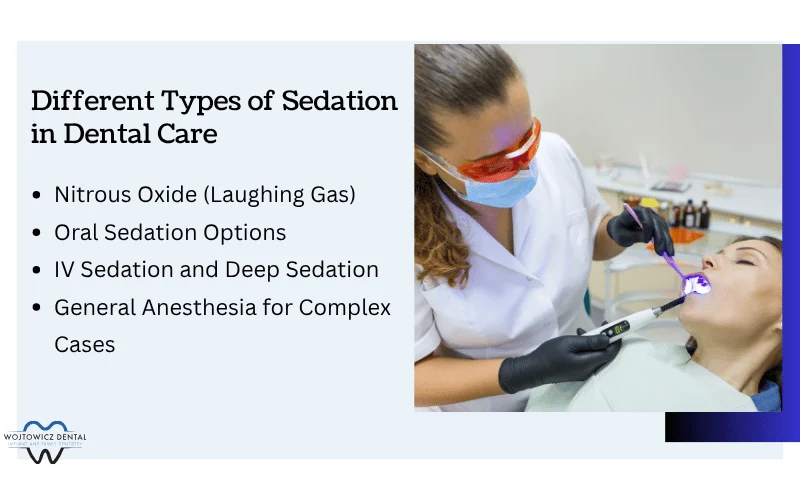
Nitrous Oxide (Laughing Gas)
Nitrous oxide offers the lightest form of sedation available at your dentist’s office. You breathe the gas through a small mask that fits over your nose, and within three to five minutes, you’ll start feeling calm and relaxed.
This is considered minimal sedation because you stay fully awake and aware during your procedure. Your dentist can adjust how much laughing gas you receive throughout your treatment to keep you comfortable.
Nitrous oxide wears off quickly once your dentist gives you pure oxygen through the mask. You can drive yourself home and return to normal activities right away.
This makes it perfect for shorter procedures like fillings or cleanings when you just need to take the edge off your anxiety.
Oral Sedation Options
Oral conscious sedation uses prescription pills that you take about an hour before your dental appointment. Your dentist will likely prescribe a benzodiazepine medication from this list:
- Triazolam (Halcion) – the most common choice
- Diazepam (Valium) – another frequent option
- Lorazepam (Ativan) – used for longer procedures
- Midazolam – often given to children as a liquid
These sedative drugs create moderate sedation, meaning you’ll feel very drowsy and may even fall asleep in the dental chair.
You’ll still be able to respond when your dentist asks you to open wider or turn your head. Many patients don’t remember much about their procedure afterward.
You must arrange for someone to drive you to and from your appointment. The effects can last several hours after your treatment ends.
IV Sedation and Deep Sedation
IV sedation delivers medication directly into your bloodstream through a small needle in your arm. This provides the deepest level of conscious sedation available in most dental offices.
An oral surgeon or dental anesthesiologist will monitor your heart rate and blood pressure throughout the procedure. They can adjust your sedation level instantly based on your needs.
You’ll likely fall asleep and won’t remember anything about your treatment.
This option works best for severe dental anxiety or complex procedures that take a long time. You’ll need someone to take you home and stay with you for several hours while the medication wears off completely.
General Anesthesia for Complex Cases
General anesthesia puts you into a completely unconscious state. You won’t respond to any stimulation, and you’ll need help breathing through a tube or mask.
Dentists typically reserve this sedation type for extensive oral surgery, patients with special needs, or young children who need multiple procedures.
A specialized anesthesiologist must be present to manage your breathing and vital signs.
You’ll wake up in a recovery area with no memory of the procedure. Full recovery takes longer than other sedation types, and you’ll need supervision for the rest of the day.
Who Can Benefit From Sedation Dentistry?
Sedation dentistry offers relief for patients dealing with physical sensitivities like gag reflexes and tooth sensitivity, as well as those who experience dental fear during routine appointments.
These options help you receive necessary care without the discomfort that might otherwise keep you from the dentist’s chair.
Managing Sensitive Gag Reflex
If you have a sensitive gag reflex, even routine dental work can feel impossible. Your gag reflex is a natural protective response, but when it’s overly sensitive, simple tasks like X-rays or impressions can trigger strong reactions.
Sedation dentistry helps patients with this challenge by relaxing your throat muscles and reducing awareness of the sensations that normally trigger gagging.
Nitrous oxide works particularly well because it starts working within minutes and wears off quickly after your appointment.
Your sedation dentist can adjust the level based on your needs. Many patients find that even minimal sedation makes procedures like taking molds or cleaning back teeth much more manageable.
You’ll still be awake and able to respond, but the overwhelming urge to gag decreases significantly.
For complex procedures that require work deep in your mouth, an oral surgeon might recommend deeper sedation levels to ensure your comfort throughout the appointment.
Solutions for Sensitive Teeth
Sensitive teeth can turn dental cleanings into painful experiences. When your tooth enamel wears down or your gums recede, hot, cold, or even air from dental tools can cause sharp pain.
Sedation addresses this in two ways. First, it reduces your awareness of discomfort during treatment. Second, when you’re relaxed, you’re less likely to tense up, which actually makes pain management easier for your dental team.
Common triggers for sensitive teeth during dental visits:
- Cold water used during cleanings
- Air from the suction tool
- Scraping tools touching exposed root surfaces
- Pressure on teeth during examinations
Your dentist will still use local anesthesia to block pain in specific areas. Sedation works alongside it to keep you calm and comfortable. This combination lets your dentist complete thorough work without rushing because you’re in pain.
Dental Cleanings and Minor Treatments
Regular dental cleanings and minor treatments shouldn’t require sedation for most people. But if dental fear has kept you away from the dentist for years, sedation can help you finally get back on track with your oral health.
When you skip cleanings due to anxiety, plaque hardens into tartar and gum disease can develop. These issues require more extensive treatment later. Sedation breaks this cycle by making appointments feel manageable again.
Light sedation options like nitrous oxide work well for cleanings because you recover quickly and can often resume normal activities the same day.
You’ll feel relaxed while the hygienist works, making the appointment feel shorter than it actually is.
Some patients only need sedation for their first few appointments. Once you rebuild trust with your dental team and see that modern techniques are gentler, your anxiety may decrease naturally.
Safety Measures and Professional Oversight
Professional dental sedation requires strict safety protocols and trained providers to protect patients during treatment.
Your dental team must review your complete medical background, maintain careful monitoring throughout the procedure, and possess proper qualifications to administer sedation safely.
Importance of Medical History Review

Your sedation dentist needs a complete picture of your health before any sedation appointment. This includes all medications you take, both prescription and over-the-counter, as well as any allergies or previous reactions to sedation.
Certain medical conditions require special attention during sedation planning. If you have sleep apnea, heart disease, or respiratory problems, your provider needs this information to choose the safest sedation method for you.
Your ASA status, which rates your overall physical health, helps determine whether you need basic sedation services or a more specialized approach with enhanced monitoring.
Past experiences with sedation or general anesthesia also matter. Tell your provider if you’ve had complications before or if family members have experienced problems with anesthesia.
This history guides your dental team in selecting the right drugs and dosages for your specific situation.
Monitoring and Emergency Preparedness
During sedation, your vital signs get checked continuously throughout the entire procedure. Your dental team monitors your oxygen levels, heart rate, blood pressure, and breathing to ensure you stay safe and comfortable.
UK sedation practice requires structured monitoring and recovery processes with appropriate emergency equipment readily available.
The treatment room must have oxygen supplies, suction equipment, and emergency medications in case complications arise.
A trained team member stays dedicated to monitoring you while the dentist performs your dental work. This person doesn’t assist with the dental procedure but focuses solely on watching your responses and vital signs.
After treatment, you remain under observation until you’re fully alert and stable enough to leave with your escort.
Qualifications of Sedation Providers
Your sedation provider must complete specialized training beyond basic dental school. Providers of conscious sedation must undertake training which includes supervised clinical experience following established professional standards.
Different sedation levels require different qualifications. An oral surgeon or dental anesthesiologist typically has the most extensive sedation training, especially for deeper sedation or complex medical cases.
These specialists complete years of additional education focused specifically on anesthesia and sedation techniques.
Your provider should maintain current certification in basic life support and complete ongoing education in sedation practices.
They need to demonstrate they can handle emergencies and manage complications if they occur during your treatment.
Benefits and Considerations of Sedation Dentistry
Sedation dentistry offers significant advantages for patients with dental anxiety, from creating a more relaxed experience to helping you complete necessary procedures.
Understanding both the benefits and potential risks helps you make an informed decision about whether sedation is right for your dental needs.
Improved Patient Experience
Sedation dentistry transforms how you experience dental procedures by creating a calm, comfortable environment. You’ll feel significantly more relaxed during your appointment, which allows your dentist to work more efficiently.
One major benefit is optional amnesia. Some sedatives can induce partial or complete memory loss during the procedure, which is especially helpful if you have extreme dental phobia.
You won’t remember the sights, sounds, or sensations that typically trigger your anxiety.
Sedation also suppresses your gag reflex. This makes it easier for your dentist to perform certain procedures that might otherwise be difficult or uncomfortable for you.
You can complete multiple treatments in fewer visits. When you’re relaxed and comfortable, your dentist can often handle several procedures in one appointment instead of spreading them across multiple visits.
Reducing Appointment Anxiety
Anxiety management through sedation goes beyond just feeling calm during your procedure. The medication reduces fear, stress, and discomfort associated with dental visits before you even sit in the chair.
Different sedation levels work for different anxiety types. If you have mild nervousness, nitrous oxide might be enough to help you relax.
For moderate to severe anxiety, oral sedation or IV sedation provides deeper relaxation while still keeping you responsive.
Your dentist will create a personalized sedation plan based on your specific fears and health status. Being honest about what scares you most helps your dental team choose the right approach.
Whether you’re worried about needles, pain, or losing control, there’s a sedation option that addresses your concerns.
Potential Risks and Side Effects
While sedation dentistry is considered safe under proper supervision, you should understand the possible side effects. Most are mild and temporary, but knowing what to expect helps you prepare.
Common side effects include drowsiness that can last several hours after your appointment, dry mouth, mild nausea, and memory lapses during the procedure. These typically resolve on their own without complications.
Rare but serious complications can include allergic reactions to sedative medications and respiratory issues.
Your dentist minimizes these risks by reviewing your medical history thoroughly and monitoring your vital signs throughout the procedure.
You’ll need someone to drive you home after most forms of sedation except nitrous oxide. Plan ahead for recovery time, which varies from immediate alertness with laughing gas to 6-8 hours for oral sedation.
Frequently Asked Questions
Patients with severe anxiety have access to multiple sedation methods that range from mild relaxation to deeper calming states.
Understanding what happens during each stage of sedation and knowing the costs can help you plan your visit with confidence.
Can I be sedated at the dentist if I have severe dental anxiety?
Yes, you can receive sedation even if you have severe dental anxiety. Dentists offer different levels of sedation to match your comfort needs and the complexity of your treatment.
Your dentist will review your medical history and anxiety level during a first dental consultation. They’ll recommend the sedation method that keeps you safe while helping you stay calm throughout your appointment.
Sedation dentistry is especially helpful if you avoid dental visits because of fear, have a strong gag reflex, or need several procedures in one visit.
Patients with prior traumatic dental experiences also benefit from these calmer, more predictable sessions.
What are the different sedation options for nervous dental patients (nitrous oxide, oral sedation, IV sedation)?
Nitrous oxide, also called laughing gas, provides fast and adjustable relaxation. You breathe it through a small mask, and the effects start within minutes.
The calming feeling fades quickly after your dentist switches you to oxygen at the end of treatment. Many patients can resume light activities the same day once cleared.
Oral sedation uses pills to reduce anxiety for longer visits. Your dentist times the dose so the strongest effects happen during the most uncomfortable parts of your procedure.
Because pills absorb differently in each person, your dental team watches your vital signs closely. You’ll need someone to drive you home after oral sedation.
IV sedation provides minute-to-minute control over your comfort level. The team can adjust the medication quickly during surgery or complex restorative work.
This option works well for extensive procedures or when other sedation methods haven’t been enough. You’ll feel deeply relaxed and may not remember much of the appointment.
What should I expect before, during, and after IV sedation for a dental procedure?
Before your appointment, you’ll receive written instructions about eating, drinking, and which medications to take or skip. You must arrange for an adult to drive you to and from the office.
Bring your complete medication list and any medical clearances your dentist requested. Plan to arrive on time so the team can review your consent forms and answer last-minute questions.
When you arrive, the team places monitoring equipment and records your baseline vital signs. The dentist or anesthetist establishes IV access and slowly delivers medication until you reach a calm, relaxed state.
During treatment, you stay responsive but deeply comfortable. Your team tracks your oxygen levels, heart rate, blood pressure, and breathing continuously.
After the procedure ends, you’ll rest in a recovery area until you meet safety criteria for discharge. You cannot drive the same day, and you should avoid making important decisions for at least 24 hours.
Someone must stay with you at home for several hours after IV sedation. Mild drowsiness and light-headedness are normal and usually pass within a day.
How safe is dental sedation, and what are the most common risks or side effects?
Dental sedation has a strong safety record when your dentist follows proper protocols. Your team prepares for any complications with oxygen, suction, airway equipment, and medication reversals.
The most common side effects are mild and temporary. You might feel drowsy, light-headed, or slightly nauseous during or after your appointment.
These effects usually go away with rest and observation. Serious complications are rare but can include breathing problems, allergic reactions, or blood pressure changes.
Your dentist reduces risk by reviewing your complete medical history before sedation. Tell them about all medications, supplements, health conditions, and past reactions to anesthesia.
Continuous monitoring during your procedure lets the team spot and fix problems quickly. They track your breathing, heart rate, and oxygen levels throughout treatment.
What medications are commonly used for dental sedation, and how do they differ (for example, diazepam vs IV meds)?
Diazepam is an oral sedative that belongs to the benzodiazepine family. It reduces anxiety and helps you relax before and during dental work.
You take diazepam by mouth about an hour before your appointment. The effects last several hours, so you’ll need someone to drive you home.
Other common oral medications include triazolam and lorazepam. These work similarly to diazepam but differ in how quickly they start and how long they last.
IV medications like midazolam and propofol work much faster than pills. Your dentist injects them directly into your bloodstream for immediate effect.
IV drugs give your dental team precise control over your sedation level. They can adjust the dose minute by minute based on how you respond.
Nitrous oxide works differently from pills and IV drugs. It’s a gas you inhale, and it leaves your system quickly when you breathe pure oxygen.
Is sedation dentistry usually covered by dental insurance, and what costs should I plan for?
Most dental insurance plans consider sedation an optional comfort service rather than a medical necessity. Coverage depends on your specific plan and the reason for sedation.
Some insurers cover sedation for children, patients with special needs, or certain complex procedures. Always check with your insurance company before your appointment to understand what they’ll pay.
Nitrous oxide typically costs between $50 and $100 per visit. It’s the most affordable sedation option and sometimes receives partial insurance coverage.
Oral sedation usually ranges from $150 to $500 depending on the medication and appointment length. This fee is separate from your actual dental treatment costs.
IV sedation is the most expensive option, ranging from $500 to $1,000 or more per visit. The cost depends on how long the procedure takes and who administers the sedation.
Ask your dental office for a written estimate that separates treatment fees from sedation charges. This breakdown helps you understand total costs and makes insurance claims clearer.


