

If you struggle with missing, worn, or damaged teeth, you may wonder what a full mouth reconstruction really includes.
A full mouth reconstruction, also called full mouth restoration, full mouth rehabilitation, or full mouth rehab, combines several dental treatments into one custom plan that restores your teeth and bite.
A full mouth reconstruction treatment plan usually includes a detailed exam, imaging and bite analysis, gum or bone treatment if needed, and restorative work such as dental implants, crowns, bridges, or dentures to rebuild your smile and function.
Your dentist designs the plan around your specific needs, whether you deal with decay, gum disease, jaw pain, or major tooth wear.
You also receive a clear timeline, cost outline, and recovery plan so you know what to expect at each stage.
When you understand what goes into full mouth rehabilitation, you can make informed choices about your care and feel more confident about the process ahead.
Key Takeaways
- Your plan starts with a full exam and detailed diagnostics to assess your teeth, gums, and bite.
- Treatment may include gum therapy, bone support, and restorative procedures to rebuild function.
- Your dentist creates a clear timeline, cost estimate, and step‑by‑step plan based on your needs.
Core Elements of a Full Mouth Reconstruction Plan
A full mouth reconstruction combines restorative dentistry and cosmetic dentistry to rebuild how your teeth look and work. Your dentist follows a clear treatment planning process to restore function, comfort, and long-term oral health.
What Qualifies as Full Mouth Reconstruction?
You qualify for full mouth reconstruction when you need treatment for most or all teeth in your upper and lower jaws. This is not a single procedure. It is a coordinated plan that restores your bite, jaw health, and tooth structure.
Dentists use the term when you have serious problems such as:
- Multiple missing teeth
- Severe tooth decay
- Advanced gum disease
- Worn teeth from grinding
- Bite problems or jaw pain
- Injury that damaged several teeth
A full mouth reconstruction often includes crowns, bridges, dental implants, or dentures. It may also involve gum treatment or orthodontics.
Unlike a simple smile makeover, this approach focuses on medical and structural repair first. Cosmetic changes improve appearance after your teeth and gums are healthy and stable.
Who Needs This Comprehensive Approach?
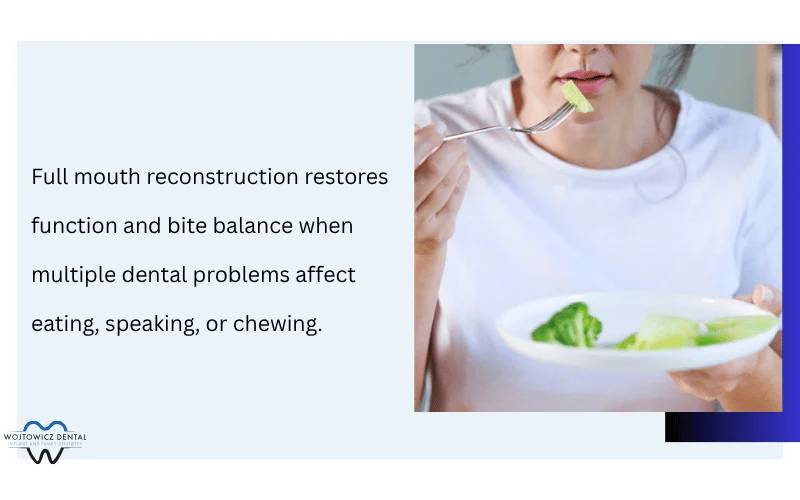
You may need this comprehensive approach if dental problems affect how you eat, speak, or chew. Ongoing pain, loose teeth, or difficulty biting into food are clear warning signs.
Some people seek care after years of untreated decay or gum disease. Others need help after an accident or long-term grinding that has worn down their teeth.
Dentists recommend a custom-designed treatment plan that combines multiple restorative procedures when single treatments will not fix the problem. If you only repair one or two teeth while others remain damaged, your bite can stay unstable.
This full mouth reconstruction process helps balance your bite. It also protects remaining teeth from excess pressure and further wear.
Creating a Personalized Treatment Plan
Your dentist begins with a detailed exam. This includes X-rays, photos, bite analysis, and a review of your medical history.
Next, your provider maps out a personalized treatment plan. This plan lists the order of procedures, healing time, and expected results. Treatment planning often moves in stages:
- Stabilize oral health – treat infections, decay, or gum disease.
- Rebuild structure – place implants, crowns, or bridges.
- Refine appearance – adjust shape, color, and alignment if needed.
You may complete treatment over several months. Implant cases can take longer due to healing time.
Your dentist adjusts the plan based on your goals, budget, and overall health. This step-by-step process ensures your reconstruction improves both function and appearance in a safe, organized way.
Initial Examination and Diagnostic Procedures
Your dentist gathers clear facts about your teeth, gums, and jaw before starting treatment.
You complete a detailed dental exam, imaging, bite analysis, and a planning visit so your care team can build a plan that fits your exact needs.

Comprehensive Dental Exam
You start with a full dental exam that checks every tooth and your gum health. Your dentist looks for decay, cracks, worn enamel, old fillings, and signs of infection.
They also check for loose teeth and measure gum pockets to spot gum disease.
This exam often follows the basic steps outlined in steps in a full mouth reconstruction, where the dentist studies the condition of your teeth before choosing any treatment.
Your dentist also reviews your medical history and past dental work. If you report chronic jaw pain, headaches, or sensitive teeth, they note these symptoms right away.
They may take impressions or digital scans to create models of your teeth. These models help them see how your upper and lower teeth meet and where bite problems may exist.
Digital X-Rays and Imaging
Next, your dentist uses digital X-rays to see what the eye cannot. These images show cavities between teeth, bone loss, impacted teeth, and infections near the roots.
Digital X-rays use low radiation and provide instant results. Your dentist can zoom in and measure bone levels, which is important if you may need implants or extractions.
In many cases, imaging is part of the early process. The goal is to collect clear data before making decisions.
If needed, your dentist may order 3D scans. These scans show jaw structure and nerve location. This step helps prevent problems during surgery and supports safe treatment planning.
Bite Analysis and Assessment
Your dentist performs a careful bite analysis to study how your teeth fit together. They check your bite alignment while you close, chew, and move your jaw side to side.
Bite issues can cause worn teeth, cracked restorations, and chronic jaw pain. They may also lead to headaches or muscle soreness in your face and neck.
Your dentist looks for:
- Uneven tooth wear
- Shifting teeth
- Clicking or popping in the jaw
- Signs of grinding or clenching
If you have bite problems, your dentist may suggest orthodontics, a night guard, or bite adjustment before placing crowns or implants. Stable bite alignment protects your new dental work and reduces stress on your jaw.
Treatment Planning Consultation
After gathering exam results, images, and bite data, you meet for a treatment planning consultation. Your dentist explains what they found and shows you images or models of your mouth.
They outline which procedures you need, such as crowns, bridges, implants, or gum treatment. You also discuss timing, cost, and how long each phase will take. Some plans last a few months, while complex cases may take longer.
This visit gives you a clear roadmap. You understand what will happen, why it is needed, and how each step supports long-term oral health.
Foundation and Preparatory Treatments
Before your dentist places crowns, implants, or bridges, they must create a stable base.
That means treating infection, removing damaged teeth, rebuilding bone when needed, and correcting jaw or bite problems that could cause failure later.
Periodontal Therapy and Gum Disease Treatment
Healthy gums hold your teeth in place and protect the bone underneath. If you have swollen, bleeding, or receding gums, you may need periodontal therapy before moving forward.
Gum disease treatment focuses on stopping infection and preventing bone loss. Your dentist or periodontist checks pocket depth around each tooth and looks for signs of damage on X-rays.
Treatment may include:
- Deep cleaning below the gumline
- Antibiotic therapy
- Ongoing maintenance visits every 3–4 months
Advanced cases may require surgical care to reduce deep pockets. Treating gum disease first improves long-term stability and protects your investment.
When your gums heal and inflammation goes down, your restorations have a much stronger foundation.
Scaling and Root Planing

Scaling and root planing is a deep cleaning that removes plaque and tartar below the gumline. It targets bacteria that brushing and flossing cannot reach.
During scaling, your provider removes buildup from the tooth surface and under the gums. Root planing smooths the root surfaces so your gums can reattach more easily.
You may need local anesthesia to stay comfortable. Some mild soreness and swelling can happen for a few days.
This step helps:
- Reduce gum pocket depth
- Control infection
- Slow bone loss
Deep cleaning often serves as the first active step in gum disease treatment. When inflammation decreases, your dentist can better evaluate which teeth can stay and which may need extra support or removal.
Tooth Extractions and Bone Grafting
Some teeth cannot be saved. Severe decay, cracks below the gumline, or advanced bone loss may require tooth extractions.
Your dentist removes the tooth carefully to protect the surrounding bone. After extractions, they may recommend bone grafting if the jawbone lacks enough volume for implants.
Bone grafting adds material to areas where bone has shrunk. Over several months, your body replaces that material with natural bone.
This step is common in complex cases. Rebuilding lost structure helps support implants, bridges, or dentures.
Without enough bone support, restorations may fail or feel unstable. Preparing the site now reduces problems later.
TMJ and Bite Correction
If your bite does not line up properly, your new restorations may wear down or crack. Bite misalignment also places strain on your jaw joints.
Your dentist checks how your upper and lower teeth meet. They may use digital scans, models, or bite analysis tools.
Signs you may need TMJ treatment or bite correction include:
- Jaw pain or clicking
- Headaches
- Uneven tooth wear
- Difficulty chewing
Treatment may involve orthodontics, reshaping tooth surfaces, night guards, or other therapies. Some patients with TMJ disorder need joint-focused care before major restorative work begins.
Correcting your bite protects your restorations and reduces pressure on your jaw. When your teeth meet evenly, you chew more comfortably and lower your risk of future damage.
Restorative and Cosmetic Procedures
A full mouth reconstruction uses a mix of restorative and cosmetic dentistry treatments to repair damage and replace missing teeth. Your dentist selects each option based on your bone health, bite, gum condition, and long-term goals.
Dental Implants and Osseointegration
Dental implants replace missing teeth by placing a small titanium post into your jawbone. This post acts as an artificial tooth root and supports a crown, bridge, or implant-supported dentures.
After placement, osseointegration begins. This is the process where your jawbone grows around the implant and locks it in place. It can take several months, but it gives implants strong support for chewing and speaking.
You may receive temporary restorations while the implant heals. Once healing is complete, your dentist attaches a custom crown or bridge that matches your natural teeth.
A personalized full mouth reconstruction treatment plan often includes dental implants when you need stable, long-term tooth replacement.
Crowns, Bridges, and Inlays/Onlays
Dental crowns cover and protect damaged teeth. Your dentist may use porcelain crowns when appearance matters, especially for front teeth. Crowns restore shape, strength, and function.
Dental bridges replace one or more missing teeth. A dental bridge uses crowns on nearby teeth or implants to hold a false tooth in place. Bridges help you chew better and prevent nearby teeth from shifting.
Inlays and onlays repair teeth with moderate damage. They are stronger than fillings but more conservative than full crowns. Your dentist bonds them to the tooth to restore structure while saving healthy enamel.
These treatments often work together in full mouth reconstruction procedures designed to improve both function and appearance.
Dentures and Implant-Supported Dentures
Dentures replace several or all missing teeth in the upper jaw, lower jaw, or both. Traditional dentures rest on your gums and are removable for cleaning.
If you want more stability, implant-supported dentures attach to dental implants. These dentures snap or clip onto implants placed in your jaw. They reduce movement and improve chewing strength.
Your dentist may recommend dentures when many teeth cannot be saved. In some cases, you will wear temporary restorations while your gums heal before receiving the final denture.
A customized full mouth reconstruction approach may combine dentures with implants to balance cost, comfort, and long-term results.
Veneers and Other Cosmetic Options
Veneers are thin shells that bond to the front of your teeth. They improve color, shape, and minor alignment issues. Veneers are common in cosmetic dentistry when your teeth are healthy but worn, stained, or uneven.
Your dentist removes a small amount of enamel before placing porcelain veneers. This helps them sit flush with your natural teeth. Veneers do not replace missing teeth, but they improve how restored teeth blend with your smile.
Other cosmetic options may include tooth reshaping or teeth whitening to match new crowns and bridges. These cosmetic steps are often part of the final phase to refine your results.
Orthodontic and Adjunctive Treatments
You may need more than crowns or implants to rebuild your smile. Orthodontic care, bite correction, and root canal therapy often prepare your teeth and gums for long-term stability and comfort.
Braces and Clear Aligners
Orthodontics often plays a key role in full mouth reconstruction. If your teeth sit in the wrong position, your dentist may not place crowns or implants until they correct the alignment.
Braces use metal or ceramic brackets and wires to move teeth into better positions. They work well for complex crowding, large gaps, and major bite problems. You visit your provider every few weeks for adjustments.
Clear aligners use a series of custom plastic trays. You switch trays every one to two weeks to guide tooth movement. Aligners work best for mild to moderate spacing and alignment issues.
You must wear aligners 20 to 22 hours a day for good results. Both options improve function and help protect new dental work from uneven pressure.
Invisalign and Other Orthodontic Solutions
Many adults prefer discreet orthodontic treatment. Invisalign and other orthodontic solutions often fit well into a full mouth reconstruction plan.
Invisalign uses clear, removable trays made from digital scans of your teeth. The trays apply gentle pressure to shift teeth over time. You can remove them to eat and brush, which makes daily care easier.
Other systems may use similar clear aligner technology. Your dentist chooses the best option based on your bite, tooth shape, and overall goals.
Straightening your teeth before placing veneers, crowns, or implants helps create better spacing. It also reduces stress on restorations and improves how your upper and lower teeth meet.
Bite Adjustment and Smile Enhancement
Bite problems can cause pain, tooth wear, and broken dental work. During reconstruction, your dentist checks how your teeth come together when you chew and speak.
They may reshape small areas of enamel to improve contact. This process is called occlusal adjustment. It balances pressure across your teeth.
In some cases, your provider combines orthodontic treatments with restorations to fix overbites, underbites, or crossbites. Correcting these issues protects your jaw joints and muscles.
Smile enhancement may also include minor contouring or reshaping. These changes help your teeth look even and natural while keeping your bite stable.
Root Canal Therapy and Related Treatments
If you have deep decay or infection, you may need a root canal before other work begins. Root canal therapy removes infected tissue from inside the tooth.
Your dentist cleans and seals the inner canals to prevent further infection. After healing, they often place a crown to strengthen the tooth.
You might also need related treatments such as retreatment of an old root canal or treatment for abscesses. Addressing infection first creates a healthy foundation for implants, bridges, or crowns.
Taking care of these issues early reduces pain and lowers the risk of failure in your full mouth reconstruction plan.
Timeline, Recovery, and Cost Considerations
Your treatment plan outlines how long your care may take, what healing will involve, and how much you may invest. Clear expectations help you plan time off, manage discomfort, and review payment options with confidence.
How Long Does Full Mouth Reconstruction Take?
Many people ask, how long does full mouth reconstruction take? The honest answer depends on your procedures and healing time.
If you only need crowns, bridges, or veneers, treatment may take a few weeks to a few months. More complex cases that include implants or bone grafting often take longer.
Implants require healing time after placement. The jawbone must fuse to the implant, which can take three to six months before your dentist places the final crown or bridge.
Your timeline often depends on:
- The number of teeth treated
- Whether you need extractions or gum treatment
- Your overall health and healing speed
- The type of restorations used
Your dentist will give you a written schedule so you know what happens at each stage.
What to Expect During Recovery
Recovery looks different for each procedure. Some treatments, like crowns or veneers, involve little downtime. You may feel mild soreness for a day or two.
Surgical steps, such as implant placement or extractions, require more healing time. You may have swelling, minor bleeding, and discomfort for several days. Your dentist may suggest soft foods, limited activity, and pain medication.
If your plan includes implants, full healing can take several months. During this time, you may wear temporary teeth so you can eat and speak normally.
You also need follow‑up visits. Your dentist checks healing, adjusts your bite, and makes sure restorations fit well. Careful home hygiene and regular visits protect your results and lower the risk of problems.
Full Mouth Reconstruction Cost and Payment Options
Full mouth reconstruction cost varies widely because every plan is custom. The total depends on how many teeth need work and which procedures you choose.
Treatment can range from about $15,000 to $60,000. Costs rise when you need implants, bone grafts, or extensive restorative work.
Several factors affect your total:
- Type of restorations (implants, bridges, dentures)
- Lab materials and technology used
- Number of appointments and surgeries
- Sedation or anesthesia needs
Many dental offices offer payment plans or third‑party financing. Some procedures may receive partial insurance coverage, especially when they restore function rather than improve appearance.
Before you begin, ask for a written estimate. Review what insurance may cover and what payment options fit your budget.
Frequently Asked Questions
Full mouth reconstruction blends several dental procedures into one clear plan. Your dentist studies your teeth, gums, bite, and jaw before deciding what to treat and when.
What procedures are usually combined in a full mouth restoration plan?
Your plan often combines treatments that repair damage and replace missing teeth.
You may also need gum disease treatment, root canal therapy, or tooth extractions. If you grind your teeth or have jaw pain, your dentist may include bite adjustment or TMJ care.
Each plan depends on how many teeth you have lost and how much wear or decay is present.
How does a dentist decide the right sequence of treatments for rebuilding the whole mouth?
Your dentist starts with disease control. They treat infection, decay, or gum problems before placing crowns or implants.
Next, they build a stable bite. That may mean placing implants first so crowns or bridges have proper support.
They also plan the order to protect healing time. For example, implants need months to bond with bone before final teeth go on top.
What kind of exams and imaging are typically needed before starting treatment?
You will need a full dental exam with detailed X‑rays. Many offices also use 3D scans to check bone levels and nerve position before placing implants.
Your dentist may take photos and digital impressions. These records help design crowns, bridges, or dentures that fit your bite.
They also check your jaw joints and measure how your upper and lower teeth meet.
How long does a complete mouth rehabilitation usually take from start to finish?
Treatment time depends on how complex your case is. Some procedures like crowns or veneers may take only a few visits, while implant cases can take several months.
If you need bone grafting or gum surgery, healing adds more time. Simple cases may finish in a few months, but complex plans can last a year or longer.
Your dentist should give you a clear timeline before treatment begins.
What’s the difference between a full mouth reconstruction and a smile makeover?
A full mouth reconstruction focuses on health and function. It restores damaged teeth, treats disease, and corrects bite problems.
A smile makeover mainly improves appearance. It may include whitening, veneers, or minor reshaping when your teeth and gums are already healthy.
Both can improve how your teeth look, but reconstruction fixes medical and structural problems first.
What do dentists mean by the “rule of 7” and the “3-3-3 rule,” and how can they affect treatment planning?
The “rule of 7” often refers to early orthodontic screening around age seven. While it applies more to children, early bite issues can affect how adult treatment is planned later in life.
The “3-3-3 rule” can describe follow‑up timing, such as checking healing at three days, three weeks, and three months after certain procedures. Dentists use structured check points like these to track healing and adjust your plan if needed.
Clear milestones help your dentist protect your results and keep your treatment on schedule.