
Getting a dental crown used to mean taking time off work twice, dealing with messy impressions, and wearing an uncomfortable temporary crown for weeks.
The traditional process stretched across multiple appointments and could take up to three weeks from start to finish.
Same-day dental crowns let you walk into your dentist’s office with a damaged tooth and leave the same day with a permanent, custom-made crown, all in one appointment lasting about two to three hours.
This one-visit approach uses CEREC technology to design and create your crown right in the dental office while you wait.
If you’re wondering whether same-day crowns are right for you, understanding what actually happens during that single appointment can help you plan your schedule and know what to expect.
The process is different from traditional crowns in several key ways that affect your time, comfort, and overall experience.
Key Takeaways
- Same-day crowns are completed in one appointment lasting two to three hours instead of two visits spread over several weeks
- You avoid wearing a temporary crown and only need to get numbed once during the entire process
- Digital scanning replaces traditional impressions and your crown is designed and milled in the office while you wait
Table of Content
- How Same-Day Crowns Work: The One-Visit Process
- Comparing Same-Day and Traditional Crowns
- Understanding the Appointment Experience
- Benefits and Limitations of Same-Day Crowns
- Crown Materials, Longevity, and Aftercare
- Questions to Ask Your Dentist About Same-Day Crowns
- Frequently Asked Questions
How Same-Day Crowns Work: The One-Visit Process
Same-day crowns use digital scanning and in-office milling technology to create your permanent crown while you wait.
The entire process happens at your dentist’s office in a single appointment, replacing the traditional two-visit model.
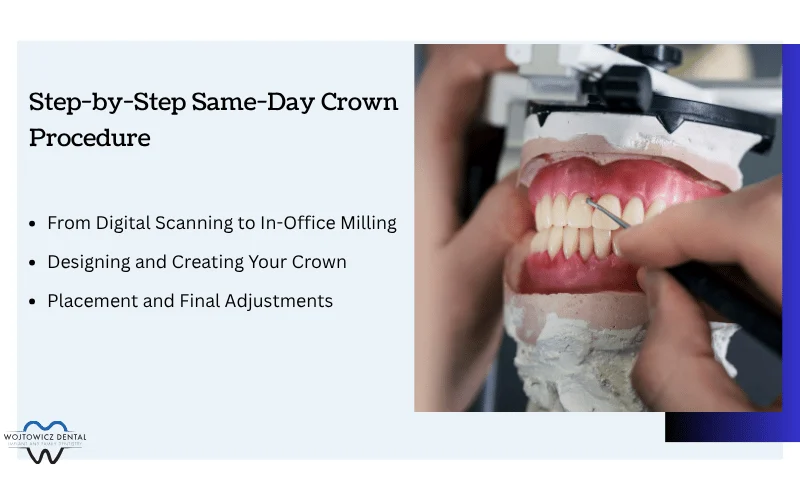
From Digital Scanning to In-Office Milling
Your dentist starts by preparing your tooth just like they would for a traditional crown. They remove any decay and shape the tooth to support the restoration.
Instead of using messy putty impressions, your dentist uses an intraoral scanner to capture digital impressions of your prepared tooth.
The scanner takes thousands of pictures in seconds to create a 3D model of your mouth. This digital impression is more accurate and comfortable than traditional impression materials.
The digital scan appears instantly on a computer screen. Your dentist can check the image right away and retake any areas if needed.
This step is crucial because the accuracy of your CEREC same-day crown depends on the quality of this initial scan.
Designing and Creating Your Crown
Once your digital impression is complete, your dentist uses computer-aided design software to create your crown design. The software suggests a crown shape based on your tooth anatomy and neighboring teeth.
Your dentist adjusts the design on screen to ensure proper fit, bite alignment, and appearance. They customize the crown’s shape, size, and contact points with surrounding teeth.
This design phase typically takes 10 to 15 minutes.
After finalizing the design, the data transfers to an in-office milling machine. The CEREC technology (Chairside Economical Restoration of Esthetic Ceramics) mills your crown from a solid block of ceramic material.
The milling process takes about 15 to 20 minutes while you wait in the office.
Placement and Final Adjustments
After the in-office milling completes, your dentist removes the crown from the machine and checks its fit. They may polish and stain the ceramic to match your natural tooth color.
Your dentist places the crown on your prepared tooth to test the fit and bite. They make any necessary adjustments by reshaping contact points or adjusting the crown’s height.
You’ll bite down on special paper to identify any high spots that need smoothing.
Once the fit is perfect, your dentist bonds the permanent crown to your tooth using dental cement. The entire appointment usually takes 90 minutes to two hours from start to finish.
You leave with your final dental restoration in place, with no temporary crown or second visit needed.

Comparing Same-Day and Traditional Crowns
The main difference between these two options comes down to timing and process.
Traditional crowns require multiple visits and a temporary restoration, while same-day crowns give you a permanent solution in one appointment.
Traditional Two-Visit Workflow
When you choose a traditional crown, your dentist prepares your tooth during the first appointment. They reshape it and take an impression using either putty-filled trays or a digital scanner.
This impression gets sent to an outside dental laboratory where technicians craft your permanent crown.
The traditional crown process typically takes one to three weeks for the lab to complete. You’ll need to schedule a second visit once your crown arrives.
During that appointment, your dentist removes the temporary crown, checks the fit and appearance of the permanent one, and cements it in place.
This two-appointment system has been the standard for decades. It works well for complex cases that need custom shading or specialized materials.
Lab-Made and Temporary Crowns Explained
Lab-fabricated crowns offer more material choices than same-day options. Skilled technicians can create crowns from porcelain-fused-to-metal, full-cast gold, or specially layered ceramics that match unusual tooth coloring.
Between your two visits, you’ll wear a temporary crown to protect your prepared tooth.
These temporaries are made from acrylic or composite resin and attached with weaker cement so they can be removed easily.
Temporary crowns require extra care. They can loosen, fall off, or break before your permanent crown is ready. You’ll need to avoid sticky or hard foods and be gentle when brushing and flossing around them.
No Temporary Crown Needed
Same-day crowns eliminate the need for temporaries entirely. You get your permanent restoration in the same appointment where your tooth is prepared.
This means you avoid all the hassles that come with wearing a temporary. You won’t worry about it falling off during an important meeting or breaking while eating.
You don’t need to follow special dietary restrictions for weeks.
Digital impressions used for same-day crowns are also more comfortable than traditional molds. Instead of biting into putty trays, your dentist uses a small wand to scan your teeth in minutes.
Similarities and Differences in Outcomes
Both types of dental crowns provide strong, long-lasting restorations when properly placed.
Same-day CAD/CAM crowns show clinical outcomes comparable to traditional lab-fabricated crowns, with research showing equivalent survival rates.
Most crowns last 10 to 15 years or longer with good oral care. The material you choose matters more than whether it’s made in-office or at a lab.
Studies have found that CAD/CAM crowns demonstrate superior marginal fit compared to some pressed alternatives. This precision helps prevent bacteria from entering the gap between your crown and natural tooth.
Cost is usually similar between both options. Same-day and traditional crowns made from the same material typically fall in the same price range of $1,000 to $2,500 per crown.
Understanding the Appointment Experience
A same-day crown appointment typically lasts 2-3 hours and involves preparing your tooth, creating a digital scan, designing and milling your ceramic crown, and placing it permanently, all without the need for a temporary crown or return visit.
What to Expect During Your Visit
When you arrive for your same-day crown appointment, you’ll check in just like any dental visit. Your dentist will review the treatment plan and answer any questions before starting.
Plan to be at the office for the full appointment time. Bring something to keep you comfortable, like headphones or a book for brief waiting periods while the crown is being made.
You’ll receive local anesthesia to numb the area around your tooth. This injection feels the same as it does for fillings or other dental work. The numbness will last several hours after you leave.
Eat a meal before your appointment since you won’t be able to eat comfortably while numb. You can also take any pain relievers beforehand if you’re concerned about discomfort.
Tooth Preparation and Digital Impressions
Your dentist begins by removing any decay and shaping your tooth to fit the dental crown. This step is crucial for long-term success.
The preparation creates enough space for the crown while keeping as much healthy tooth structure as possible.
After tooth preparation, your dentist uses a digital scanner instead of traditional impression material. The small camera captures thousands of images per second as it moves around your mouth.
You’ll see a 3D model appear on screen in real time.
The scanning process takes about 10-15 minutes. Your dentist might use cotton rolls to keep the area dry since the scanner needs a clear view.
If any part of the digital impression isn’t captured well, they can easily rescan that section without starting over.
Once the scan is complete, your dentist designs your crown using specialized software. This takes 15-20 minutes and involves adjusting the shape and margins.
The design then goes to an in-office milling machine that carves your ceramic crown from a solid block.
Fitting, Bite Alignment, and Final Placement
Your dentist will first try the finished crown on your tooth without cement. This try-in allows them to check the fit and make sure the margins sit flush against your natural tooth.
Bite alignment is tested by having you bite down gently. Your dentist checks that the crown doesn’t feel too high and that it contacts neighboring teeth properly.
They’ll ask you how it feels, don’t hesitate to speak up if something seems off.
Minor adjustments can be made right away with polishing instruments. Your dentist might refine the shape or smooth any rough spots.
Once everything fits correctly, they’ll clean your prepared tooth and apply bonding agents.
The crown is then cemented permanently in place. You’ll bite on a cotton roll or similar device while the cement hardens.
After final polishing and one last bite check, your tooth restoration is complete, all in that single visit.
Benefits and Limitations of Same-Day Crowns
Same-day crowns offer significant time savings and eliminate temporary restorations, but they may not suit every clinical situation.
Understanding when one-visit CEREC technology works best helps you make an informed decision about your dental restoration.

Convenience and Time Savings
You complete your entire dental crown procedure in one appointment that typically lasts one to two hours. This means you walk out with your permanent restoration the same day without scheduling a second visit.
The single-appointment approach is especially valuable if you have a busy work schedule or limited availability. You don’t need to take multiple days off or arrange childcare for separate visits.
CEREC same-day crowns also mean you avoid the hassle of eating carefully or worrying about a temporary crown coming loose.
Traditional crowns require you to wear a temporary for one to three weeks while the lab fabricates your permanent restoration.
Enhanced Comfort and Accuracy
Digital scanning replaces uncomfortable putty-filled impression trays that many patients find difficult to tolerate.
The intraoral scanner captures detailed 3D images of your teeth using a small handheld wand.
Research shows that CAD/CAM crowns demonstrate superior marginal fit compared to some traditional methods. A precise fit reduces the risk of bacteria entering gaps between your crown and natural tooth structure.
You also benefit from no temporary crown period, which eliminates common complaints like sensitivity, loosening, or dietary restrictions while waiting for your permanent restoration.
When a Lab-Made Crown May Be Recommended
Complex cases involving heavy bite forces may require lab-fabricated restorations that offer specialized strength optimization.
Full-cast gold crowns for back teeth handling extreme pressure typically need traditional lab fabrication.
You might also need a traditional crown if you require highly customized esthetics with intricate color layering to match unusual natural tooth coloring.
Skilled lab technicians can create detailed artistic work that some chairside systems cannot replicate.
Full-mouth reconstruction processes involving multiple crowns often benefit from coordinated lab fabrication for consistency across all restorations.
Crown Materials, Longevity, and Aftercare
Same-day crowns use high-quality ceramic materials that typically last 10-15 years with proper care.
Understanding the materials used and how to protect your investment helps you get the most from your restoration.
Types of Ceramic and Crown Materials
Same-day crowns are made from solid ceramic blocks that come in different types. The most common material is feldspathic porcelain, which offers excellent aesthetics and natural tooth color.
Some offices use lithium disilicate, which provides extra strength for back teeth.
These ceramic blocks are pre-manufactured under controlled conditions. This ensures consistent quality compared to hand-mixed materials. The blocks come in various shades to match your natural teeth.
Same-day crown costs typically range from $1,000 to $2,500 per crown depending on the material used.
Traditional lab-made crowns offer more material options like gold or porcelain-fused-to-metal, but same-day ceramic crowns provide excellent durability for most situations.
Crown Longevity and Durability
Your ceramic crown can last 10-15 years or longer with good care. Some patients keep their crowns for 20+ years.
The lifespan depends on several factors, including where the crown is located, your bite force, and daily habits.
Back teeth crowns experience more pressure from chewing. Front teeth face less force but need to handle different stresses.
Crown longevity also depends on the condition of the tooth underneath and how well the crown was placed.
Regular dental exams help catch problems early. Your dentist will check for chips, cracks, or loosening during routine visits.
Protecting Your Crown: Night Guards and Maintenance
Teeth grinding poses the biggest threat to ceramic crowns. If you grind or clench your teeth at night, you need a night guard. This protective appliance prevents excessive force on your crown while you sleep.
Daily care for dental crowns is simple. Brush twice daily and floss around the crown just like your natural teeth. Avoid chewing ice, hard candy, or using your teeth as tools.
Watch what you eat during the first 24 hours after placement. Avoid sticky or very hard foods until the cement fully sets.
After that, you can eat normally but use common sense with extremely hard items that could damage any tooth.
Questions to Ask Your Dentist About Same-Day Crowns

Before scheduling your appointment, you need to gather key information about the process. Start by asking if your dentist uses CEREC technology or another system for creating same-day crowns.
Find out how long you’ll actually be in the chair. Most appointments take 2-3 hours, but this can vary based on the complexity of your case and your dentist’s experience with in-office milling.
Important questions to bring up:
- Am I a good candidate for a same-day crown, or would a traditional crown work better for my situation?
- How many same-day crowns have you placed, and what are your success rates?
- What type of material will you use for my dental restoration?
- Will my insurance cover the same-day procedure the same way it would cover a traditional crown?
- What happens if the crown doesn’t fit properly during the appointment?
- Do you offer sedation options for longer appointments?
You should also ask about aftercare and what to expect once you leave. Find out if sensitivity is normal and how long it typically lasts.
Don’t forget to bring your insurance card and medication list to your visit. This helps your dentist plan your treatment properly.
If your tooth needs a crown, asking whether same-day is an option gives you a clear picture of what your appointment will involve. Your dentist can explain whether your case is a good fit for the technology.
Frequently Asked Questions
Same-day crown appointments typically last between two and three hours, and you’ll leave with your permanent restoration already in place.
Understanding the specifics of timing, durability, and what makes someone a good candidate can help you plan your visit and know what to expect.
How long does a same-day crown appointment usually take from start to finish?
Your entire same-day crown appointment will take about 2-3 hours. This is longer than a typical dental visit, but you complete everything in one trip.
The appointment includes numbing your tooth, preparing it, taking digital scans, designing your crown, milling it from ceramic, and placing it permanently.
Each step takes time, but you avoid the need to come back for a second visit.
Plan to block out a half day from your schedule. It’s a good idea to eat before your appointment since you’ll be numb for several hours afterward.
What happens during the visit, prep, scanning, milling, and placement?
Your dentist starts by numbing the area and preparing your tooth. This involves removing any decay and shaping the tooth to fit the crown. The preparation takes about 30-45 minutes.
Next comes digital scanning, which takes 10-15 minutes. Your dentist uses a small camera wand to capture 3D images of your prepared tooth and the surrounding area. This replaces the traditional goopy impressions.
Your dentist then designs your crown using specialized software, which takes 15-20 minutes. They adjust the crown’s shape, size, and how it contacts your other teeth.
The milling machine carves your crown from a solid ceramic block in 10-20 minutes. Finally, your dentist finishes and polishes the crown before cementing it permanently to your tooth, which takes another 20-30 minutes.
Will I need a temporary crown at any point, or is the final crown placed the same day?
You won’t need a temporary crown at all. The permanent crown is bonded to your tooth during the same appointment, so you leave with your final restoration already in place.
This is one of the biggest advantages of same-day crowns. Traditional crowns require wearing a temporary for 2-3 weeks while a lab makes your permanent crown. Temporary crowns can feel uncomfortable and sometimes fall out.
With same-day technology, you skip that entire waiting period and all the hassles that come with it.
Can I eat normally right after the crown is placed, or should I plan for any restrictions?
You can eat normally once the numbness from the anesthetic wears off, which usually takes 2-4 hours. Be careful not to bite your cheek or tongue while you’re still numb.
It’s best to start with softer foods for the first day. Your crown is permanent and fully bonded, but giving yourself a day to adjust makes the transition easier.
Some people experience mild sensitivity to hot or cold temperatures for a few days. This is normal as your tooth adjusts to the new crown.
Are same-day crowns as strong and long-lasting as crowns made by a dental lab?
Same-day crowns typically last 10-15 years or more with proper care, which is similar to traditional lab-made crowns. The longevity depends more on your oral hygiene and how you care for your teeth than where the crown was made.
The ceramic materials used for same-day crowns are high-quality and designed to withstand normal chewing forces. Your dentist will select the right material based on which tooth needs the crown.
The key factors affecting how long your crown lasts are your cleaning habits, whether you grind your teeth, and your dentist’s skill. The method used to create the crown isn’t the deciding factor.
Who is a good candidate for a one-visit crown, and when might two visits still be needed?
Most people who need a crown are good candidates for the same-day option. The technology works well for replacing old fillings, fixing cracked teeth, or restoring teeth after root canals.
However, some situations may still require traditional crowns. Very complex restorations, certain front teeth where maximum aesthetics matter, or teeth with extensive damage might need a lab-made crown.
If you grind your teeth heavily, your dentist might recommend different materials that aren’t available for same-day milling.
Your dentist will evaluate your specific situation and let you know if you’re a candidate. They’ll consider the tooth location, the extent of damage, and your individual needs before recommending the best approach.