If you’re considering dental implants to replace missing teeth, you probably want to know how much value you’ll get from this investment.
Studies show that dental implants have a 90 to 95 percent success rate over 10 years, and when placed by an experienced dentist and properly cared for, they can last decades or even a lifetime.
The implant itself is designed to be permanent because it fuses with your jawbone through a process called osseointegration.
However, the full picture is a bit more complex than just one simple answer. While the titanium post in your jaw can last forever, the crown attached to it may need replacement due to normal wear and tear after 15 to 20 years.
Plus, several factors can affect whether your implant succeeds or fails, from your oral hygiene habits to your overall health.
Understanding what impacts dental implant longevity gives you the power to protect your investment. This guide will walk you through everything that affects how long your implants will last and what you can do to help them go the distance.
Key Takeaways
- Dental implants typically last 10 years or more with success rates of 90 to 95 percent, and many last a lifetime with proper care
- The implant post is designed to be permanent, but the crown may need replacement after 15 to 20 years due to wear
- Good oral hygiene, regular dental visits, avoiding smoking, and working with an experienced surgeon are key to making your implants last as long as possible
Components and Lifespan of Dental Implants
Understanding the different parts of your dental implant helps explain why some components last longer than others. The implant post often lasts decades, while the crown typically needs replacement sooner.
Implant Post Durability
The implant post is the part that goes into your jawbone and acts as an artificial tooth root. This component is designed to be permanent and can last 15 to 30 years or longer with proper care.
The post is usually made from titanium or ceramic materials. These materials bond with your jawbone through a process called osseointegration. Once the post fuses with your bone, it creates a stable foundation that can last a lifetime.
Studies show a 90 to 95 percent success rate of dental implants over 10 years. The key to maintaining your implant post is keeping your jawbone healthy through good oral hygiene and regular dental visits.
Role of the Abutment and Dental Crown
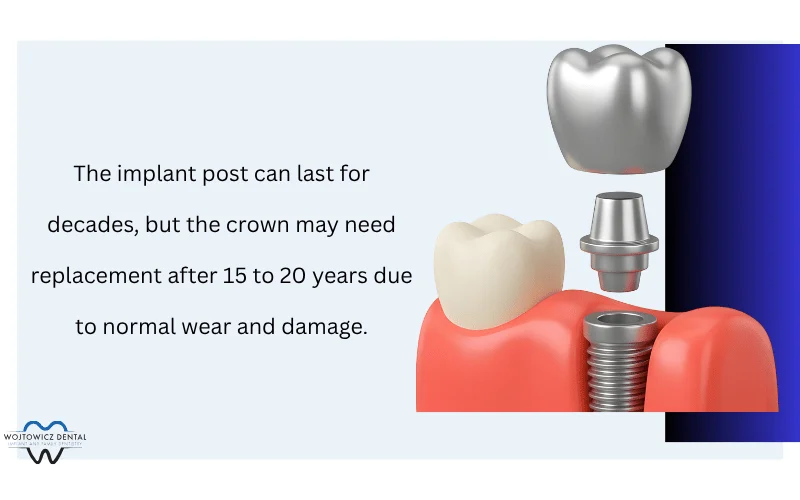
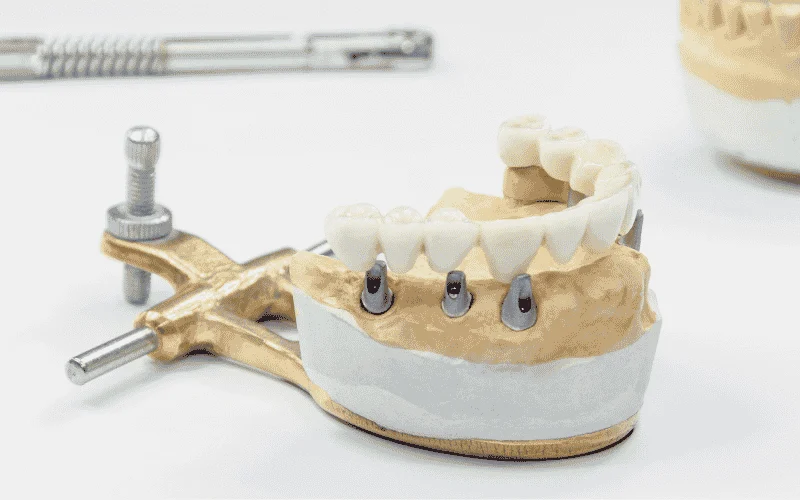
The abutment is a metal connector piece that links your implant post to the dental crown on top. The crown is the visible tooth-like part that you use for chewing and smiling.
While the implant post can last for decades, your dental crown typically wears down faster. About 50 to 80 percent of crowns need replacement within 15 to 20 years due to normal wear and tear.
Your crown can chip, crack, or become stained over time just like natural teeth. The good news is that replacing a crown is much simpler than replacing the entire implant.
Your dentist can usually swap out a worn crown while keeping the original post and abutment in place.
Comparing Implant Lifespans to Other Tooth Replacement Options
Dental implants generally outlast other tooth replacement options available to you. Removable dentures typically last 5 to 10 years before needing replacement.
Traditional dental bridges usually last 10 to 15 years. Both of these options require more frequent replacements than implants because they don’t integrate with your jawbone.
Here’s how the options compare:
| Option | Average Lifespan | Replacement Frequency |
| Dental implant post | 15-30+ years | Rarely needs replacement |
| Dental crown | 15-20 years | May need 1-2 replacements |
| Dental bridge | 10-15 years | Regular replacement needed |
| Removable dentures | 5-10 years | Frequent replacement needed |
Dental implants provide durable tooth replacement that can save you money and hassle in the long run. While the upfront cost is higher, you’ll likely spend less over your lifetime compared to repeatedly replacing dentures or bridges.
Key Factors Influencing Implant Longevity
Several important factors determine whether your dental implants will last for decades or experience problems earlier than expected.
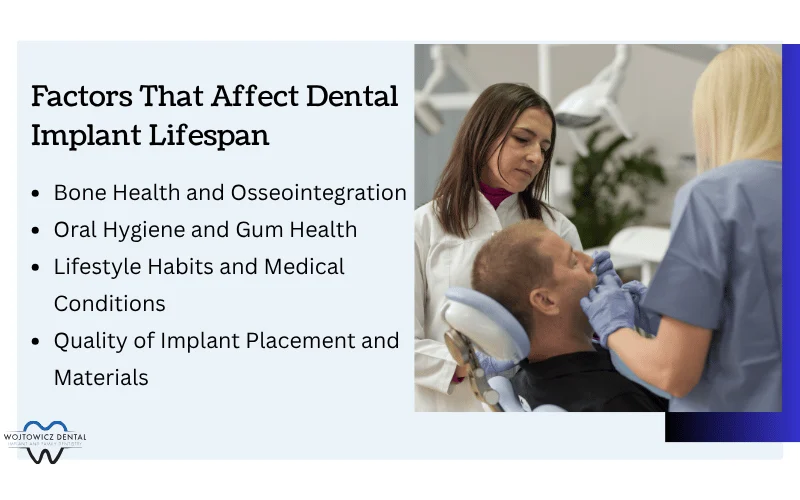
Your bone density, daily oral care habits, lifestyle choices, and the quality of your initial procedure all play significant roles in dental implant longevity.
Bone Health and Osseointegration
Your jawbone’s strength directly affects how well your implant can fuse with the bone tissue. This fusion process, called osseointegration, is what keeps your implant stable and secure in your mouth.
When you have good bone density, the titanium post can properly integrate into your jawbone over several months.
Bone health conditions like osteoporosis can weaken your jawbone and make this integration process more difficult. Without successful bone integration, your implant won’t have the stability it needs to function properly.
Bone loss around the implant area can happen over time if you don’t maintain proper care. This gradual deterioration weakens the foundation that supports your implant and can eventually lead to implant failure.
Oral Hygiene and Gum Health
Your daily cleaning routine has a major impact on how long your implants last. Brushing twice a day and flossing around your implants removes harmful bacteria that can damage your gums.
Poor oral hygiene leads to peri-implantitis, which is an infection that affects the tissue and bone around your implant. This condition causes inflammation and bone loss that threatens implant stability.
Peri-implantitis is one of the most common reasons implants fail after years of successful use.
Healthy gums create a protective seal around your implant that keeps bacteria out. Regular dental visits every six months help your dentist monitor your gum health and catch any problems early.
Your long-term oral health depends on consistent care both at home and in the dental office.
Lifestyle Habits and Medical Conditions
Smoking significantly reduces your chances of successful implant outcomes. Tobacco use restricts blood flow to your gums, which slows down healing and makes infections more likely.
Diabetes affects how your body heals and fights infection, which can complicate the osseointegration process. If you have diabetes, maintaining good blood sugar control improves your implant success rate.
Key lifestyle factors that affect implants:
- Smoking or tobacco use
- Heavy alcohol consumption
- Teeth grinding or clenching
- Poor nutrition
- Uncontrolled diabetes
Grinding your teeth puts excessive force on your implants and can cause damage over time. A night guard can protect your implants if you have this habit.
Quality of Implant Placement and Materials
The skill and experience of your dental professional matters tremendously for implant success. Proper implant placement ensures the post sits at the correct angle and depth in your jawbone.
Your surgeon must evaluate your bone structure carefully before surgery to plan the best position for each implant. Mistakes during placement can lead to poor bone integration or stress on surrounding teeth.
Research shows that implants with specific surface treatments have better survival rates and lower infection risks.
High-quality titanium or zirconia materials provide better durability than cheaper alternatives. The crown attached to your implant also needs to be well-made and properly fitted to distribute chewing forces evenly.
Your initial investment in quality materials and skilled placement pays off with better long-term results.
Risks, Causes, and Signs of Implant Failure
Dental implants can fail for various reasons, from infections around the implant site to physical stress from grinding your teeth. Understanding these risk factors helps you recognize warning signs early and take action to protect your investment.
Early and Late Implant Failure
Implant failure happens in two main timeframes. Early failure occurs within the first few months after surgery, usually before the implant fully bonds with your jawbone.
This often results from infection at the surgical site, poor bone quality, or problems with the placement procedure itself.
Late failure develops months or years after your implant seems successful. Dental implants have a 90 to 95 percent success rate over 10 years, but late failure can still occur.
Common causes include bone loss around the implant, untreated gum disease, or excessive force on the implant from chewing or grinding.
You might notice these warning signs:
- Movement or looseness in the implant
- Pain when biting or chewing
- Swelling or redness around the implant
- Bleeding gums near the implant site
Role of Peri-Implant Diseases
Peri-implant disease poses one of the biggest threats to your implant’s longevity. It starts when plaque builds up around your implant, causing inflammation in the surrounding gum tissue.
This early stage is called peri-implant mucositis and you can reverse it with proper cleaning.
If left untreated, it progresses to peri-implantitis. This serious condition destroys the bone supporting your implant. Peri-implantitis can lead to implant failure if bacteria continue damaging the bone tissue.
Signs of peri-implant disease include:
- Red, swollen gums around the implant
- Gums that bleed easily
- Receding gums exposing the implant
- Pus or discharge
- Bad breath that doesn’t go away
Impact of Bruxism and Teeth Grinding
Teeth grinding puts enormous pressure on your dental implants. The constant grinding motion creates tiny movements that prevent the implant from properly fusing with your jawbone.
This interference with osseointegration can cause early dental implant failure.
Even after your implant heals, bruxism continues causing problems. The repeated force can crack the porcelain crown, loosen the connecting screw, or even fracture the implant itself.
Research shows that overall implant failure rates reach 11 percent in smokers compared to 5 percent for nonsmokers, and grinding creates similar stress levels.
Your dentist can fit you with a night guard to protect your implants while you sleep. This custom mouthpiece distributes the grinding forces more evenly and prevents concentrated pressure on any single implant.
Comparison With Other Tooth Replacement Solutions
Dental implants typically outlast other tooth replacement options by many years. Bridges usually need replacement after 7-10 years, while traditional dentures last 5-8 years before requiring significant adjustments or replacement.
Dental Implants vs. Dental Bridges
A dental bridge relies on your neighboring teeth for support, which means those healthy teeth need to be filed down to hold the bridge in place.
This process removes enamel that never grows back. Bridges often last 7-10 years and require support from neighboring teeth, which may need future treatment.
Dental implants work differently because each implant post stands alone in your jawbone. You don’t need to alter adjacent teeth at all.
The implant itself can last your entire life once it fuses with your bone, though the crown on top typically needs replacement after 10-15 years.
Bridges also don’t stop bone loss in your jaw where the tooth is missing. An implant actually preserves bone by acting like a natural tooth root. This keeps your facial structure intact over time.
Dental Implants vs. Removable Dentures
Traditional removable dentures typically last 5-8 years before you need new ones. Your jawbone changes shape over time without tooth roots to stimulate it, which means dentures that once fit well become loose and uncomfortable.
You need to remove dentures daily for cleaning and overnight. They can slip when you eat or talk, and many foods become difficult to enjoy. Dental implants stay permanently in your mouth and let you eat whatever you want.
Dentures also speed up bone loss in your jaw because they sit on top of your gums without providing stimulation to the bone below. This can change your facial appearance over the years.
A dental implant prevents this bone loss by integrating directly into your jawbone through a process that creates a strong, stable foundation.
Implant-Supported Dentures and Mini Implants
Implant-supported dentures combine the stability of implants with the coverage of dentures. Several implants anchor a full arch of teeth, giving you much better chewing power than traditional removable dentures.
These typically last longer than regular dentures because the implants hold everything securely in place.
Mini implants are narrower than standard implants and work well in areas with less available bone. They often secure lower dentures that tend to slip more than upper ones.
While mini dental implants are designed to be permanent, less long-term research exists compared to standard implants.
You might need bone grafting before placing standard implants if your jawbone has deteriorated. Mini implants sometimes avoid this extra step because they’re smaller and need less bone support.
Best Practices for Maximizing Implant Lifespan
Taking care of your dental implants properly can help them last for decades. Good daily cleaning habits, protecting your implants from damage, and seeing your dentist regularly all play important roles in long-term oral health.
Daily Oral Care and Maintenance Tips
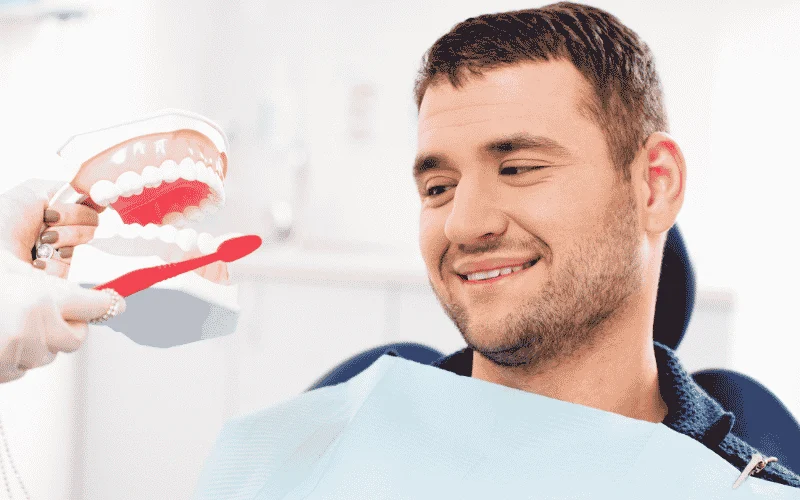
Your dental hygiene routine directly affects implant stability and how long your implants will last. You need to brush at least twice a day using a soft-bristled toothbrush to avoid scratching the implant surface or irritating your gums.
Flossing daily is just as important for implants as it is for natural teeth. Food particles and bacteria can build up around the implant and cause infections. Use floss designed for implants or a water flosser to clean hard-to-reach areas.
Plaque buildup can lead to peri-implant disease, which damages the gums and bone around your implant. Adding an antimicrobial mouthwash to your routine helps kill bacteria and keeps your gums healthy.
Limit sugary foods and drinks that feed harmful bacteria in your mouth.
Protecting Implants From Wear
Grinding your teeth puts extra pressure on implants and can cause them to fail over time. If you grind your teeth at night, ask your dentist about getting a custom night guard.
This protective device absorbs the force from grinding and helps prevent damage to both your implants and natural teeth.
Avoid chewing on hard objects like ice, pen caps, or hard candy. These habits can crack the crown attached to your implant or loosen the connection. Be careful when eating hard foods like nuts or crusty bread.
Athletes should wear a mouthguard during contact sports to protect implants from injury. Even a small impact can damage the crown or shift the implant.
Importance of Routine Dental Visits
Regular checkups every six months let your dentist catch problems before they become serious. Your dentist will clean around your implants, check for signs of infection, and make sure everything stays secure.
Professional cleanings remove tartar that you cannot remove at home. Your dentist can also check the fit of your crown and look for any wear that might need attention.
The crown attached to the implant may need replacement after 10-15 years due to normal wear, even when the implant itself remains healthy.
Tell your dentist about any changes you notice, like pain when chewing, looseness, or swollen gums. Catching issues early improves your chances of saving the implant.
Frequently Asked Questions
Many patients want to know what makes implants succeed or fail, how long different parts last, and what challenges they might face years down the road.
Success depends heavily on your health habits and bone quality, while crowns need replacement much sooner than the implant posts themselves.
What factors most affect how long dental implants stay successful?
Your personal health plays a big role in how well your implants hold up over time. If you smoke heavily or have diabetes, you face higher implant failure rates compared to patients without these conditions.
The type of implant procedure also matters. Shorter implants tend to fail more often than longer ones. If you need bone grafting along with your implant, this also increases your risk of failure.
How many implants you get affects your success rate too. Patients with multiple implants experience more failures than those with just one implant.
What happens to dental implants after 20 years, and what problems can show up?
Dental implants can work well for decades, but problems do increase over time. The implant post itself often stays strong, but the gum and bone around it can develop issues.
Peri-implantitis becomes more common as years pass. This infection around the implant stays low in the first seven years but jumps to 7.1 percent between years eight and ten.
Your implant crown will likely need replacement before the metal post does. The visible tooth part wears down from daily chewing and may crack or lose its color over time.
How long does it usually take for a dental implant to heal and fully fuse with the bone?
The healing process typically takes three to six months for the implant to fully bond with your jawbone. This fusion process is called osseointegration and determines whether your implant will succeed long-term.
Your lower jaw usually heals faster than your upper jaw because the bone is denser. If you needed bone grafting, you’ll need extra healing time before the implant goes in.
You might get a temporary crown during healing, but your dentist won’t attach the permanent crown until the implant fully fuses. Rushing this process can cause the implant to fail.
How long do implant crowns typically last before they need repair or replacement?
Your implant crown usually lasts 10 to 15 years before needing replacement. The crown wears out much faster than the metal implant post underneath it.
Daily chewing puts stress on the crown material. Over time, the porcelain can chip or crack, or the crown might become loose from the connecting piece.
The metal implant post can last 20 to 30 years or longer if you care for it properly. You’ll likely need at least one crown replacement during the life of your implant.
What are the most common disadvantages or downsides of getting dental implants?
The cost is often the biggest barrier for patients. Dental implants cost much more than dentures or bridges, though they also last longer and work better.
The treatment takes many months from start to finish. You’ll need surgery, healing time, and multiple dental visits before you get your final tooth.
Some implants do fail and need removal. You might develop infections, nerve damage, or sinus problems depending on where the implant goes. Not everyone has enough bone for implants without additional grafting procedures.
What does the “3-2 rule” for dental implants mean, and does it matter for long-term results?
The 3-2 rule is a spacing guideline that dentists use when placing multiple implants. It means leaving at least 3 millimeters between an implant and a natural tooth, and at least 2 millimeters between two implants.
This spacing helps preserve the bone and gum tissue around each implant. Without enough space, the bone between implants can break down over time.
Following this rule helps your implants stay healthy longer. Crowded implants make it harder to clean between them and can lead to bone loss that threatens the implants.