
Getting dental implants is a big step toward restoring your smile, but understanding what happens after surgery helps you feel prepared and confident.
You might worry about pain levels, when you can return to work, or how long before you can enjoy your favorite foods again.
The good news is that dental implant recovery follows a predictable pattern, and knowing what to expect at each stage makes the process much easier.
Most people experience their most intense healing during the first two weeks after dental implant surgery, but the complete recovery timeline spans three to six months as your jawbone fuses with the implant.
During those first weeks, you’ll need to manage swelling and stick to soft foods. After that, you can get back to your normal routine while your body quietly completes the healing process in the background.
This guide walks you through each phase of your dental implant recovery timeline, from the first 24 hours through final restoration.
You’ll learn how to manage discomfort, what foods work best during healing, and which warning signs mean you should contact your dentist right away.
Key Takeaways
- The first two weeks require the most attention with swelling management and dietary changes, but visible healing completes quickly
- Your implant takes three to six months to fully fuse with your jawbone through a natural process called osseointegration
- Following proper aftercare instructions and maintaining good oral hygiene helps ensure your implant lasts for decades
Table of Content
- Dental Implant Procedure Overview
- Phases of Dental Implant Healing
- Managing Pain, Swelling, and Discomfort
- Essential Aftercare and Oral Hygiene
- Potential Challenges and Signs of Complications
- Long-Term Success and Maintenance Tips
- Frequently Asked Questions
Dental Implant Procedure Overview
The dental implant procedure involves several steps from your first appointment through the actual surgery where a titanium post gets placed into your jawbone.
Your dentist carefully plans each stage to make sure the implant fits correctly and heals properly.
Initial Consultation and Preparation
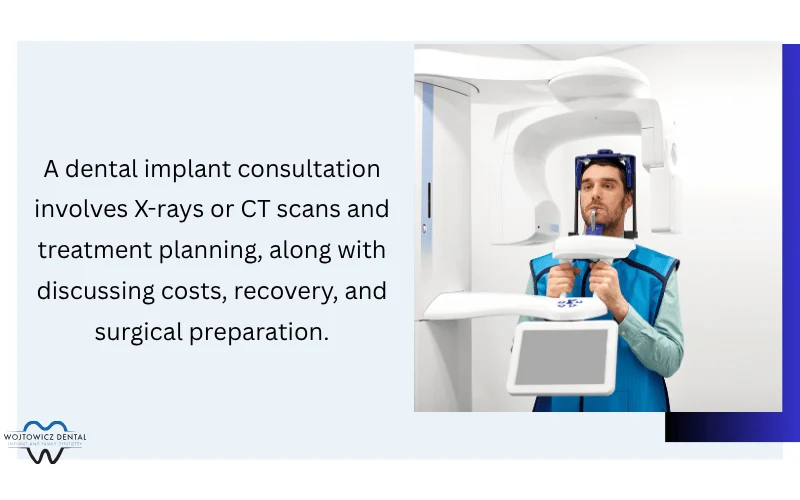
Your dental implant consultation starts with a complete exam of your mouth and jaw. Your dentist takes X-rays or CT scans to check your bone density and see where nerves and sinuses are located.
These images help them plan exactly where to place your implant.
You’ll discuss your medical history during this visit. Tell your dentist about any medications you take or health conditions you have. Some conditions like diabetes or osteoporosis can affect healing.
Your dentist creates a treatment plan based on what they find. They’ll explain how many implants you need and whether you need extra procedures like bone grafting.
You’ll also learn about the timeline for your dental implant surgery and what happens at each stage.
This is your chance to ask questions about costs, recovery time, and what to expect. Your dentist will give you pre-surgery instructions like avoiding food and drink before the procedure.
Steps of Implant Surgery
The implant placement process typically takes 1 to 2 hours per implant. If you need multiple dental implants, your surgery will take longer. Some patients also need bone grafting during the same appointment.
The main steps include:
- Numbing the area with local anesthesia
- Making a small cut in your gum tissue
- Drilling a precise hole in your jawbone
- Placing the titanium implant post
- Closing the gum tissue with stitches
Your dentist might place a healing cap on top of the implant or close the gum completely over it. This depends on your specific treatment plan. You’ll receive post-op instructions before you leave the office.
What Happens During Implant Placement
Your dentist starts by giving you local anesthesia to numb the area completely. You won’t feel pain during the procedure, though you might feel some pressure.
Once you’re comfortable, they make a small opening in your gum tissue to reach the jawbone underneath.
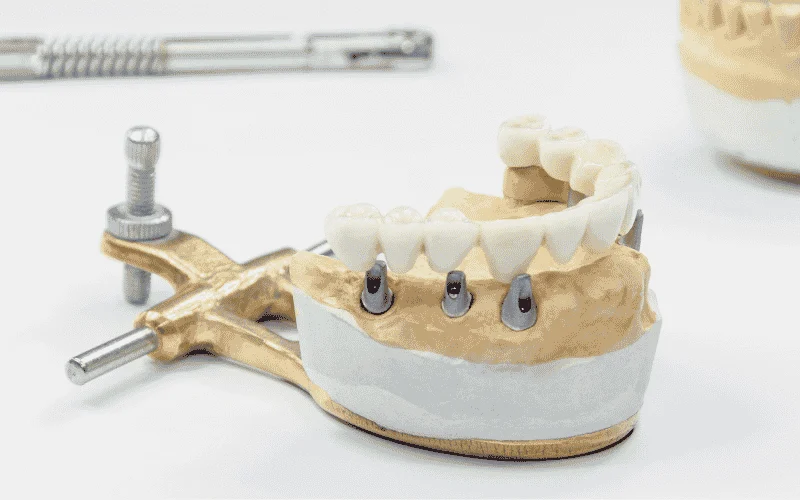
The titanium implant gets carefully positioned into the bone at a precise depth and angle. This titanium post acts as an artificial tooth root. The metal is biocompatible, which means your body won’t reject it.
After the implant is secured in place, your dentist may attach a healing abutment or close the gum tissue over it with stitches. The healing abutment is a small cap that helps your gums heal in the right shape around the implant.
Phases of Dental Implant Healing
Dental implant healing happens in distinct phases that span several months. Each phase plays a critical role in ensuring your implant becomes a stable part of your jaw.
Immediate Post-Surgery Recovery
The first phase begins right after your implant placement. You’ll experience some swelling and mild discomfort for the first few days.
Your dentist will give you specific instructions to follow. These typically include keeping your head elevated, applying ice packs, and avoiding the surgical site.
What to expect during the first 24-48 hours:
- Minor bleeding that should stop within a day
- Swelling that peaks around day two or three
- Mild to moderate discomfort manageable with over-the-counter pain medication
- A soft food diet requirement
You should rest and avoid strenuous activities during this time. Don’t disturb the surgical area with your tongue or fingers. This helps protect the implant site and promotes proper healing.
Week-By-Week Recovery Timeline
Your dental implant recovery timeline progresses gradually over the first month. Week one focuses on managing swelling and transitioning to gentle oral hygiene around the implant site.
By week two, most of your soft tissue healing is complete. You can start reintroducing slightly firmer foods into your diet, though you should still avoid hard or crunchy items.
During weeks three and four, you’ll notice significant improvement. Many patients can eat most normal foods by this point, though some restrictions may still apply depending on your specific case.
Your dentist will schedule follow-up appointments to monitor your progress. These visits help ensure your implant recovery is on track and address any concerns you might have.
Osseointegration and Bone Healing
Osseointegration is the most important phase of dental implant healing. This is when your jawbone grows around and fuses with the titanium implant post.
The process typically takes three to six months to complete. Your dental implant recovery time depends on several factors including bone quality, implant location, and your overall health.
Factors that affect osseointegration:
- Upper jaw implants often take longer than lower jaw implants
- Bone grafts can extend the timeline by several months
- Smoking significantly impairs bone healing
- Good nutrition supports faster integration
You won’t see much happening on the outside during this phase. But inside your jaw, bone cells are actively growing and bonding with your implant. This creates the stable foundation needed for your replacement tooth.
Final Crown or Prosthesis Placement
Once complete osseointegration occurs, your dentist will attach the final restoration. This marks the end of your dental implant recovery.
Your dentist will first place an abutment, which connects the implant to your crown. This may require a minor procedure to expose the implant if it was covered during healing.
After your gums heal around the abutment, impressions or scans are taken. Your custom crown is then fabricated to match your natural teeth in color and shape.
The final crown is secured to the abutment either with cement or a screw. Your dentist will check your bite and make any needed adjustments to ensure comfort and proper function.
Managing Pain, Swelling, and Discomfort
Your body responds to dental implant surgery with predictable symptoms that peak in the first few days. Taking the right steps at the right time makes a significant difference in how comfortable you feel during recovery.
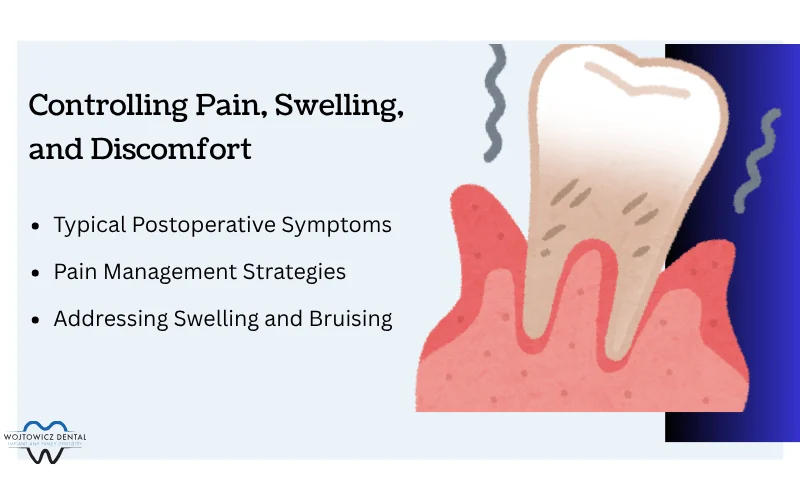
Typical Postoperative Symptoms
You’ll notice swelling around the surgical site that gradually increases after your procedure. The puffiness typically peaks on day three, then slowly goes down over the next week. Your face might look puffy or feel tight during this time.
Some bleeding or light oozing is normal for the first few hours after implant surgery. You might see pink-tinged saliva when you gently rinse your mouth. Bite down on gauze pads for 30 to 45 minutes at a time if bleeding continues.
Bruising can appear on your face near the surgical area. The discoloration might look yellow, purple, or blue. This happens because small blood vessels get disturbed during the procedure.
Your gums will feel tender and sore. You might experience a dull ache or throbbing sensation around the implant site. Most people find that discomfort decreases significantly by days 5-7 as initial healing progresses.
Pain Management Strategies
Take your prescribed pain medication before the numbing wears off completely. Set a timer on your phone so you don’t miss doses during the first 24 hours. Staying ahead of pain works better than trying to control it after it starts.
Your dentist will recommend specific medications based on your needs. Over-the-counter ibuprofen helps with mild to moderate discomfort. Prescription pain relievers provide stronger relief if you need them.
Pain management tips:
- Take medication with food to avoid stomach upset
- Don’t drive or operate machinery while taking prescription pain relievers
- Avoid alcohol when taking any pain medication
- Contact your dentist if pain gets worse after day three
Rest as much as possible during the first few days. Your body needs energy for healing, not physical activity. Prop your head up with extra pillows when lying down to reduce swelling.
Addressing Swelling and Bruising
Apply ice packs to your face for 20 minutes on, then 20 minutes off during the first 48 hours after surgery. The cold helps control both swelling and pain. Wrap the ice pack in a thin towel to protect your skin.
After the first two days, switch to warm compresses if swelling persists. The warmth increases blood flow to the area and helps your body clear away excess fluid. Apply heat for 20 minutes at a time, several times per day.
Keep your head elevated even while sleeping. Use two or three pillows to prop yourself up at a 45-degree angle. This position helps fluid drain away from your face instead of pooling around the dental implant recovery site.
Avoid bending over or lifting heavy objects for the first week. These activities increase blood pressure in your head and can make swelling worse. Skip intense exercise until your dentist clears you to resume normal activities.
Essential Aftercare and Oral Hygiene
Your implant needs proper care and cleaning to heal correctly. Following specific diet guidelines, using gentle cleaning techniques, and rinsing with salt water all help protect the surgical site during dental implant healing.
Diet and Activity Recommendations
Stick to soft foods for the first week after surgery. Scrambled eggs, mashed potatoes, yogurt, smoothies, and pasta work well during this time. Keep foods at room temperature since hot items can irritate your gums.
Avoid crunchy, hard, or chewy foods that could disturb the implant site. Skip chips, nuts, raw vegetables, popcorn, and tough meats for at least two weeks. Don’t use straws because the suction can dislodge blood clots that form around your implant.
You can gradually add more variety to your meals between weeks two and four. Start with soft cooked vegetables and tender proteins like fish.
Chew on the opposite side of your mouth from the implant. Your body needs extra protein, vitamin C, and calcium during recovery to support tissue repair and bone growth.
Rest as much as possible during the first few days. Avoid intense exercise, heavy lifting, or activities that raise your blood pressure for at least a week after surgery.
Oral Hygiene Techniques
Brush your other teeth normally but avoid the surgical area for the first 24 hours. Use a soft-bristled toothbrush and be gentle around the implant site.
Good oral hygiene helps prevent infection during the dental implant recovery timeline.
After the first day, you can carefully clean around the implant using gentle circular motions. Don’t scrub or put pressure on the surgical site. Brush twice daily to keep bacteria from building up in your mouth.
Interdental brushes are small cone-shaped tools that clean between your teeth and around the implant. Use these once your dentist says it’s safe, usually after the first week.
Floss your other teeth carefully with waxed floss or a water flosser set on low pressure. Avoid forcing floss into the gum line near your implant.
Salt Water Rinses and Professional Products
Start salt water rinses on day two, not immediately after surgery. Mix half a teaspoon of salt in a cup of warm water. The water should feel comfortable, not hot.
Swish the rinse gently around your mouth after meals and before bed. Don’t swish hard or spit forcefully. Let the water fall out of your mouth instead to avoid disturbing the healing tissue.
Do this three to four times per day to remove food particles and keep the area clean.
Your dentist may recommend an antibacterial mouthwash to reduce bacteria buildup. Use alcohol-free rinses since alcohol can dry out your mouth and irritate tissues. Follow the instructions on the bottle for how often to rinse.
Potential Challenges and Signs of Complications
While dental implants have high success rates, some issues can develop during recovery. Knowing what symptoms indicate a problem helps you get treatment quickly and protect your investment.
Recognizing Signs of Implant Failure
Implant failure happens when the implant doesn’t properly fuse with your jawbone or develops problems after healing. You might notice the implant feels loose or moves slightly when you touch it.
Pain that continues beyond a few weeks is another warning sign.
Short-term symptoms are most common in dental implant surgery, but some people experience long-term issues.
Numbness or tingling in your lip, chin, or gums that doesn’t go away could mean the implant was placed too close to a nerve.
Watch for these signs of implant failure:
- Persistent pain or discomfort after the first few weeks
- The implant feels loose or wiggly
- Swelling that doesn’t improve or gets worse
- Difficulty chewing on the implant side
- Numbness or unusual sensations that last
If your implant fails to fuse with the bone, your dental surgeon may need to remove it. The good news is that the procedure can be tried again once the area heals.
Understanding Peri-Implantitis
Peri-implantitis is a gum disease that affects the bone supporting your dental implant. It develops from ongoing inflammation around the implant site. This condition can take about 5 years to progress and show symptoms.
The main signs include bleeding or swelling around your implant. You might also notice your gums pulling away from the implant or bad breath that doesn’t go away with brushing.
Peri-implantitis causes loss of the bone that keeps your implant stable.
Good cleaning habits help prevent this problem. Floss around your implant daily once your gums heal. Use interdental brushes to clean hard-to-reach spots. Schedule regular dental checkups so your dentist can clean below the gum line.
When to Contact Your Dentist
Call your dentist right away if you have severe pain, heavy bleeding, or a fever above 101°F. These symptoms could mean an infection that needs immediate treatment.
You should also reach out if swelling and pain last longer than a week after surgery. Understanding common problems that can arise helps you know when something needs attention.
Contact your dental office if you notice:
- Pus or discharge from the surgical site
- A bad taste in your mouth that won’t go away
- The implant crown feels loose
- Increased pain instead of gradual improvement
- Signs of sinus problems like green or yellow nasal mucus (for upper jaw implants)
Don’t wait to see if problems resolve on their own. Quick action prevents minor issues from becoming serious complications that could put your implant at risk.
Long-Term Success and Maintenance Tips
Your dental implant can last decades with proper care. Daily cleaning habits and regular dental visits protect your investment and keep your implant functioning like a natural tooth.
Preserving Your Dental Implant for Life
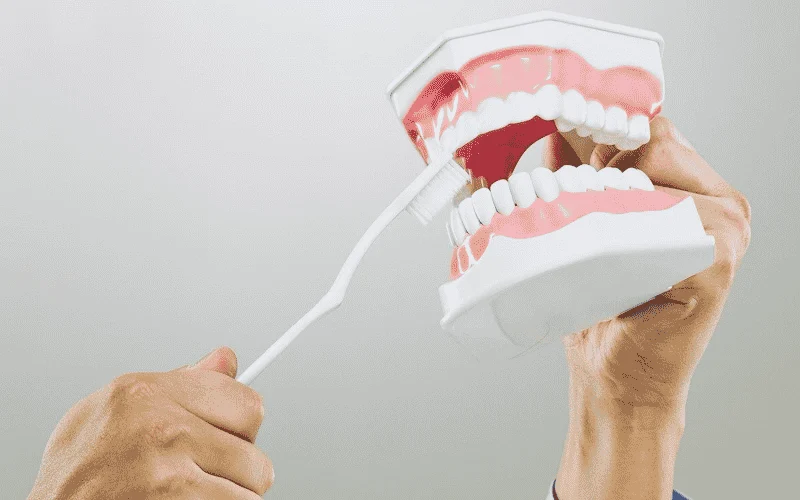
Brush your dental implant twice daily using a soft-bristled toothbrush. You need to clean around the implant crown just like your natural teeth to prevent plaque buildup.
Floss at least once per day around your implant. Special floss or interdental brushes work well to clean the small spaces where your implant meets the gum tissue. These areas can trap food and bacteria if you skip this step.
Avoid chewing on hard objects like ice, pens, or hard candy. While the implant itself is strong, excessive force can damage the crown or stress the surrounding bone.
This matters because osseointegration keeps your implant stable, and protecting the bone around it ensures long-term success.
Stay away from tobacco products. Smoking slows healing and increases your risk of implant failure even years after your dental implant recovery is complete.
Routine Checkups and Professional Care
Schedule dental checkups every six months. Your dentist will examine your implant, check the surrounding gum tissue, and take X-rays when needed to monitor the bone level.
Professional cleanings remove tartar that regular brushing can’t eliminate. Your hygienist uses special tools designed for implant dentistry maintenance that won’t scratch or damage the implant surface.
Your dentist will check for signs of peri-implantitis, an infection around the implant similar to gum disease. Catching problems early prevents more serious complications.
They’ll also verify that your bite is balanced and that the implant crown shows no signs of wear or loosening.
Report any changes immediately. Contact your dentist if you notice bleeding, swelling, pain, or movement around your dental implants between scheduled visits.
Frequently Asked Questions
Most people have similar concerns about pain levels, healing time, and daily activities after getting dental implants.
The recovery process follows predictable patterns, though individual experiences vary based on factors like bone density and overall health.
How long does it usually take to feel back to normal after dental implant surgery?
You’ll likely feel significantly better within 3 to 7 days after your surgery. Most patients experience initial healing within the first two weeks, though complete bone fusion takes three to six months.
The good news is you won’t feel like you’re recovering for most of that time. After the first couple of weeks, you can return to your regular activities while your implant quietly integrates with your jawbone.
Your face might look puffy for the first few days. Some bleeding and tenderness are normal right after the procedure.
What are the typical healing stages I should expect in the first week and beyond?
The first 24 hours involve managing bleeding and starting your pain medication before the numbing wears off. Swelling usually peaks around day three, and you’ll need to apply ice packs for 20 minutes on and 20 minutes off during the first 48 hours.
Days 5 through 7 bring noticeable improvement. Discomfort decreases significantly by this point, and you’ll start feeling more like yourself.
Week two marks a turning point. Most swelling disappears, and your gums should change from red to a healthier pink color as inflammation subsides.
Between weeks 2 and 4, you’ll have a follow-up appointment where your dentist checks the gum tissue and removes any non-dissolving stitches.
During weeks 5 through 12, bone integration with the implant takes place, though you won’t feel much happening during this phase.
What foods and drinks are best during recovery, and what should I avoid (like dairy)?
Soft foods that don’t require much chewing work best during the first week. Scrambled eggs, mashed potatoes, oatmeal, protein shakes, and pasta are good choices.
Keep everything at room temperature since hot foods can irritate the surgical site. You can drink milk and eat dairy products like yogurt unless you have a personal sensitivity or your dentist advises otherwise.
Avoid crunchy, chewy, or hard foods that could disturb the implant. Skip chips, nuts, raw vegetables, and tough meats for now.
Don’t use a straw for drinks. The suction can dislodge the blood clot forming around your implant.
Between weeks 2 and 4, you can gradually add more variety to your meals. Start with soft warm foods and continue avoiding hard or sticky items that could damage the surgical site.
How much time off work do most people need after getting a dental implant?
Most people take one to two days off work after dental implant surgery. The amount of time you need depends on your job type and how you feel.
If you have a desk job, you might return to work the next day. Physical jobs that require heavy lifting or intense activity may need three to five days of rest.
Avoid intense exercise that raises your blood pressure until your dentist gives you the okay. Listen to your body and don’t rush back to demanding activities.
What are the best at-home care tips to keep the surgical site clean and comfortable?
Start salt water rinses on day two, not immediately after surgery. Mix half a teaspoon of salt in a cup of warm water and swish gently around your mouth after meals and before bed.
Don’t swish vigorously or spit forcefully. Let the water fall out of your mouth instead of spitting hard, which can disturb the healing tissue.
Brush your other teeth normally, but avoid the surgical area. Use a soft-bristled toothbrush to maintain oral hygiene without causing irritation.
Rest as much as possible during the first few days. Your body needs energy for healing, not physical activity.
Bite down gently on gauze packs for 30 to 45 minutes at a time if you notice light bleeding. Some oozing is expected for the first few hours.
What can I do to help my mouth heal faster and reduce swelling or discomfort?
Take your pain medication before the numbing wears off after surgery. Set a timer so you don’t forget your next dose, as staying ahead of the pain works better than trying to catch up later.
Apply ice packs during the first 24 hours to control both pain and swelling. After the first day or two, warm compresses often provide more relief than ice.
Focus on protein-rich foods like fish, eggs, and yogurt during recovery. Add foods with vitamin C and calcium to support tissue repair and bone growth.
Rinse with antibacterial mouthwash to reduce bacteria buildup, but avoid alcohol-based rinses that can dry out your mouth. Clean between all your teeth to prevent infection from spreading.
Avoid smoking, as it reduces blood flow and oxygen to the healing site. Attend all follow-up appointments so your dentist can monitor your progress and catch any issues early.