
Living with diabetes can make you question every health decision, including tooth replacement. You may wonder if high blood sugar will slow healing or raise your risk of implant failure.
You deserve clear answers before you commit to surgery.
Yes, you can get dental implants if you have diabetes, as long as your blood sugar stays well controlled and your dental and medical teams monitor your care.
When your A1C stays in a healthy range, studies show implant success rates come close to those of people without diabetes.
Blood sugar plays a key role in healing. High levels can slow bone healing and raise infection risk, which affects how the implant bonds with your jaw.
Some dentists advise caution if your A1C rises above certain levels. When you understand the risks and plan while getting dental implants for diabetics, you can move forward with confidence.
Key Takeaways
- You can get dental implants with diabetes if you keep blood sugar under control.
- Stable A1C levels support healing and lower the risk of infection or implant failure.
- Careful planning and follow-up care improve long-term implant success.
Table of Content
- Are Dental Implants Safe for Diabetics?
- How Diabetes Influences Dental Implant Outcomes
- Success Rates and Long-Term Prognosis for Diabetic Patients
- Preparing for Dental Implant Surgery with Diabetes
- Post-Surgery Care and Best Practices for Diabetics
- Frequently Asked Questions
Are Dental Implants Safe for Diabetics?
You can get dental implants if you have diabetes, but your blood sugar control plays a big role. Research shows strong results when diabetes stays well managed.
Your dentist will look at healing ability, infection risk, and your daily glucose levels before moving forward.
Clinical Research on Implant Safety in Diabetic Patients
Clinical studies show that dental implants and diabetes can work well together when blood sugar stays under control.
A review reported that implant procedures are safe and predictable in people with controlled diabetes, with complication rates close to those without diabetes.
Success rates vary based on control levels. Some reports show success rates around 85–90% in people with diabetes, compared to about 95–98% in those without it.
When your A1C stays within your target range, studies show implant outcomes often match those of non‑diabetic patients.
The key factor is not the diagnosis itself, but how stable your blood sugar remains before and after surgery.
Blood Sugar Control and Candidacy Considerations
If you ask, are dental implants safe for diabetics, the honest answer depends on your glucose control. High blood sugar slows healing and raises the risk of infection.
It can also affect how well the implant bonds to your jawbone, a process called osseointegration.
You improve your chances of success when you:
- Keep your A1C within your doctor’s recommended range
- Take diabetes medication as prescribed
- Maintain good oral hygiene
- Attend regular dental visits
If your diabetes is not well controlled, your dentist may delay surgery. They may also work with your primary care doctor to help you stabilize your levels first.
You should also expect close follow‑up after surgery. Careful monitoring helps catch early signs of infection or delayed healing.
Evaluating Risks Versus Benefits
You need to weigh risks and benefits based on your health status. Uncontrolled diabetes increases the chance of implant failure and post‑surgical infection.
However, controlled diabetes lowers those risks to levels similar to people without diabetes.
Dental implants often offer better stability than dentures. Loose dentures can cause sore spots, gum irritation, and trouble chewing firm foods.
Stable implants may help you eat a balanced diet, which supports better blood sugar control.
When you consider whether diabetics can get dental implants, focus on your current health, not just your diagnosis.
With good planning and medical support, many people with diabetes safely receive dental implants and keep them long term.
How Diabetes Influences Dental Implant Outcomes
Diabetes can slow healing, raise infection risk, and affect how well the implant bonds with your jawbone. Your blood sugar control plays a direct role in how successful dental implants with diabetes will be.
Healing Time and Osseointegration Challenges
When you get dental implants for diabetics, your body must grow bone around the implant. This process is called osseointegration, and it usually takes a few months.
High blood sugar can slow this process. It affects blood flow, bone cells, and collagen, which your body needs to repair tissue.
Research in a systematic review on diabetes mellitus and dental implants found that diabetes can influence bone healing and early implant survival.
You may notice that your healing time is longer than someone without diabetes. Dentists often monitor you more closely during the first 3 to 6 months.
If you keep your A1C in a healthy range, your bone can still integrate well with the implant. Good glucose control supports better stability and lowers early failure risk.
Risks of Infection and Peri-Implant Disease
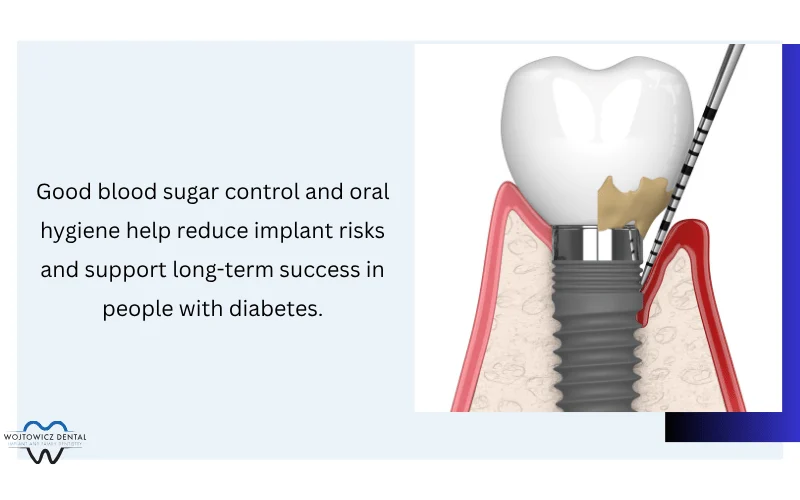
Diabetes can weaken your immune response. This makes it harder for your body to fight bacteria around the implant.
Poorly controlled blood sugar raises the risk of swelling, delayed wound healing, and peri-implantitis, which is inflammation and bone loss around the implant.
A review on dental implant outcomes in patients with diabetes mellitus highlights the link between glycemic control and peri-implant health.
You face higher risk if your blood sugar stays above target levels for long periods. Long-term hyperglycemia can damage small blood vessels, which reduces oxygen and nutrient supply to the gums.
To lower your risk, you should:
- Keep your A1C within your doctor’s goal
- Follow strict oral hygiene
- Attend regular dental checkups
- Treat gum disease before implant surgery
With stable diabetes and careful care, many people still have healthy implants for years.
Differences Between Type 1 and Type 2 Diabetes
Type 1 and Type 2 diabetes both affect dental implants, but they differ in cause and management.
With Type 1 diabetes, your body does not produce insulin. Blood sugar can change quickly, so tight daily control is critical before and after surgery. Your dentist may coordinate closely with your physician to plan implant timing.
With Type 2 diabetes, insulin resistance is the main issue. Many people manage it with diet, exercise, oral medication, or insulin.
Because Type 2 is more common in adults seeking implants, most research on diabetes and dental implants focuses on this group.
Studies show that well-controlled Type 2 diabetes often has implant success rates close to those without diabetes. The key factor is not the type alone, but how well you control your blood sugar over time.

Success Rates and Long-Term Prognosis for Diabetic Patients
You can get dental implants if you have diabetes, but your blood sugar control plays a key role in how well they last.
When you manage your glucose levels and follow aftercare steps, your long‑term results can match those of people without diabetes.
Impact of Glycemic Control on Implant Longevity
Your A1C level has a direct effect on healing and long‑term implant stability. When you keep your blood sugar within a controlled range, your body forms bone around the implant more predictably.
Research shows that patients with poorly controlled diabetes face higher rates of peri‑implantitis and implant loss over time, especially after placement, according to this systematic review on diabetes mellitus and dental implants.
In contrast, when diabetes stays controlled, success rates look similar to those of healthy patients.
Other reviews confirm that good glucose control lowers the risk of complications. One paper explains that implant failure rates in well‑controlled patients are comparable to non‑diabetic individuals.
If your blood sugar stays high for long periods, healing slows and infection risk rises. That makes strong glycemic control one of the most important factors for dental implants with diabetes.
Benchmark Success Rates Compared to Non-Diabetic Patients
Dental implants have high success rates in the general population, often above 90 percent over many years. The key question is how dental implants for diabetics compare.
Studies show that when your diabetes is well managed, long‑term survival rates closely match those of non‑diabetic patients. Marginal bone loss and implant stability also appear similar in controlled cases.
However, if your blood sugar remains poorly controlled, success rates drop. Research notes a significant decrease in implant success in patients with uncontrolled type 2 diabetes, especially when A1C levels stay elevated.
This means your personal numbers depend less on the diagnosis itself and more on how stable your condition is before and after surgery.
Factors That Improve or Reduce Success
Several clear factors can raise or lower your odds of long‑term success with dental implants:
Factors that improve success
- Stable A1C and consistent glucose monitoring
- Good daily oral hygiene
- Regular dental checkups
- Careful surgical planning
- Non‑smoking status
Factors that reduce success
- Poor glycemic control
- Smoking
- Untreated gum disease
- Long duration of uncontrolled diabetes
High blood sugar can increase inflammation and raise your risk of peri‑implantitis. Smoking further reduces blood flow, which slows healing.
You can improve your outcome by working closely with both your dentist and your primary care doctor. When you treat diabetes as part of your implant plan, you give your dental implants the best chance to last for many years.
Preparing for Dental Implant Surgery with Diabetes
Careful planning lowers your risk of infection and implant failure. You need stable blood sugar, clear communication with your medical team, and strong daily oral care before dental implant surgery.
Pre-Surgical Planning and Medical Collaboration
Start by sharing your most recent A1C result with your dentist. Many implant specialists prefer an A1C under 7% before moving forward with dental implants for diabetics. If your level is higher, your dentist may suggest delaying treatment until you improve control.
Work closely with your primary doctor or endocrinologist. Good coordination helps manage blood sugar around the time of surgery.
Blood sugar control has a bigger impact on success than whether you have type 1 or type 2 diabetes.
You should also review your full health history. Tell your dentist if you have kidney disease, heart problems, or a history of gum disease. These conditions can affect healing after dental implant surgery.
Morning appointments often work best. Your blood sugar is usually more stable earlier in the day, and you can eat and take medication on schedule.
Optimizing Blood Sugar and General Health
Give yourself time to improve your numbers before surgery. It takes about 2 to 3 months to see real change in your A1C.
Focus on:
- Checking blood sugar regularly
- Following your meal plan
- Taking medications exactly as prescribed
- Avoiding smoking
Smoking and high blood sugar together raise the risk of infection and implant loss.
If you have gum disease, treat it first. Healthy gum tissue supports better healing. Research on dental implants for diabetic patients shows that long-term high blood sugar and gum problems both increase implant failure risk.
You should also control blood pressure and maintain a healthy weight. Stable overall health supports bone healing and improves how your body responds to dental implants and diabetes together.
Managing Medications and Oral Hygiene Before Surgery
Review all medications with your dentist. Include insulin, oral diabetes drugs, blood pressure pills, and blood thinners.
Do not stop or adjust medication unless your doctor tells you to. On the day of dental implant surgery, you may need a modified meal or insulin schedule. Your medical team will guide you.
Some dentists prescribe antibiotics before or after surgery. This step may reduce infection risk, especially if your blood sugar has been hard to control.
Improve your oral hygiene at least four weeks before surgery:
- Brush twice daily with a soft brush.
- Floss every day.
- Use an antimicrobial rinse if recommended.
- Schedule a professional cleaning.
Clean gums and low plaque levels help your implant bond to bone. Preparing for dental implant surgery this way gives you a stronger foundation for healing.
Post-Surgery Care and Best Practices for Diabetics
After dental implant surgery, your daily habits matter as much as the procedure itself. Careful wound care, steady blood sugar control, and early action if problems appear can protect your results and support long-term success.
Wound Care and Blood Sugar Monitoring
Right after dental implant surgery, you need to protect the surgical site. Bite on gauze as directed and avoid spitting, smoking, or using a straw for at least 24 hours. These steps help prevent bleeding and dry socket.
Keep swelling down with a cold pack for 10–15 minutes at a time during the first day. Take medications exactly as prescribed.
For dental implants and diabetes, blood sugar control is critical. Higher glucose levels can slow healing and raise infection risk. Many experts recommend an A1C under 7.5% before major procedures.
Check your glucose more often for the first 48 hours. Soft foods like yogurt, eggs, and soup may change your usual carb intake, so adjust insulin or medication with your doctor’s advice.
Oral Hygiene and Maintenance Visits

You still need daily oral care, even while healing. Good hygiene lowers the risk of infection around dental implants for diabetics.
For the first few days:
- Brush gently with a soft toothbrush.
- Avoid the surgical site unless your dentist says otherwise.
- Rinse with a prescribed antimicrobial mouthwash if recommended.
After the initial healing phase, brush twice a day and floss daily. Clean around the implant carefully to prevent plaque buildup.
Poor cleaning can lead to peri-implantitis, which is more common when diabetes is not well controlled.
Schedule follow-up visits as instructed. Dentists often suggest cleanings every 3–6 months for patients managing diabetes.
Well-managed diabetes can lead to outcomes similar to those without diabetes when home care and professional maintenance stay consistent.
Recognizing and Addressing Complications
Early action can save an implant. Do not ignore warning signs.
Contact your dentist if you notice:
- Increasing pain after 2–3 days
- Pus or bad-tasting drainage
- Fever above 100.4°F
- Swelling that spreads beyond the area
- Blood sugar that stays high despite usual medication
People with poorly controlled diabetes face higher risks of delayed healing and infection.
If a problem starts, quick treatment with cleaning, antibiotics, or adjustment of the implant area can prevent failure.
Stay in close contact with both your dentist and your diabetes care provider. Working as a team gives your dental implants the best chance to heal and last.
Frequently Asked Questions
Most people with diabetes can get dental implants if they keep their blood sugar under control. Your A1C level, gum health, and overall medical history play a direct role in healing time and long‑term success.
Are dental implants safe for people with diabetes?
Yes, dental implants are usually safe if you manage your blood sugar well.
High blood sugar can slow healing and raise the risk of infection. That does not mean you cannot get implants. It means your dental team will plan carefully and monitor you closely.
Many dentists agree that patients with well‑controlled diabetes often have success rates close to people without diabetes.
Can you get dental implants if you have type 1 diabetes?
Yes, you can get implants if you have type 1 diabetes.
Dentists do not base their decision on whether you have type 1 or type 2 diabetes. They focus on how stable your blood sugar has been over time.
This article on type 1 and type 2 diabetic patients getting dental implants explains that keeping your blood sugar in a healthy range before and after surgery improves your chances of success.
What A1C level do dentists typically want before placing dental implants?
Many dentists look for an A1C below about 7% before surgery.
Some specialists may accept slightly higher numbers, but they often use 8% as a caution point. If your A1C has been above that level, they may delay treatment until you improve control.
How does blood sugar control affect dental implant healing time?
Your blood sugar level affects how well your body heals after surgery.
When your glucose stays high, your body has a harder time fighting bacteria and building new bone around the implant. This can slow the process called osseointegration, where the implant fuses with your jaw.
If you keep your levels stable, healing often follows a normal timeline. Good control also lowers your risk of gum infection, which can threaten the implant.
What is the dental implant success rate for patients with diabetes?
Success rates for people with controlled diabetes can be close to those without diabetes.
However, poorly controlled diabetes raises the risk of implant failure. A large review found higher failure rates in diabetic patients compared to non‑diabetic patients, especially when blood sugar stayed high.
Your personal outcome depends on your A1C history, oral hygiene, and follow‑up care.
What conditions or factors might disqualify someone from getting dental implants?
Uncontrolled diabetes is one of the main red flags.
Active gum disease, heavy smoking, untreated bone loss, or serious health issues like advanced heart or kidney disease can also delay or prevent implant treatment.
Your dentist will check your mouth and review your medical history before moving forward.
If your blood sugar has been unstable for months, your provider may ask you to work with your doctor first. Once your health improves, you may become a good candidate for implants.