

Your wedding smile matters because it shows up in nearly every photo from the day, from the ceremony to the last dance.
If you are picturing a brighter, straighter, more confident smile for your wedding, planning your smile makeover timeline early can give you enough time for treatment, healing, and final adjustments.
Rushing cosmetic dentistry in the final weeks before a big event often limits your options instead of expanding them.
Planning around a wedding date is different from planning cosmetic dentistry with no deadline.
The safest approach starts with your event date, moves backward through the treatments you want, and leaves room for healing, adjustments, and everyday oral health checks along the way.
Cosmetic dentistry from an experienced provider can help you sort out which changes fit your calendar and which ones need more breathing room.
Couples in Elroy, WI, planning a wedding, anniversary party, or milestone event often assume smile makeovers happen overnight.
In practice, the best results come from sequencing treatments correctly and giving your mouth time to heal between steps, especially when whitening, bonding, or veneers are part of the plan.
Key Takeaways
- Start with your event date and work backward, giving priority treatments the most lead time.
- Oral health checks and gum care come before any cosmetic treatment, no matter how close the event is.
- Whitening usually comes before shade-matched bonding or veneers, with a buffer before photography for comfort and sensitivity.
Start With the Event Date and Your Smile Goals
Your wedding date is the starting point for every decision that follows, not an afterthought once treatments are chosen.
Once you know how many months or weeks you have, a cosmetic dentist can map out which smile goals are realistic and which ones need a longer runway.
Wedding smile prep works best as a conversation about priorities first, procedures second.
Some couples want a full smile makeover with alignment, whitening, and veneers. Others just want a cleaner, brighter version of their current smile.
Tools like digital smile design let you preview possible changes before committing, which helps you and your dentist agree on smile design goals early, before any irreversible steps are taken.
What Matters Most in Your Photos and Daily Confidence?
Photos capture your smile at rest and mid-laugh, so both matter for planning. Ask yourself whether color, spacing, chips, or gum show bother you most in photos versus everyday mirror moments.
A smile makeover addresses several concerns at once, but that is not always necessary. If one chipped tooth or a shade of yellowing bothers you most, a focused fix may meet your goal without a longer, more involved plan.
Why a Consultation Early in Elroy Creates More Options
An early visit to an experienced Elroy dentist opens up choices that a rushed timeline forecloses.
If you wait until two months before the wedding to book a consultation, treatments needing lab work or healing time may no longer fit.
Booking a consultation with Wojtowicz Dental as soon as you set your wedding date gives Dr. Emily Wojtowicz time to evaluate your oral health, discuss your smile goals, and build a plan with realistic checkpoints along the way.
Make Oral Health the Foundation of Cosmetic Care
Healthy teeth and gums come before any cosmetic decision, regardless of how much time remains before your wedding.
Cosmetic work placed over untreated decay, gum inflammation, or an unstable bite tends to need rework later, which is the opposite of what a tight timeline allows.
Why Gum Health, Decay, and Existing Dental Work Come First
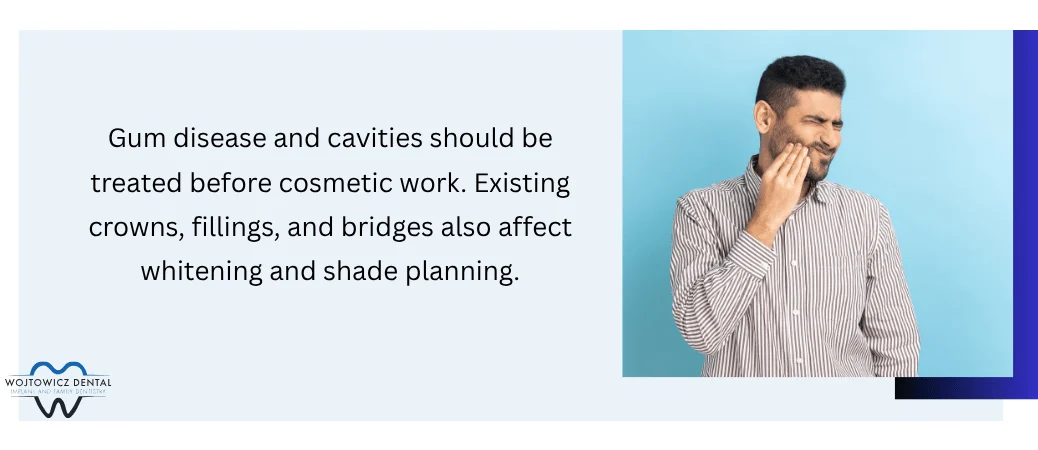
Gum disease and cavities need treatment before whitening, bonding, or veneers begin. Tooth decay is often found during routine checkups, sometimes confirmed with X-rays.
Treating decay or gum inflammation first protects the foundation your cosmetic work depends on.
Existing crowns, fillings, or bridges also factor into planning.
Whitening will not change the color of tooth-colored restorations, so your dentist needs to know what dental work is already in your mouth before recommending a shade goal.
A routine visit for regular dental cleanings and exams is often the first appointment on a wedding smile timeline, even before cosmetic consultations begin.
When a Misaligned Bite or Missing Tooth Changes the Plan
A misaligned bite or a missing tooth can reshape your entire cosmetic timeline.
If your bite is uneven, orthodontic treatment may need to happen before veneers or bonding so the new dental work sits correctly and wears evenly.
Missing teeth raise a similar question. Dental implants require a healing period called osseointegration, where the implant fuses with the jawbone, which can take several months.
If a missing tooth is part of your smile concern, ask early whether dental implants fit your timeline or whether a temporary solution makes more sense before the wedding, with permanent treatment planned afterward.
Which Options Fit Your Time Before the Event?
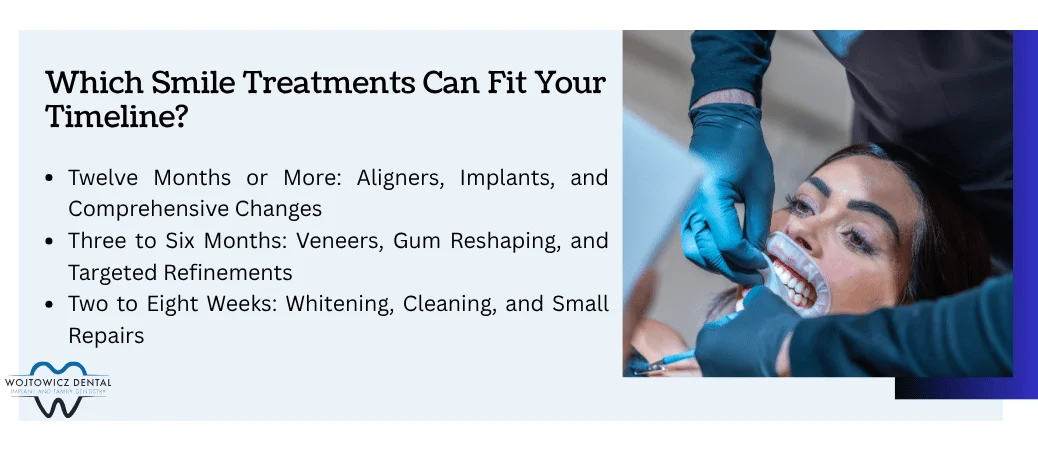
The treatments you can realistically complete depend on how many months separate you from the wedding, more than any other factor.
Some cosmetic changes need a year or longer for comfortable, well-fitted results, while others can happen in the final weeks with minimal risk.
| Treatment | Typical Lead Time | Healing or Adjustment Needed |
| Clear aligners or braces | 12+ months | Ongoing adjustment period |
| Dental implants | 12+ months | Osseointegration healing |
| Porcelain veneers | 3 to 6 months | Lab fabrication, bite check |
| Gum contouring | 3 to 6 months | Gum healing time |
| Composite bonding | 2 to 8 weeks | Minimal |
| Professional teeth whitening | 2 to 8 weeks | Possible sensitivity |
Twelve Months or More: Aligners, Implants, and Comprehensive Changes
Orthodontic treatment and dental implants need the most lead time of any wedding smile option.
Clear aligners such as Invisalign gradually shift teeth over many months, and rushing the process risks an incomplete result or relapse after the aligners come off.
Dental implants follow a similar pattern. The implant needs time to fuse with the bone through osseointegration before a permanent crown is placed, which is why a missing tooth discovered a few months before the wedding often calls for a temporary option instead.
Three to Six Months: Veneers, Gum Reshaping, and Targeted Refinements
Porcelain veneers and gum contouring fit comfortably into a three to six month window.
Veneers require impressions, temporary veneers while a lab fabricates the permanent set, and a fitting appointment to check color and comfort.
Gum contouring, which reshapes the gumline to reveal more tooth structure or even out an uneven smile, needs healing time before the gums look settled in photos.
Both treatments benefit from being scheduled well before the final month.
Two to Eight Weeks: Whitening, Cleaning, and Small Repairs
Professional teeth whitening, dental cleanings, and small repairs are the most flexible treatments on a wedding timeline.
In-office whitening delivers faster results in a single visit, while take-home whitening trays gradually brighten your teeth over one to two weeks, giving you more control over the process.
Small chips or minor gaps can often be corrected with dental bonding in a single appointment, with little to no recovery time needed before photography.
Put Treatments in the Right Order and Leave a Buffer
Alignment comes before whitening and restorations, and whitening comes before shade-matched bonding or veneers, in nearly every well-planned smile timeline.
Getting this order backward can mean redoing work or living with a shade mismatch in your wedding photos.
Why Alignment Usually Comes Before Whitening and Restorations
Moving teeth with clear aligners or braces changes their position, which can affect how veneers or bonding are shaped and placed.
Finishing orthodontic treatment first means any restorative work fits the final tooth positions instead of ones that are about to shift.
How to Plan Around Shade Matching, Healing, and Sensitivity
Whitening should happen before porcelain veneers or composite bonding, since those materials are color-matched to your natural teeth at the time they are placed.
If you whiten afterward, the restorations will not lighten along with your natural enamel, leaving a visible difference.
Temporary tooth sensitivity and gum irritation can occur after whitening. Leaving a short buffer before any bonding or veneer appointment gives your teeth time to settle.
How to Protect a Bright Smile Before Wedding Photography
Staining habits in the final weeks can undo whitening progress right before your wedding photography.
Coffee, tea, and red wine are common culprits, and cutting back in the two weeks before the event helps protect your results.
Scheduling a light touch-up with take-home whitening trays a few days before the wedding, rather than the night before, allows time for any sensitivity to fade before you are in front of a camera.
Choose a Comfortable Timeline for Your Best Smile

The right wedding smile prep timeline is the one that fits your goals without rushing your oral health.
A comfortable plan starts months ahead when possible, treats gum health and decay first, and sequences cosmetic dentistry so whitening, bonding, and veneers all work together instead of competing for the same weeks.
Smile makeovers do not need to be dramatic to feel meaningful. A smaller, well-timed plan built around your specific smile goals can leave you just as confident on your wedding day as a comprehensive one.
Working with a dental team that understands local scheduling, lab timelines, and healing windows gives you a realistic path forward, without the pressure of last-minute decisions.
Frequently Asked Questions
How far in advance should I start a wedding smile makeover in Elroy, WI?
Start as soon as you set your wedding date, ideally 12 months ahead if you are considering Invisalign, braces, or dental implants.
Even a simpler plan involving whitening or bonding benefits from starting three to six months out, since it leaves room for a dental checkup and any needed treatment beforehand.
Can I get veneers before my wedding if I only have a few months?
Porcelain veneers usually need three to six months to complete comfortably, including time for impressions, temporary veneers, and a final fitting.
If your wedding is closer than that, composite bonding or professional teeth whitening may be a more realistic option for achieving a similar visual improvement in less time.
Should I whiten my teeth before composite bonding or porcelain veneers?
Whitening should happen before composite bonding or porcelain veneers, since those materials are shade-matched to your teeth at the time they are placed.
Whitening afterward will not lighten the bonding or veneers, which can create a noticeable color difference in photos.
Is Invisalign realistic if my wedding is less than a year away?
Invisalign can still be worth discussing with your dentist, but the amount of tooth movement needed determines whether it fits your timeline.
Minor spacing or alignment concerns may be addressed in several months, while more complex bite issues typically need closer to a year or more.
What dental treatments are safe to schedule in the final two weeks before a wedding?
A dental cleaning, minor touch-up whitening with take-home trays, or a small bonding repair are generally safe to schedule close to the wedding date.
Save new veneers, orthodontic changes, or dental implant procedures for earlier in your timeline, since these need more healing and adjustment time.