Choosing the right implant dentist can feel like a big task, especially when you are dealing with missing teeth and considering dental implants as a long-term solution.
The best way to feel confident in your choice is to walk into your dental implant consultation with a clear list of questions about training, treatment options, and costs.
This helps you understand exactly what to expect and gives you the information you need to make a smart decision for your oral health.
A good consultation is not just about getting a price quote. It is your chance to learn about the dentist’s experience, ask about your specific case, and get a real sense of how they will support you through the process.
Knowing the right questions to ask an implant dentist can help you compare your options, understand their recommendations, and avoid surprises later.
This guide walks you through the most important questions to bring to your appointment.
You will learn what to ask about your candidacy, the dentist’s background, your treatment plan, recovery, and long-term care so you can leave your consultation feeling informed and ready to move forward.
Key Takeaways
- Asking the right questions during your consultation helps you feel confident and informed before starting treatment.
- A qualified implant dentist should be able to clearly explain your candidacy, treatment plan, and what to expect during recovery.
- Getting a written cost breakdown and timeline helps you avoid surprises and plan for long-term care.
Table of Content
- Confirm Your Candidacy and Clinical Readiness
- Evaluate the Dentist’s Training and Experience
- Understand Your Personalized Treatment Plan
- Clarify Surgery, Comfort, and Recovery Expectations
- Discuss Risks, Aftercare, and Long-Term Maintenance
- Get a Written Timeline, Cost Breakdown, and Follow-Up Plan
- Frequently Asked Questions
Confirm Your Candidacy and Clinical Readiness
Not everyone is ready for implants on day one, and that’s okay. Your dentist needs to check your bone, gums, and health history before moving forward with treatment.
Am I a Good Candidate for Implants Right Now?
You might be a great candidate, or you might need some prep work first. Either way, it’s worth asking directly.
Your dentist should look at your overall dental health, not just the missing tooth or teeth.
They’ll want to know how long the tooth has been gone, what shape your other teeth are in, and whether you’ve had any past dental work that could affect the plan.
Ask if you need any treatment before implants can happen. Some patients are ready right away and even qualify for same-day dental implants.
Others need a few months of prep work, like treating gum disease or building up bone.
Don’t be afraid to ask why you do or don’t qualify yet. A good dentist will explain their reasoning in plain terms.
Do I Have Enough Jawbone Density for Dental Implants?
Implants need solid bone to attach to, so this question matters a lot. Bone loss is common after you lose a tooth, especially if it’s been missing for a while.
Ask your dentist to check your jawbone using dental x-rays or a CT scan. These images show exactly how much bone you have and where.
If you don’t have enough bone density, that doesn’t mean implants are off the table.
Bone grafting can rebuild the area over time for dental implants. A bone graft adds material to weak spots in your jaw, giving the implant something sturdy to bond with.
Ask how long grafting might take to heal before the implant can go in. This step can add months to your treatment plan, so it helps to know upfront.
Are My Gums Healthy Enough for Implant Treatment?
Your gums play a bigger role in implant success than you might think. Healthy gums support the implant and help it stay in place long term.
Ask your dentist to check for periodontal disease or any signs of infection. Gum disease can weaken the tissue and bone around your teeth, which puts implants at risk.
If your gum condition needs work, your dentist may recommend gum treatment before implant placement. This could mean a deep cleaning or other therapy to clear up infection and inflammation.
Ask how your current gum health compares to what’s needed for implants. Getting a clear answer now can save you frustration later.
Could My Medical History or Habits Affect Healing?
Your body’s ability to heal matters just as much as your bone and gums. Certain health conditions and habits can slow down or complicate the process.
Be upfront about your full medical history, especially if you have diabetes. You may still be able to get dental implants if you have diabetes, but uncontrolled blood sugar can affect how well your body heals after surgery.
Ask about blood thinners and bisphosphonate medications too, since both can impact healing and bone response. Your dentist needs to know every medication you’re taking, not just the major ones.
Smoking is another factor to bring up. It can slow healing and increase the risk of implant failure, so your dentist may suggest quitting or cutting back before treatment.

Evaluate the Dentist’s Training and Experience
Not every dentist has the same level of skill in implant dentistry, so it helps to ask about their background before you commit to treatment.
Their training, case history, and results can tell you a lot about what to expect from your own procedure.
What Training and Credentials Do You Have in Implant Dentistry?
Dental school gives every dentist basic knowledge, but implant surgery often calls for extra training beyond that. Ask your dentist about any advanced courses, certifications, or residencies they have completed in implantology.
Some dentists pursue credentials through groups like the American Academy of Implant Dentistry, which involves extra testing and case reviews.
You might also be treated by a specialist, such as an oral surgeon or periodontist, who has focused years of training on implant placement.
There’s no single right path, but you want to know your dentist has real, verified experience. A confident dentist will be happy to share this information with you.
How Many Similar Implant Cases Have You Completed?
Experience matters, especially if your case involves anything more complex than a single tooth replacement. Ask how many implant surgeries the dentist has performed, and more importantly, how many cases similar to yours.
For example, if you need bone grafting or multiple implants, ask if they have handled that specific type of case before.
A dentist who does this work regularly will usually have clear answers and helpful details to share.
You don’t need an exact number, but you should feel confident they have hands-on experience with cases like yours. This can lower your risk of complications and improve your results.
Can I See Before-and-After Photos and Discuss Expected Outcomes?
Photos can help you set realistic expectations for how your smile might look after treatment. They can also help you see how dental implants can improve your smile by replacing missing teeth with restorations designed to look natural.
Ask to see before-and-after photos from patients with a similar starting point to yours.
This gives you a chance to judge the dentist’s work and see real examples of their skill. It also opens the door to ask questions about the treatment planning process, healing time, and what influenced each outcome.
If a dentist can’t show you any photos or is hesitant to talk about past cases, that may be a sign to keep looking. A trustworthy provider will welcome this kind of transparency.
Who Will Perform Each Part of My Care?
Getting dental implants often involves more than one step, and sometimes more than one provider. Ask who will handle each part of your treatment, from the initial consultation to the final restoration.
In some cases, a general dentist may complete part of the process, while an oral surgeon or periodontist handles implant placement.
Understanding this ahead of time helps you know what to expect and who to contact with questions along the way.
Clear answers here can also reveal how well the dental team communicates and coordinates. This matters for both your comfort and the long-term success of your treatment.
Understand Your Personalized Treatment Plan
Your dentist should walk you through the exact steps of your dental implant treatment, not just hand you a generic plan.
Ask about the tooth-replacement option, any needed prep work, the materials involved, and how technology helps place your implant accurately.
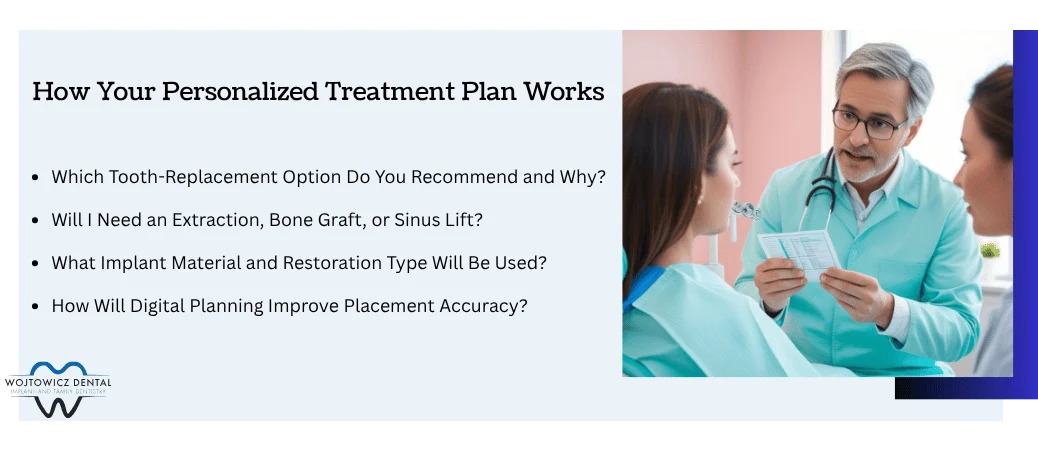
Which Tooth-Replacement Option Do You Recommend and Why?
There is more than one way to replace missing teeth with implants. Your dentist might suggest a single implant, implant-supported bridges, or an all-on-x setup depending on how many teeth you are missing.
Ask why they picked this option for you specifically. A good dentist will explain how your jawbone health, the number of missing teeth, and your budget all played a role.
You should also ask how this option compares to dentures. Implants tend to feel more stable and natural, but your dentist can walk you through the pros and cons based on your case.
Will I Need an Extraction, Bone Graft, or Sinus Lift?
Some patients need extra steps before the implant itself goes in. Ask your dentist if you will need a tooth extraction first, and how that will affect your timeline.
You should also ask about bone grafting. If your jawbone is too thin or soft, a bone graft can build up the area so it can support an implant.
For upper back teeth, you might need a sinus lift. This procedure raises the sinus floor to create more room for the implant.
Ask how each of these steps affects your total treatment time and cost. Some patients need one, both, or neither.
What Implant Materials and Types of Restorations Will Be Used?
Implants are usually made from titanium or zirconia. Ask your dentist which material they recommend and why.
Titanium is the most common choice. It has a long track record and bonds well with bone.
Zirconia implants are a newer option. Some patients like them because they are metal-free and tooth colored.
You should also ask about the abutment, which is the small connector piece between the implant and your new tooth.
Then ask what type of restoration will sit on top, whether that is a single crown, a bridge, or a full denture. Each choice affects how your new tooth will look, feel, and function.
How Will Digital Planning Improve Placement Accuracy?
Modern implant treatment planning often relies on digital tools to improve accuracy. Ask your dentist if they use digital impressions instead of the old-style putty molds. Digital scans tend to be faster and more comfortable.
You should also ask about dental x-rays or 3D imaging. These scans let your dentist see your jawbone, nerves, and sinuses before they ever start.
This kind of planning helps your dentist place the implant in the exact right spot. Ask how this technology lowers the chance of problems during your procedure.
Clarify Surgery, Comfort, and Recovery Expectations
Knowing what happens before, during, and after your implant surgery helps you feel calm and ready.
Ask your dentist to walk you through sedation choices, healing time, and how they check that your implant is bonding with your jawbone.
What Type of Anesthesia or Sedation Is Available?
Most implant surgeries start with local anesthesia to numb the area around your tooth. This keeps you awake but pain-free during the procedure.
If you feel nervous about surgery, ask about extra sedation options. Many offices offer nitrous oxide, oral sedatives, or IV sedation for patients who want to relax more deeply.
Your dentist should also ask about your health history first. Some sedation methods are not safe for people with certain heart or breathing conditions.
It also helps to ask essential questions before your surgery so you know exactly what to expect on the day of treatment.
What Happens During Implant Placement and the Healing Period?
Dental implant surgery usually starts with a small cut in your gum. The dentist then places a titanium or zirconia post into your jawbone.
After implant placement, you enter a healing period that can last two to six months. During this time, swelling and mild soreness are common, but they usually fade within a week.
Ask your dentist what pain relief you can use and which foods to avoid. Soft foods and cold drinks often help the area heal faster.
Knowing the recovery timeline after dental implants help you plan work, meals, and rest around your recovery.
How Will You Monitor Osseointegration?
Osseointegration is the process where your jawbone grows around the implant post and locks it in place. This step is what makes the implant strong enough to hold a tooth.
Ask how your dentist checks on this bone integration process. Many use X-rays or scans at set follow-up visits to confirm the bone is fusing properly.
If you’re concerned about getting a dental implant with bone loss, ask whether your bone provides enough support for proper integration or if additional treatment may be needed.
This step matters because a solid bond is what makes your implant last for years, so ask about the signs your dentist looks for during these checkups.
What Temporary Tooth Options Will I Have?
You will likely need a temporary tooth while your implant heals and before your final restoration is placed. Ask what options are available so you are not left with a gap in your smile.
Common choices include:
- A removable flipper tooth
- A temporary bridge
- A temporary crown attached to the implant, if your case allows it
Ask how long you will wear the temporary piece and how it may affect eating or speaking.
You should also ask what the process looks like once you move to crown placement, since some offices custom-fit your final crown only after bone healing is confirmed.
This helps you understand the full timeline of your dental implant consultation from start to finish.
Discuss Risks, Aftercare, and Long-Term Maintenance
Getting a dental implant is generally safe, but you should still understand the possible risks, how to care for your implant, and what happens if problems come up.
Knowing this ahead of time helps you feel more confident going into the implant process.
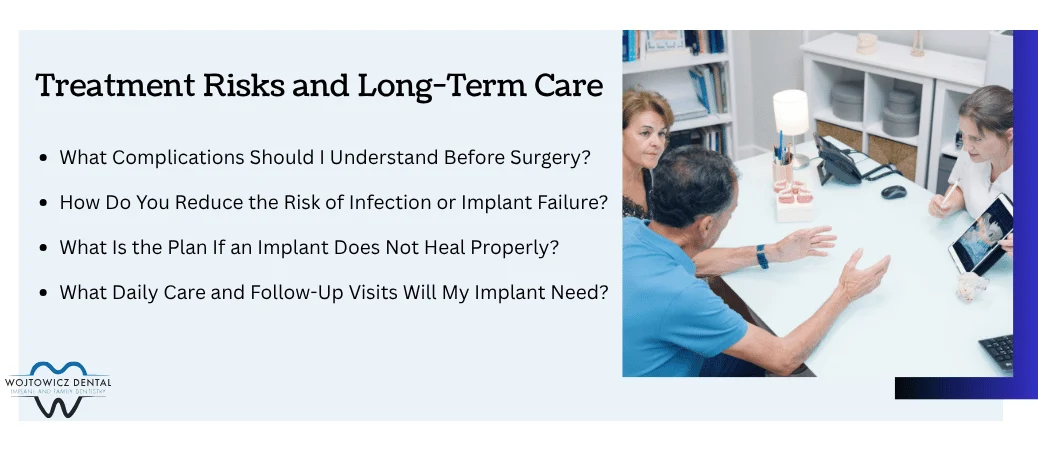
What Complications Should I Understand Before Surgery?
Ask your dentist to walk you through the risks before you agree to surgery. The most common ones include infection, implant failure, and nerve damage.
Infection can happen if bacteria get into the surgical site. Implant failure means the implant does not properly fuse with your jawbone, which is called osseointegration.
Nerve damage is rare, but it can occur if an implant is placed too close to a nerve. This might cause numbness or tingling in your lip, chin, or tongue.
Your dentist should also mention risks tied to your specific health, like uncontrolled diabetes or smoking, since these can slow healing and raise your chances of complications.
How Do You Reduce the Risk of Infection or Implant Failure?
Ask what steps your dentist takes to lower your risk. Most dentists use sterile tools, take detailed x-rays or CT scans beforehand, and may prescribe antibiotics before or after surgery.
Your own habits matter too. Good oral hygiene before and after surgery plays a big role in preventing infection.
Here’s what helps most:
- Brushing gently but thoroughly twice a day
- Avoiding smoking, which slows healing and raises failure risk
- Keeping follow-up appointments so your dentist can catch problems early
- Following any antibiotic or rinse instructions exactly as given
Your dentist should also check your jawbone density and overall gum health before surgery, since weak bone or unhealthy gums can lead to implant failure down the line.
What Is the Plan If an Implant Does Not Heal Properly?
Ask what your dentist does if an implant fails to heal correctly. This does not happen often, but it is worth knowing about ahead of time.
If an implant does not properly integrate with your bone, your dentist may need to remove it. After the area heals, they can often try placing a new implant, sometimes with additional bone grafting first.
Signs of dental implant failure include ongoing pain, swelling, or looseness in the implant. Your dentist should explain how they monitor healing progress and what warning signs mean you should call them right away.
Ask, too, if there’s a warranty or follow-up plan in case a replacement is needed.
What Daily Care and Follow-Up Visits Will My Implant Need?
Implants need daily care just like your natural teeth. Brushing twice a day and flossing are still key parts of your routine.
Your dentist may also recommend interdental brushes to clean around the implant and gum line more thoroughly. These small brushes reach spots regular floss can miss.
Here’s a simple care checklist:
| Task | How Often |
| Brushing | Twice daily |
| Flossing or interdental brushes | Once daily |
| Dental checkups | Every 6 months |
| Professional cleaning | Every 6 months |
Ask your dentist how long the initial healing period will last before your implant is fully settled.
Regular follow-up visits let your dentist check gum health around the implant and catch small issues before they become bigger problems.
Get a Written Timeline, Cost Breakdown, and Follow-Up Plan
Before you agree to any treatment, ask your dentist to put the details in writing. A clear cost breakdown, a realistic timeline, and a solid follow-up plan protect you from surprises later.
What Does the Complete Cost Include?
Ask exactly what your quote covers. Some dentists give a low number that only covers the implant itself, leaving out the abutment, final crown, or anesthesia. Others give an all-in price that covers the whole process.
Get a written cost breakdown that lists every part of your dental implant treatment. This should include the implant, abutment, final restoration, anesthesia, and any bone grafting you might need.
Ask what happens if your plan changes mid-treatment. If your dentist finds you need more grafting or a different type of crown, will the price change? Get this in writing so you know what you’re really paying for.
Will Dental Insurance or Financing Help Cover the Cost?

Dental insurance often covers only part of implant treatment, if it covers any at all. Some plans help pay for the extraction or the crown but not the implant itself.
Ask your dentist’s office to check your dental insurance benefits before you commit to treatment. This gives you a clearer picture of your out-of-pocket cost.
If insurance won’t cover much, ask about financing options. Many practices offer payment plans or work with outside lenders.
Find out the monthly payment, the length of the loan, and whether there’s interest. This information matters just as much as the total price you’re quoted.
How Long Will Each Treatment Stage Take?
Implant treatment rarely finishes in one visit. Your dentist should walk you through each stage of your dental implant consultation and explain how long healing will take at every step.
A simple case might take three to six months from start to finish. If you need bone grafting or a tooth extraction first, the timeline can stretch to nine months or longer.
Ask specific questions like:
- How long is the healing period after the implant is placed?
- When will I get my final crown?
- Will I have a temporary tooth during healing?
Getting a realistic timeline in writing helps you plan your schedule and set the right expectations.
Who Provides Follow-Up Care and Handles Future Repairs?
Ask who will care for your implant after it’s placed. Some practices split care between different providers, so it helps to know who handles cleanings, checkups, and any adjustments.
Find out what happens if something needs fixing later. Ask if there’s a fee for repairs or replacements, and whether any part of your treatment comes with a warranty.
Your dentist should also explain how to care for your implant long term. Regular cleanings and checkups keep your gum tissue and jawbone healthy around the implant.
Knowing who to call if a problem comes up gives you peace of mind well after your final crown is placed.
Frequently Asked Questions
You probably have more questions swirling around than what’s listed above, and that’s totally normal. Here are quick answers to some of the most common things people wonder about before booking their consultation.
Am I a good candidate for dental implants?
Most healthy adults with enough jawbone can get implants. Your dentist will check your bone density, gum health, and overall medical history first.
Things like uncontrolled diabetes or smoking can affect how well implants heal. Be honest with your dentist about these factors so you can discuss risks and benefits together.
If you don’t have enough bone right now, don’t worry. Many dentists offer bone grafting to build up the area before placing your implant.
What experience and training do you have with implant procedures?
Not every dentist has the same level of training in implant work. Ask how many implants they’ve placed and how long they’ve been doing this specific procedure.
You can also ask if they have any special implant credentials beyond general dental school. These extra certifications often mean more hands-on training and testing.
Look for a dentist who explains their process clearly and answers your questions without rushing. That’s usually a good sign they know what they’re doing.
What treatment options are available for my specific needs?
There isn’t just one type of implant treatment. Depending on how many teeth you’re missing, you might need a single implant, multiple implants, or a full arch replacement using just a few implants and abutments.
Some patients qualify for same-day procedures where teeth are removed and implants placed all in one visit. Others need a more traditional timeline that spreads treatment over several months.
Your dentist should walk you through the specific plan that fits your mouth, not a generic one-size-fits-all approach.
How long will the implant process take from start to finish?
This depends a lot on your bone health and how many implants you need. Traditional treatment can take anywhere from four months to a year, sometimes longer, because the bone needs time to fuse with the implant post.
Newer techniques allow for same-day implant placement in some cases, cutting down on wait time significantly. Ask your dentist which timeline applies to your situation before you commit.
You’ll likely wear a temporary restoration during the healing period either way. This keeps your smile looking normal while your implant integrates with the bone underneath.
What are the risks, success rates, and possible complications?
Dental implants have a strong track record. Success rates are typically well above 90 percent, and they’ve been used safely since the 1960s.
Still, no medical procedure is without some risk. Complications can happen, especially if you have certain health conditions or habits like smoking that slow healing.
The good news is that choosing an experienced dentist lowers your risk significantly. They know how to plan around potential issues and handle any problems quickly if they come up.
What will the total cost include, and are financing options available?
Implant costs vary a lot based on how many teeth you’re replacing and what extra procedures you might need, like bone grafting.
Ask for a full breakdown that includes the surgery, the crown, and any follow-up visits.
Implants can actually be cheaper over a lifetime than a fixed bridge. That’s because implants last much longer with proper care.
Many dental offices offer payment plans or work with financing companies to help spread out the cost. Don’t be afraid to ask what options they have before you decide on a treatment plan.