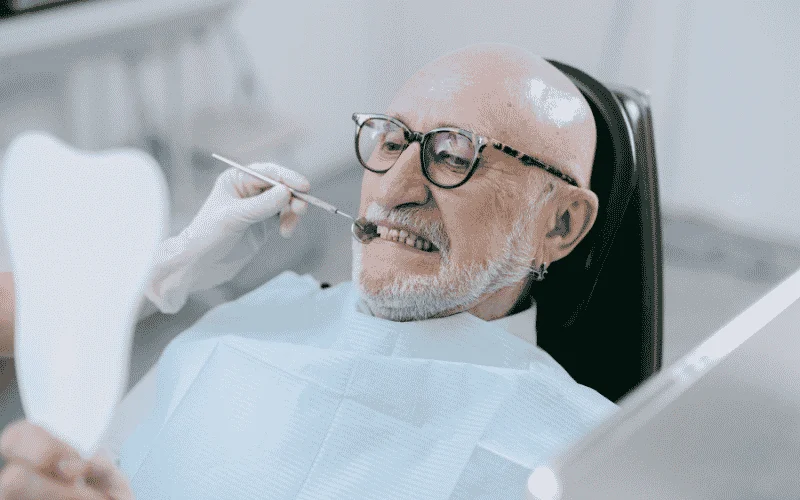
If your lower denture floats every time you talk or eat, you are not doing anything wrong.
That denture was built to sit on a ridge that keeps shrinking, and your tongue lifts it dozens of times an hour. Denture adhesive buys you a few hours of quiet, then the sore spots come back.
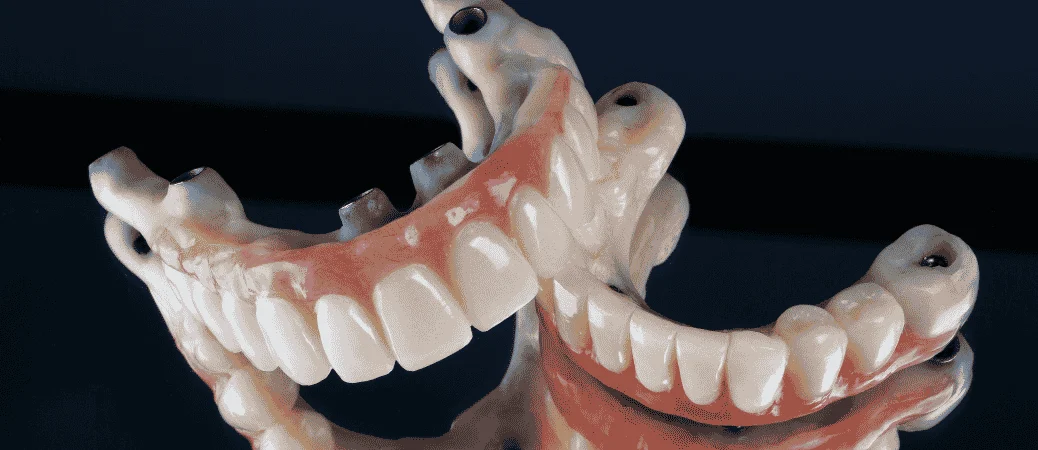
Understanding how implant-supported dentures work starts with the implants placed beneath the denture.
These implants allow the denture to attach more securely instead of relying only on suction or adhesive, helping it stay in place while you chew, laugh, and speak.
In many cases, the denture you already own can be modified to snap onto implants, and in others your dentist will recommend a new custom denture built for the attachments.
Both routes are far less involved than a fixed full-arch restoration, and both start with an honest look at the appliance you have now.
Key Takeaways
- Your current denture may be converted to snap onto implants if its fit, bite, and acrylic thickness are still sound.
- Two to four implants per arch can stabilize a removable denture without committing to fixed full-arch treatment.
- Attachment parts wear and need replacing, so plan on regular checkups along with daily cleaning.
Can Your Current Denture Be Stabilized With Implants?
Sometimes yes. Whether your existing denture can be converted depends on how well it fits your ridge today, how thick the acrylic is, where attachments would sit, and whether your bite still lines up correctly.
Conversion is a real option worth asking about, and it is only appropriate when the appliance is in good shape.
When an Existing Denture Can Be Converted
A conversion works best when the denture is fairly new, sits reasonably well, and has enough acrylic bulk to hold housings without cracking.
Your dentist places the implants, lets them heal, then hollows out spots in the denture base and cements attachment housings inside.
Ask directly whether your existing appliance can be modified for implant support, since even a denture that feels loose can often be adapted. A few checks tell the story:
- Fit: Does it still contact your ridge evenly, or does it rock when you press on one side?
- Acrylic thickness: Thin, worn spots crack once housings are seated.
- Bite: Worn or flattened teeth throw off how your jaws meet.
- Age and history: Repeated relines, past denture repair, or hairline cracks make conversion risky.
Conversion is a common approach when your denture passes those checks, and the team at Wojtowicz Dental will tell you plainly if it does not.
When a New Custom Denture Is the Better Choice
A new denture is the safer plan when your current one is thin, cracked, more than five to seven years old, or no longer matches your ridge after bone loss.
Fabricating a fresh denture around planned implant positions lets the lab build extra strength exactly where the housings sit.
Many clinicians recommend a purpose-built denture for implant retention because it fits more precisely and lasts longer. That cost stings up front, and it usually saves you repeat repairs later.
Why Implant Support Is Different From Denture Adhesive
Adhesive creates a temporary seal between soft tissue and acrylic. Implants create a mechanical connection to bone.
That difference shows up at dinner. With snap attachments, biting into an apple or chewing a steak does not lift the front of the denture.
Implants also stimulate the bone underneath, which slows the ridge shrinkage that makes loose dentures worse each year.
Which Implant Attachment Option Fits Your Routine?
Most denture wearers who want more stability without full-arch surgery choose a removable overdenture that snaps onto two to four implants.
Fixed options exist and cost more, take more implants, and cannot be taken out at home.
How Snap-In Dentures and Overdentures Work
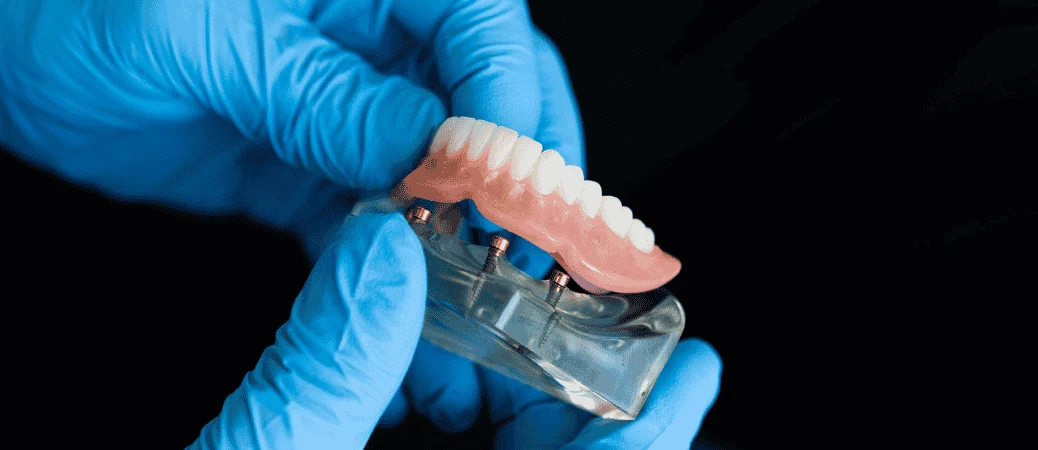
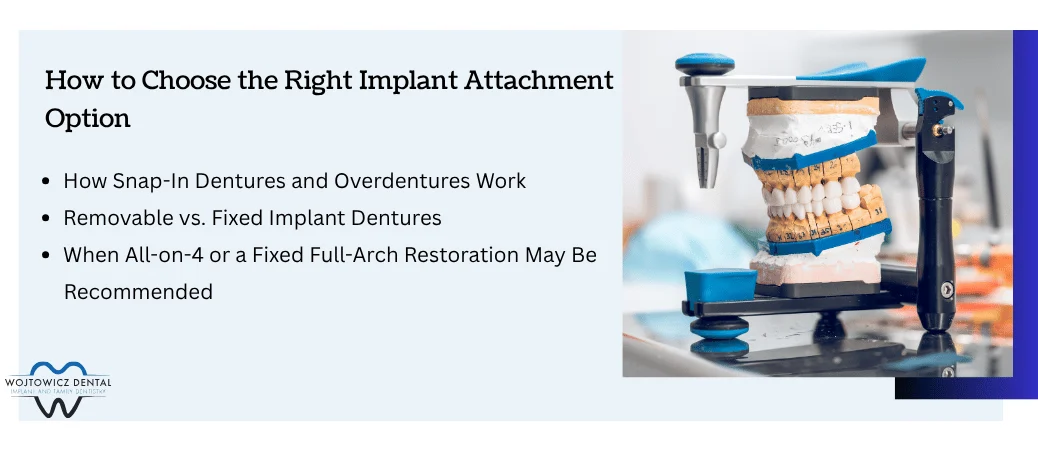
Snap-in dentures, also called implant overdentures, use small attachments on top of each implant. Nylon inserts inside your denture grip those attachments and release with firm finger pressure.
Two implants in the lower jaw make a noticeable difference for most people. Four implants spread the load better and reduce rocking.
Some practices use a bar connecting the implants, which grips more firmly and needs more space under the denture.
Mini dental implants are narrower posts sometimes used when bone width is limited.
They involve a simpler placement and carry different long-term expectations than standard-diameter implants, so ask how they perform in your specific bone.
Removable vs. Fixed Implant Dentures
| Snap-In Overdenture | Fixed Full-Arch | |
| Implants per arch | 2 to 4 | 4 to 6 |
| Removable at home | Yes | No |
| Covers palate (upper) | Often reduced or removed | No |
| Bite force | Strong | Strongest |
| Home cleaning | Take out and brush | Water flosser under bridge |
| Parts replaced | Nylon inserts, yearly-ish | Screws, occasional prosthesis work |
Removable implant supported dentures let you clean every surface at the sink. Fixed restorations feel most like natural teeth and require you to clean around them in place.
When All-on-4 or a Fixed Full-Arch Restoration May Be Recommended
Your dentist suggests fixed treatment when you want teeth that never come out, when you have enough bone for four to six implants, or when a removable denture keeps causing sore spots despite adjustments.
All-on-X dental implants use angled posterior implants to work with available bone, which sometimes avoids grafting.
If you are weighing both paths, this comparison of full arch implants vs dentures lays out the daily differences.
Are You a Candidate for Denture Stabilization?
Many long-term denture wearers may be candidates for implant stabilization, but eligibility depends on available bone, gum health, medical history, and other individual factors.
Years without tooth roots shrink the ridge, especially in the lower front, and that shrinkage shapes what your dentist can offer.
How Jawbone Volume and Bone Density Affect Planning
The lower front jaw holds its bone better than almost anywhere else, which is why two-implant lower overdentures work for so many people.
Upper jaws lose height faster and sit near the sinuses, so upper cases sometimes need more implants or added bone.
When bone height or width falls short, bone grafting builds up the site before or during implant placement.
Grafting adds months to the timeline. Reading about bone loss and dental implants helps you know what questions to ask.
Why Gum Disease and Teeth Grinding Need Attention First
Active gum disease around any remaining teeth raises the risk of implant problems, so treatment comes first. If you still have a few natural teeth under a partial, their periodontal condition gets evaluated as part of planning.
Teeth grinding puts heavy force on attachments and wears nylon inserts fast. Mention clenching or morning jaw soreness at your consult. A night guard or a different attachment design often solves it.
What Digital Scans and a CBCT Scan Show Your Dentist
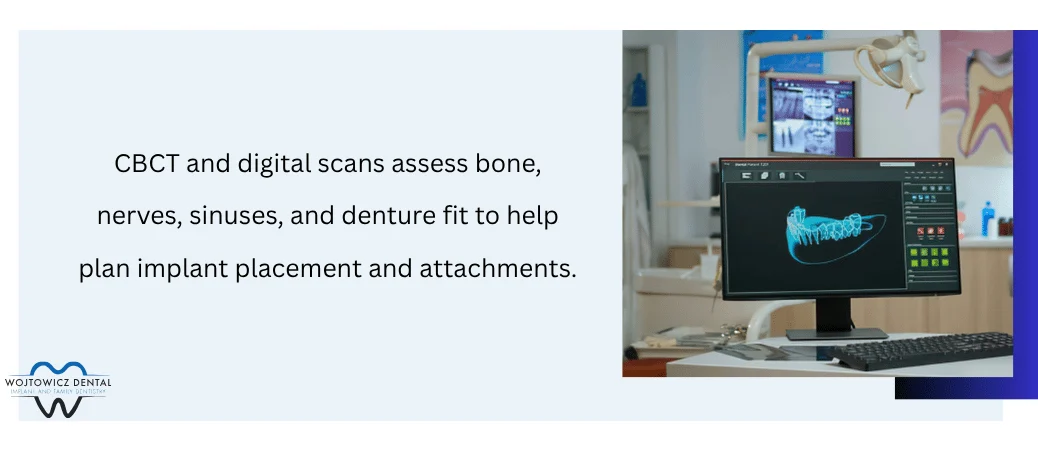
A CBCT scan is a 3D X-ray that shows bone height, width, and the location of nerves and sinuses. It turns guesswork into measurement, revealing exactly where implant sites have enough bone.
Digital scans capture your ridge and your existing denture, so the lab can plan attachment positions before surgery.
At Wojtowicz Dental, Dr. Emily Wojtowicz uses this information to evaluate your available bone, current denture, and possible implant positions before treatment begins.
Bring your current denture to the appointment so it can be evaluated as part of your treatment plan.
What Happens During Implant Treatment and Healing?
Treatment runs in stages: planning, placement of the titanium implants, a healing period of roughly three to six months while bone fuses to the posts, then attachment of the housings to your denture.
You wear a denture the entire time.
Planning Implant Placement and Preparing the Denture
Your dentist maps implant positions using the scan data and your denture’s tooth arrangement. Positions get chosen so attachments sit under the denture without weakening it.
If your existing appliance is being converted, expect a reline or adjustment beforehand. If a new denture is planned, impressions and try-ins happen alongside the surgical prep.
What to Expect During Dental Implant Surgery
The time needed to place lower implants varies based on the number of implants, bone condition, and whether additional procedures are required.
Local anesthetic handles the site, and IV sedation is available if the thought of surgery makes your stomach drop.
Some swelling and soreness are expected after implant placement, particularly during the first few days.
Your dentist will provide instructions for managing discomfort and walk you through the dental implant recovery timeline.
Temporary Dentures, a Soft Diet, and the Healing Period
Your denture goes back in, usually relined with a soft material so it does not press on the healing sites. Some dentists ask you to leave it out for the first day or two.
Plan on a soft diet for a few weeks: eggs, fish, cooked vegetables, yogurt. Osseointegration, the fusing of bone to implant, takes three to six months depending on bone quality and whether grafting was done.
Attachments go in after your dentist confirms implant stability.
How Long Do Implant-Retained Dentures Last?
The implants themselves can last decades, while the denture riding on top typically needs replacement every five to ten years, and the nylon attachment inserts wear out much sooner.
Daily Oral Hygiene for Implants and Attachments
Take the denture out every night. Brush the attachment tops with a soft toothbrush, the same way you would brush natural teeth, and rinse well.
A water flosser helps clear debris from around the implant collars. Clean the inside of the denture where the nylon inserts sit, since food packs in there. More dental implant care tips cover the products worth keeping at the sink.
Why Follow-Up Visits and Attachment Replacement Matter
Nylon inserts lose grip with use. Many patients need them swapped roughly once a year, and the swap takes minutes in the chair.
Checkups also catch loosening abutments early and let your dentist reline the denture as your ridge changes. Skipping visits is how a small fix turns into a denture repair.
Signs That Need Prompt Dental Attention
Call your dentist if you notice any of these:
- The denture suddenly feels loose again or clicks
- Bleeding, swelling, or pus around an implant
- Pain when biting that was not there last week
- A cracked denture base or a missing insert
- An implant that feels like it moves
Movement of an implant itself points to possible implant failure and needs same-week attention. For context on longevity, this look at how long dental implants last covers the factors that matter most.
Finding a More Secure Fit Without Over-Treating
Stabilizing a denture you already own is often the smallest step that solves the biggest problem.
Two to four implants per arch restore chewing ability and let you retire the adhesive tube, without the cost or commitment of full-arch implant treatment.
Bring your current denture to a consultation and ask three specific things: whether it can be converted, how many implants your bone supports, and what the attachment maintenance will cost each year.
A consultation at Wojtowicz Dental starts with a scan and a look at the appliance in your hand.
If a new denture turns out to be the better path, that is not a setback. It means the lab can build the base thick enough where it counts, and you get a fit designed around the implants from day one.
Come with a list of the foods you have stopped eating; that tells your dentist more about your goals than any chart.
Frequently Asked Questions
Can my existing dentures be converted to snap-in dentures?
Often yes, provided the denture fits reasonably well, the bite is correct, and the acrylic is thick enough to hold attachment housings without cracking.
Dentures that are old, thin, heavily repaired, or no longer matched to your ridge usually need replacing instead. Your dentist can tell you at the exam.
How many implants are needed to stabilize lower dentures?
Two implants in the lower front jaw are the common starting point and make a clear difference in stability.
Four implants distribute chewing force more evenly and reduce rocking, especially if you have a strong bite. Bone volume and budget both factor into the number.
Can I sleep with implant-supported dentures?
Most dentists ask you to remove a snap-in denture at night so your gums get a break and you can clean the attachments.
Sleeping in it increases irritation and speeds up wear on the nylon inserts. Fixed full-arch restorations stay in, since you cannot take them out.
Do implant-supported dentures cover the roof of your mouth?
Upper implant-supported dentures often have the palate reduced or removed entirely, which is one reason people notice food tasting better.
That depends on how many implants support the denture and how bone volume is distributed. Two implants alone may not provide enough support to open up the palate.
How long does it take to get snap-in dentures?
Plan on three to six months from implant placement to attaching the housings, since the bone needs that time to fuse to the implants.
Bone grafting can add several more months. You wear a denture throughout the healing period.
What are the downsides of implant-supported dentures?
They cost more than a conventional denture, require surgery, and the nylon inserts need replacing about once a year.
The denture itself still needs replacement every five to ten years, and it still comes out for cleaning. For some people, those trade-offs beat the daily adhesive routine, and for others they do not.