
You wake up with a sore jaw, a dull headache near your temples, or a tooth that suddenly hurts when you sip cold water. Those small annoyances often point to something happening while you sleep.
If you notice flattened, chipped, or sensitive teeth along with morning jaw soreness, you may already be experiencing teeth grinding damage as your nighttime grinding wears down your enamel; and that’s your cue to see a dentist before cracks and crowns enter the picture.
The medical name for this habit is bruxism, and it can happen during the day or at night without you ever knowing.
Many people don’t find out until a partner hears the grinding sound or a dentist spots worn, flattened tooth tips during a checkup.
The good news is that catching it early usually means simpler fixes, like a night guard and a few stress habits, instead of major dental work.
Here’s how to read the signs, understand what’s driving your clenching, and protect your oral health starting tonight.
Key Takeaways
- Worn enamel, jaw soreness, and morning headaches are early warning signs of sleep bruxism.
- Stress, certain medications, and sleep issues like snoring or sleep apnea often trigger nighttime clenching.
- A dental exam and a properly fitted night guard can stop the damage before you need crowns or other repairs.
Early Signs Your Smile May Be at Risk
Most people who grind their teeth at night have no idea they’re doing it, so the clues show up in other ways: aching muscles when you wake up, teeth that look shorter than they used to, and a bite that suddenly feels off.
Catching these signals early can mean the difference between a simple night guard and crowns or root canals later.
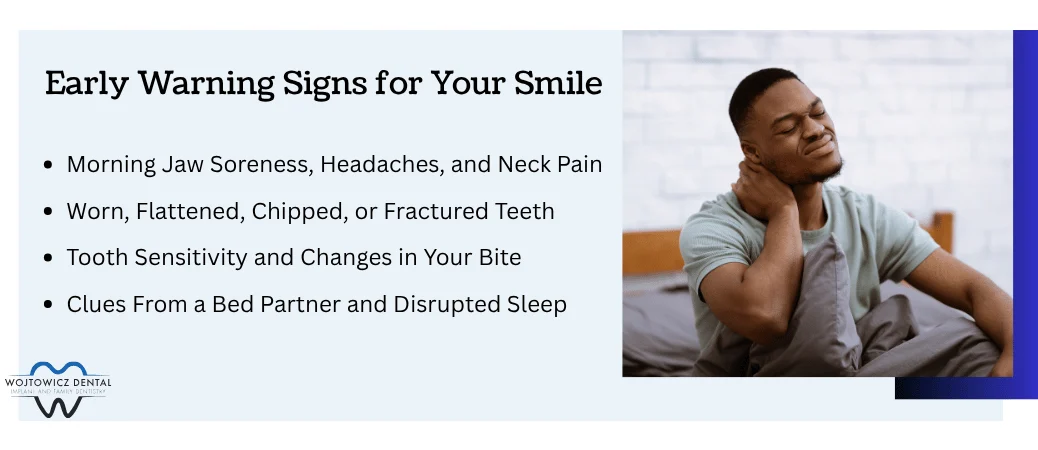
Morning Jaw Soreness, Headaches, and Neck Pain
Pay attention to how your head and jaw feel in the first hour after waking up.
A sore jaw that feels tired or tight, like you chewed gum all night, is one of the most common signs. Some people also notice a dull headache that starts at the temples, and it can be strong enough to feel like a migraine.
Jaw clenching uses the same muscles that connect to your neck and the sides of your head, so neck pain and shoulder tension often come along with it.
If your jaw pops, clicks, or won’t open all the way, mention it to your dentist soon.
Worn, Flattened, Chipped, or Fractured Teeth
Look closely at your teeth in good lighting. Grinding wears away enamel, and enamel does not grow back.
Signs of tooth damage to watch for:
- Flattened chewing surfaces: The pointed cusps on your molars look smooth or level
- Shorter front teeth: Your smile looks different in photos than it did a few years ago
- Small chips along the edges of your front teeth
- Hairline cracks or fractured teeth, especially in molars
- Yellowing where thin enamel lets the darker dentin underneath show through
- Broken or loose dental work: Fillings, crowns, and veneers take a beating from clenching
Worn-down teeth build up slowly, which is why the changes are easy to miss until they’re significant. Your dentist can compare X-rays and old records to spot the pattern.
Tooth Sensitivity and Changes in Your Bite
New tooth sensitivity is worth taking seriously. When enamel thins out, cold drinks, hot coffee, and sweet foods can cause a sharp zing that fades quickly.
You may also notice that one tooth aches when you bite down on it. That can point to a crack from repeated pressure.
Another clue is a bite that feels different. Maybe your teeth no longer meet the way they used to, or one side hits first when you close your mouth.
Some people find their gums pulling back near the gumline, or they see notches at the base of a tooth. Both can be linked to the force of teeth clenching.
Clues From a Bed Partner and Disrupted Sleep
Sometimes the best evidence comes from the person sleeping next to you. Grinding can be loud enough to wake a partner, and they may describe it as a clicking or scraping sound.
Ask them directly. If you sleep alone, a recording app on your phone can pick up the noise.
Poor sleep quality is another red flag. You might wake up several times a night, feel unrested in the morning, or deal with daytime fatigue for no clear reason.
There’s also a connection worth knowing about: sleep bruxism often overlaps with snoring and sleep apnea.
If you snore heavily or someone has noticed you stop breathing during sleep, bring that up along with the grinding.
How Bruxism Can Damage Teeth and Joints Over Time
Grinding puts hundreds of pounds of pressure on your teeth night after night, and that force has to go somewhere.
It wears down enamel, cracks fillings and crowns, strains your jaw joints, and in the worst cases loosens teeth to the point where they can’t be saved.
Enamel Loss, Cavities, and Tooth Wear
Enamel is the hard outer shell of your tooth, and it doesn’t grow back. Grinding slowly sands it away, starting with the chewing surfaces of your molars and the tips of your canines.
Once enamel erosion exposes the softer dentin underneath, teeth often turn yellow and feel sensitive to cold drinks or sweets.
That exposed layer also decays faster, so cavities show up in spots you never had trouble with before.
Flattened teeth are one of the first signs a dentist looks for. Worn tooth enamel and tooth sensitivity are common bruxism symptoms, along with teeth that look shorter or unevenly worn.
Over years, heavy wear can shorten your bite enough to change how your face looks and how your teeth fit together.
Cracks, Crowns, and Other Dental Restoration Issues
Grinding creates tiny stress fractures that spread over time. You may end up with chipped teeth, hairline cracks, or a full fracture that runs into the root.
Dental work takes a beating too. Fillings pop out, veneer chips, and porcelain crowns can crack under repeated clenching, which means more damage to fillings, crowns, and other dental repairs than a non-grinder would ever face.
Common warning signs of stressed restorations:
- A rough or sharp edge you can feel with your tongue
- Sharp pain when you bite down on one specific spot
- A filling that keeps coming loose
- Dark lines running down the side of a tooth
If a crack reaches the pulp, you may need a root canal before the tooth can be rebuilt.
TMJ Strain and Chronic Facial Muscle Pain
Your temporomandibular joint sits just in front of each ear and works every time you talk or chew. Constant clenching overworks it and the muscles around it.
That leads to clicking or popping sounds, a jaw that feels stuck, and chronic jaw pain that flares up in the morning.
Muscle tension in the masseter and temporalis muscle also causes dull headaches at your temples, plus soreness in your neck, face, or ears.
Many people with TMJ pain and headaches from grinding don’t connect the two at first, since the tooth wear can be silent.
A misaligned bite makes things worse by forcing the joint to work at an awkward angle.
When Severe Damage Can Lead to Tooth Loss
Grinding doesn’t just wear teeth down from the top. The rocking motion strains the bone and ligaments holding each tooth in place, which can loosen teeth and contribute to gum recession.
Add a deep crack or advanced decay, and a tooth may not be repairable. At that point, treatment moves from a simple filling to bite guards, restorative work, or even oral surgery.
Replacing a lost tooth usually means a bridge or dental implants, which cost far more than a night guard and take months to complete.
The good news: damage builds gradually, so catching it early at a routine checkup keeps most cases from ever reaching that stage.
Common Triggers of Nighttime Clenching
Teeth grinding rarely has one single cause. Stress, breathing problems during sleep, certain drinks and habits, some medications, your genes, and the way your teeth fit together can all play a part; and often several of them overlap.

Stress, Anxiety, and Daytime Clenching
Stress and anxiety are the most commonly reported triggers. The NHS lists stress and anxiety as the most common cause of teeth grinding.
Anger, frustration, and general tension can do the same thing. If you catch yourself clenching your jaw while stuck in traffic or answering email, that’s awake bruxism; and people who clench during the day often grind at night too.
Habits like chewing gum for long stretches, biting your cheek, or nibbling your lip also keep your jaw muscles switched on.
Stress management won’t cure grinding on its own, but it helps. Simple steps like a wind-down routine before bed, regular exercise, and jaw-relaxation exercises can lower how often your muscles fire overnight.
Sleep Apnea, Snoring, and Other Sleep Problems
Grinding often travels with other sleep disorders. People with sleep bruxism are more likely to snore or have sleep apnea, which involves pauses in breathing during sleep.
Here’s the connection: sleep bruxism tends to happen during brief arousals; short moments when your sleep gets lighter.
When breathing is blocked in obstructive sleep apnea (OSA), your body stirs, and your jaw muscles can activate at the same time.
Watch for these red flags alongside grinding:
- Loud snoring or gasping noises at night
- Witnessed pauses in breathing
- Waking with a dry mouth or headache
- Daytime sleepiness even after a full night in bed
Nasal congestion and night terrors can also disrupt sleep enough to set off clenching. If OSA is part of the picture, treating the breathing problem often matters more than a night guard alone.
Caffeine, Alcohol, and Tobacco Use
What you drink and smoke changes how deeply you sleep, and that matters for your jaw.
Smoking tobacco, drinking caffeinated beverages, or drinking alcohol can raise your risk of bruxism.
Caffeine is a stimulant, so an afternoon coffee or energy drink can still be in your system at bedtime.
Alcohol is trickier; it may help you fall asleep, but it fragments the second half of your night, which is when arousals and grinding pick up.
Easy changes worth trying:
| Habit | What to try |
| Coffee, tea, energy drinks | Stop caffeine by early afternoon |
| Alcohol | Skip drinks in the 3–4 hours before bed |
| Smoking or vaping | Avoid nicotine close to bedtime |
Medications, Depression, and Family History
Grinding can be an uncommon side effect of some prescriptions. Certain antidepressants (including SSRIs) plus medications for seizures and ADHD, such as amphetamines, have been connected to bruxism.
Never stop a prescription on your own. Talk to the doctor who prescribed it about adjusting the dose or switching, and mention your jaw symptoms specifically.
Mental health matters here as well. Depression and anxiety disorders often show up alongside grinding, partly because they affect sleep quality.
Genetics play a role, too. Sleep bruxism tends to run in families, so if a parent or sibling grinds, your odds go up.
Bite Alignment and Other Dental Factors
The way your teeth meet can contribute. Misaligned or crooked teeth, a high spot on a new crown or filling, or missing teeth can throw off your bite and encourage clenching.
Dentists debate how big a role bite problems play, but an uneven bite is one recognized trigger worth checking.
Other health conditions on the list include gastroesophageal reflux disease (GERD), Parkinson’s disease, dementia, and epilepsy. With GERD, acid coming up at night can trigger swallowing and jaw movement.
Your dentist can spot wear patterns and bite issues you’d never notice yourself, which is why regular checkups catch damage early.
Getting a Clear Diagnosis Before Major Dental Work
Before you agree to crowns, veneers, or a full mouth reconstruction, you want to know exactly what is wearing your teeth down and why.
That usually means a careful dental exam, a look at your sleep, and a check for jaw joint problems that can copy the symptoms of grinding.
What a Dentist Looks for During a Dental Exam
Your dentist can often spot bruxism before you notice it yourself. During a routine visit, they check for flattened tips on your teeth and other wear patterns that don’t match normal chewing.
They also look for:
- Tender jaw muscles or jaw joints when pressed
- Stiffness or pain as you open and close your mouth
- Chipped, cracked, loose, or missing teeth
- Marks on the inside of your cheeks or a ridged line along your tongue
- Worn enamel that exposes the softer layer underneath
X-rays may be taken to check the bone around your teeth. Many dentists also compare your mouth across several visits to see whether the damage is holding steady or getting worse, which helps decide if treatment is needed now.
When a Sleep Study May Be Needed
If your grinding happens while you sleep, your dentist may suggest a referral to a sleep medicine specialist. This step matters more than most people expect.
A sleep study, called polysomnography, records your muscle activity, breathing, heart rate, and oxygen levels overnight. It can confirm how often you grind and whether the episodes line up with pauses in your breathing.
That connection is the key. Sleep bruxism often shows up alongside obstructive sleep apnea, and treating the apnea can reduce the grinding.
Signs that point toward a sleep study include loud snoring, gasping at night, daytime sleepiness, and morning headaches that show up before you’ve had coffee.
Ruling Out TMJ Disorders and Other Sources of Pain
Jaw pain doesn’t always come from grinding. Problems with your temporomandibular joint, the hinge just in front of your ear, can cause very similar aches, clicking sounds, and limited jaw movement.
Other look-alikes include cracked teeth, an infection or abscess, ear problems, and sinus pressure. Your dentist sorts these out by feeling the joint as you move your jaw, listening for popping, and measuring how wide you can open.
Getting this right protects your wallet and your teeth. If TMJ trouble is the real driver of your jaw pain and headaches, rebuilding your teeth won’t fix it, and you could end up with new dental work that still hurts.
Why Bite Changes Need a Careful Evaluation
A misaligned bite can make grinding worse, and heavy grinding can change your bite over time. Sorting out which came first takes a real evaluation, not a quick glance.
Expect your dentist to take impressions or digital scans, check how your upper and lower teeth meet, and mark high spots with bite paper. Photos and models let them track shifts month to month.
Take your time with this step:
| Question to ask | Why it matters |
| Is my wear still active? | Stable wear may only need a guard, not crowns |
| What happens if we wait? | Helps you weigh timing and cost |
| Will a night guard come first? | Protects new dental work from the same damage |
Reshaping teeth or placing crowns is permanent, so it’s fair to ask for a second opinion before major work begins.
Protecting Your Teeth and Reducing Teeth Grinding
You can’t force your jaw to stay still while you sleep, but you can shield your enamel and cut down on how often and how hard you grind.
That usually means a well-fitted guard, calmer evenings, better sleep, some simple jaw work, and occasionally help from your dentist or doctor.
Custom Night Guards, Mouthguards, and Occlusal Splints
A night guard won’t stop your jaw muscles from firing, but it puts a barrier between your top and bottom teeth so the plastic takes the wear instead of your enamel. Many people also notice fewer morning headaches and less jaw soreness.
You have a few options:
| Type | Best for | Notes |
| Custom occlusal splint (hard acrylic) | Moderate to heavy grinding | Made from dental impressions; one guide suggests a thickness of 2.5–3 mm for heavier grinders |
| Soft or dual-laminate guard | Mild grinding, clenching | More comfortable, wears out faster |
| Over-the-counter boil-and-bite | Short-term use | Cheap, but a poor fit can shift your bite |
| Mandibular advancement device (MAD) | Grinding plus snoring or mild sleep apnea | Holds the lower jaw forward; less comfortable than dental splints for most people |
Have your dentist check the fit of any mouthguard, including drugstore versions. Guards do get thin and cracked over time, so plan on replacements.
Calming Your Jaw With Stress-Reduction Habits
Stress and anxiety show up again and again as common contributors to teeth grinding, and many people notice their symptoms spike during busy or worrying stretches.
Relaxation techniques are worth a try, even though they’re better proven for daytime clenching than nighttime grinding.
Deep breathing, meditation, mindfulness, progressive muscle relaxation, and gentle yoga all help lower overall muscle tension.
Daytime habits matter too. Check in with your jaw a few times a day and let it rest with your teeth slightly apart and your tongue on the roof of your mouth. A sticky note on your monitor works surprisingly well as a reminder.
If stress feels bigger than a breathing exercise can handle, cognitive behavioral therapy (CBT) can help you spot and reshape the tension patterns behind the habit.
Sleep Hygiene and a Relaxing Bedtime Routine
Grinding episodes tend to happen during very brief awakenings you don’t remember. Fewer of those micro-arousals can mean fewer grinding episodes, which is why steadier sleep is part of the plan.
Small lifestyle changes add up:
- Go to bed and wake up at the same times, even on weekends
- Keep the room dark, quiet, and on the cool side
- Skip caffeine after early afternoon and avoid alcohol in the evening
- Put screens away 30 to 60 minutes before bed
- Build a wind-down routine: warm shower, stretching, reading, or quiet music
- Keep naps short and before mid-afternoon
A warm compress on your cheeks before bed can loosen tight chewing muscles, and it feels good.
Physical Therapy, Jaw Exercises, and Biofeedback
A few minutes of jaw work several times a day can ease soreness and improve how far your mouth opens comfortably.
Try this resting exercise: close your lips, keep your teeth apart, press the front third of your tongue to the roof of your mouth, and hold.
For range of motion, rest your fingers just below each ear, slowly open your mouth, hold 5 to 10 seconds, then close slowly.
A physical therapist can build a routine for you and show you how to massage tender spots in your jaw, temples, and neck at home. Regular exercise helps with the stress side of things as well.
Biofeedback is another option. Sensors track your muscle activity so you can see when you’re tensing up, though nighttime use is still being studied.
When Medical or Dental Treatments May Help
If pain, cracked teeth, or worn enamel keep showing up despite a guard, your dentist or doctor has more tools.
- Muscle relaxants are sometimes prescribed short-term, but research hasn’t clearly shown they reduce grinding during sleep.
- Botox injections into the chewing muscles may lower pain and grinding force. They’re typically repeated about every six months and should only be given by a trained provider. Side effects can include bruising, infection, and temporary eyelid drooping.
- Medication review: some antidepressants and stimulants can trigger bruxism. Ask your prescriber before changing anything.
- Dental correction, such as an occlusal adjustment, crowns, or orthodontics, can help when an uneven bite is part of the problem.
- Treating related conditions like obstructive sleep apnea or GERD often reduces grinding, and early treatment prevents much of the damage.
Bring up any jaw locking, clicking, or tooth sensitivity at your next visit rather than waiting for it to settle down on its own.
Frequently Asked Questions
Nighttime grinding often shows up as flattened tooth tips, morning jaw soreness, and dull headaches near your temples, and your dentist can usually spot the wear before you feel anything.
Below are answers about how grinding gets noticed, what it does to enamel and fillings, why it happens, and when it’s time to get help.
How can I tell if I grind my teeth while I’m asleep?
Most people don’t catch themselves doing it. The clearest hint often comes from a partner who hears the grinding sound at night.
Other clues show up in the morning. You may wake with a tight jaw, sore facial muscles, tooth sensitivity, or a headache that starts at your temples.
Can a dentist spot early signs of nighttime teeth grinding?
Yes, and often before you notice a problem yourself. At a routine checkup, your dentist looks for flattened tips on your teeth and other wear patterns that don’t match normal chewing.
They may also check for:
- Chips, small cracks, or loose teeth
- Thin enamel that shows the darker layer underneath
- Tenderness in your jaw muscles
- Damage to existing fillings or crowns
Your dentist may also ask whether anyone has heard you grinding at night, since that helps confirm what they’re seeing.
What types of tooth damage can sleep bruxism cause over time?
Grinding wears enamel down, and enamel doesn’t grow back. Once it thins, the inner layer of the tooth is exposed, which can make teeth feel sensitive to cold or sweet foods.
Ongoing grinding can flatten, chip, fracture, or loosen teeth. It can also crack fillings and crowns, which means repeat repairs.
Severe cases may lead to problems in the jaw joints in front of your ears, along with tension headaches and facial pain. That said, for many people grinding never reaches that point.
What are the common causes of grinding teeth at night?
The exact cause isn’t fully known, and it’s usually a mix of things. Stress and anxiety are the most frequently reported triggers.
Other factors linked to teeth grinding include sleep problems such as snoring and sleep apnea, smoking, heavy alcohol or caffeine use, and certain medicines for depression, anxiety, or sleep.
Grinding also tends to run in families. Conditions like GERD, ADHD, and night terrors are associated with it too, and it’s common in young children, though it often fades as they get older.
What symptoms besides worn teeth may point to nighttime grinding?
Your jaw muscles do a lot of work during a grinding episode, so the signs often show up around your face and head.
Watch for:
- A jaw that feels tired, tight, or won’t fully open
- Popping or clicking when you open and close your mouth
- Pain in your jaw, neck, or face
- An earache-like pain when your ear is actually fine
- Jaw muscles that look larger than usual
- Poor or restless sleep
Some people notice their sleep quality drops or that their bed partner is being woken up by the noise.
When should I seek treatment for teeth grinding before it causes major dental work?
Bring it up as soon as you notice any of these signs, rather than waiting for a tooth to crack. Small amounts of wear are easier and cheaper to manage than a broken tooth that needs a crown or root canal.
Call your dentist if you have jaw pain, frequent morning headaches, new tooth sensitivity, or if someone tells you you’re grinding at night. Acting early helps protect your teeth and avoids extra discomfort.
A custom night guard is a common first step, since it puts a layer between your upper and lower teeth.
Your dentist may also suggest stress management, changes to caffeine or alcohol, or a check for sleep apnea if snoring is part of the picture.