

Noticing bleeding gums when brushing can feel alarming, but it is also one of the most common gum concerns dentists hear about.
Bleeding gums are usually your body’s way of telling you there is irritation or early inflammation at the gumline, and in most cases, this is treatable and even reversible if you catch it early.
The key is learning to tell the difference between a one-time fluke and a pattern worth paying attention to.
Healthy gums are supposed to be firm, pale pink, and quiet. They should not bleed when you brush, floss, or bite into an apple.
When they do, it usually means something has changed, whether that is a new flossing habit, a stiffer toothbrush, or plaque quietly building along your gumline.
This is where knowing the early signs of gum disease makes a real difference. Catching gum inflammation before it advances gives you more options and an easier path back to healthy gums.
Key Takeaways
- Bleeding gums often signal early gum inflammation, but gentle home care and a dental check-up can frequently reverse it.
- Watching for tenderness, bad breath, gum recession, and loose teeth helps you catch problems before they become advanced periodontitis.
- Diabetes, smoking, pregnancy, medications, and stress can all raise your risk, so your dentist needs the full picture of your health.
Why Gums Bleed During Brushing
One of the most common causes of bleeding gums is plaque that has been sitting along the gumline for too long.
Plaque is a soft, sticky film of bacteria that forms on your teeth every day, and when it is not cleared away, it irritates the gum tissue and causes gum bleeding.
Understanding this cycle helps you respond calmly instead of panicking at the first sign of pink in the sink.
What Plaque Buildup Does at the Gumline
Plaque that lingers at the gum line triggers a bacterial infection response in the tissue, leading to gum inflammation.
Your gums swell slightly and become more fragile, so even gentle brushing can cause them to bleed.
This early reaction is your body’s way of fighting off the bacteria collecting there, and it is often the very first clue that something needs attention, as described in research on gingivitis and periodontitis.
When Bleeding May Be Temporary Irritation
Not every instance of bleeding points to poor oral hygiene. If you just started flossing after a long break, or switched to a firmer toothbrush, your gums may bleed for a few days as they adjust.
This kind of irritation typically settles down within a week once your technique softens and your gums get used to the routine.
Why You Should Keep Brushing and Flossing Gently
Stepping away from brushing and flossing when you see blood only lets plaque build up further.
Keep brushing twice a day with a soft-bristled brush and fluoride toothpaste, and keep flossing daily, even if there is some bleeding at first.
Gentle, consistent brushing and flossing is one of the best ways to help your gums heal and stay healthy.
Pairing that habit with regular dental cleanings and exams at Wojtowicz Dental gives your gums extra support between visits.
Warning Signs Beyond Blood in the Sink
Bleeding is often the first sign of trouble, but your gums send other signals too.
Tender gums, ongoing bad breath, gum recession, and loose teeth can all point to gum disease that has moved past the earliest stage, and noticing them early gives you more treatment options.

Red, Swollen, or Tender Gums
Healthy gums look pale pink and feel firm when you touch them. If your gums look redder than usual, feel puffy, or are tender to the touch, that is a sign of gum inflammation.
This tenderness often shows up before you notice any bleeding at all, so it is worth paying attention to how your gums feel, not just how they look.
Persistent Bad Breath or a Bad Taste
Persistent bad breath, also called halitosis, that does not go away with brushing can point to bacteria trapped below the gumline.
A lingering bad taste in your mouth, especially one that returns shortly after brushing, often comes from the same source.
These symptoms tend to show up alongside gum disease that has been developing for a while.
Receding Gums and Sensitive Teeth
Gum recession happens when the gum tissue pulls back from the tooth, making teeth look longer than they used to.
This exposes the tooth root, which often leads to sensitive teeth, especially with cold drinks or sweets.
Once you notice your gums pulling back, it is a good time to have your gum health checked before more of the root becomes exposed.
Loose Teeth, Shifting Teeth, and Bite Changes
Loose teeth or shifting teeth are later signs that gum disease has reached the structures supporting your teeth.
You might notice your bite feels different, or that teeth you once relied on for chewing suddenly feel unstable.
These changes call for prompt care, since they suggest the disease has moved beyond the gum tissue itself.
From Gingivitis to Periodontitis
Gingivitis is the early, reversible stage of gum disease, while periodontitis is a more advanced form that can cause lasting damage.
Knowing where you stand on this spectrum helps explain why some cases clear up quickly with better home care, while others need more involved treatment.
What Stage 1 Gum Disease Can Look Like
Gingivitis often shows up as gums that bleed easily, look a little swollen, and feel tender, but without pain severe enough to make you stop your routine.
Many people do not even realize they have gingivitis because it rarely hurts in the early stages.
The good news is that gingivitis is generally reversible with consistent brushing, flossing, and a professional cleaning.
When Gum Disease Damages Bone and Connective Tissue
Left untreated, gingivitis can progress into periodontal disease, where the infection spreads deeper and starts affecting bone and connective tissue that hold your teeth in place.
This is where the condition becomes periodontitis, and the damage at this stage is not reversible in the way early gum inflammation is.
This shift is part of why early treatment matters so much for keeping the disease from spreading further.
How Advanced Periodontitis Can Lead to Tooth Loss
Advanced periodontitis can wear away enough bone and tissue that teeth lose their support entirely, leading to tooth loss over time.
This is the outcome dentists work hardest to prevent, since it can change how you eat, speak, and feel about your smile.
Catching gum disease before it reaches this stage is one of the strongest reasons not to wait out persistent bleeding on your own.
What Raises Your Risk of Gum Disease
Certain habits and health conditions make gum disease more likely, even if your brushing and flossing routine is solid.
Knowing your personal risk factors helps you and your dental team watch for early signs more closely.
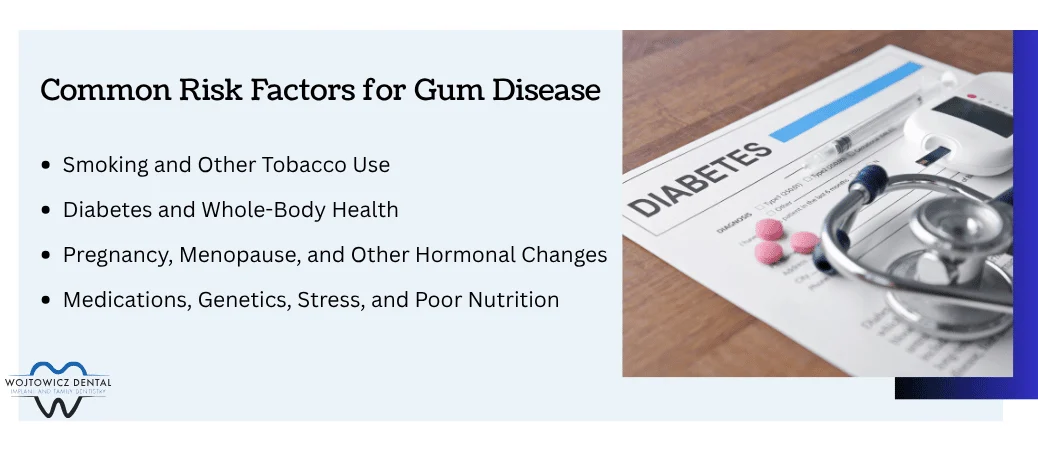
Smoking and Other Tobacco Use
Smoking and tobacco use are among the strongest risk factors for gum disease, since they reduce blood flow to the gums and slow healing.
This can mask early bleeding, since tobacco use sometimes suppresses the very symptom that would normally alert you to a problem.
Quitting or cutting back can make a noticeable difference in how your gums respond to treatment.
Diabetes and Whole-Body Health
Diabetes and gum disease often influence each other, since high blood sugar can make gum infections harder to fight off.
Gum inflammation has also been linked to broader whole-body health concerns, including heart disease. If you have diabetes, mentioning it at your dental visits helps your dentist tailor your care.
Pregnancy, Menopause, and Other Hormonal Changes
Hormonal changes during pregnancy increase blood flow to the gums, which is why so many expecting mothers notice more bleeding than usual.
The CDC reports that 60 to 75 percent of pregnant women develop some form of gingivitis during pregnancy.
Menopause and other hormonal shifts can affect gum tissue in similar ways, making regular dental check-ups especially helpful during these life stages.
Medications, Genetics, Stress, and Poor Nutrition
Some medications, including blood thinners, can make gums bleed more easily by affecting how your blood clots.
Genetics play a role too, since some people are simply more prone to gum inflammation than others.
Stress and poor nutrition, particularly low vitamin C and vitamin K intake, can also weaken gum tissue, according to research on vitamin C and oral health.
How a Dentist Diagnoses and Treats It
A dental professional can tell within one visit whether your bleeding gums point to gingivitis, more advanced periodontal disease, or something unrelated to gum health at all.
This clarity is often the most reassuring part of getting checked, since it replaces guesswork with a clear next step.
What Happens During a Gum Health Evaluation
During a dental check-up, your dental hygienist and dentist measure the depth of the space between your gums and teeth, checking for pockets that suggest gum disease.
They will also look at your gum color, texture, and any bleeding that occurs during the exam itself. This gives them a clear picture of whether you are dealing with early inflammation or something more advanced.
Dr. Emily Wojtowicz can evaluate your gum health, look for signs of inflammation or periodontal disease, and recommend care based on how far the condition has progressed.
Professional Dental Cleaning for Gingivitis
For gingivitis, a professional dental cleaning that removes plaque and tartar from around the gumline is often enough to bring your gums back to health.
Dental cleanings paired with better home habits can help resolve gingivitis and restore healthier gums when the condition is caught early.
This is one of the most encouraging parts of catching gum disease early, since the fix at this stage tends to be straightforward.
When Scaling and Root Planing Are Needed
When gum disease has progressed further, your dentist may recommend a deep cleaning known as scaling and root planing.
This process removes tartar and bacteria from below the gumline and smooths the tooth root so gums can reattach more easily.
Your dental team might also suggest an antibacterial mouthwash to help control bacteria while your gums heal. Ongoing gum health support through periodontal care at Wojtowicz Dental can help manage more advanced cases over time.
Daily Habits That Help Prevent Plaque and Tartar
Brushing twice a day with fluoride toothpaste and flossing daily are still the two most effective habits for keeping plaque from turning into tartar.
Routine dental appointments give your dentist a chance to catch small changes before they grow into bigger problems.
If it has been a while since your last visit, easing back in with a first dental appointment after years away at Wojtowicz Dental is a normal and welcome step, not something to feel awkward about.
Acting Early Helps Protect Your Smile

Paying attention to the early signs of gum disease gives you the best chance of keeping healthy gums for the long run.
Bleeding, tenderness, and bad breath are all signals worth listening to, not ignoring.
Early treatment for gum disease tends to be simpler, gentler, and more affordable than treatment for advanced cases.
Your oral health connects to how confident you feel in your smile and how comfortable you are with everyday things like eating and talking.
A caring provider like Wojtowicz Dental that knows your history can help you stay ahead of small changes before they become bigger concerns.
Frequently Asked Questions
Should I be worried if my gums bleed when I brush my teeth?
Occasional bleeding gums are common and often related to brushing technique or a new flossing habit.
If the bleeding continues for more than a week or happens every time you brush, it is worth having a dentist take a look, since this can point to early gum disease.
Can gums bleed and not be a sign of gum disease?
Yes, gums can bleed from brushing too hard, using a stiff-bristled toothbrush, or starting a new flossing routine.
Certain medications, including blood thinners, and vitamin deficiencies can also cause bleeding without gum disease being the cause.
How can I stop gum bleeding at home?
Switching to a soft-bristled toothbrush, brushing gently in small circles, and flossing daily can reduce gum bleeding within a week or two.
Rinsing with an antibacterial mouthwash and eating a balanced diet rich in vitamin C also supports healthier gums.
What does early-stage gum disease look like?
Early-stage gum disease, or gingivitis, usually shows up as gums that look a little red or swollen and bleed easily during brushing or flossing.
It often does not hurt, which is part of why so many people miss it until a dentist points it out.
What deficiency can cause bleeding gums?
Low levels of vitamin C and vitamin K can make gums more prone to bleeding, since these nutrients support gum tissue strength and healthy blood clotting.
A diet lacking in fruits, vegetables, and leafy greens is often behind this kind of deficiency.
How do I get rid of early signs of gum disease?
Gentle, consistent brushing and flossing paired with a professional dental cleaning can reverse early gum disease in many cases.
Scheduling a dental appointment lets your dentist confirm the stage of gum disease and recommend the right next step for your gums.